HID or LED Headlights Not Working: Causes, Checks and When to Get Help
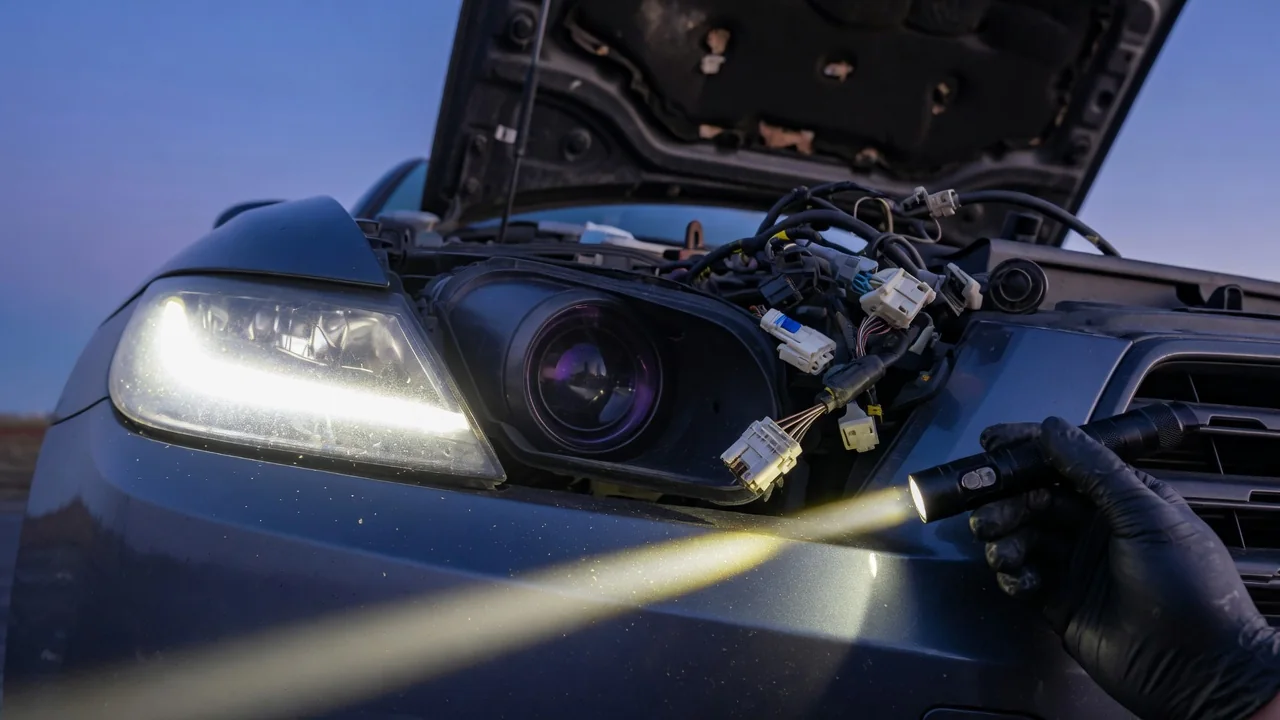
When HID headlights are not working, or LED headlights suddenly go dark, the bulb itself isn't always the cause. Modern lighting depends on ballasts, drivers, connectors, fuses, relays and sometimes vehicle monitoring systems, and all of them have to work together. Knowing how these parts interact helps you make safe, useful observations, narrow down the likely problem areas and decide when professional testing is the better choice.
Why HID and LED Headlights Fail Differently Than Halogen Bulbs
A halogen bulb is a filament that either glows or doesn't, but HID and LED lamps depend on supporting electronics. An HID capsule needs an igniter to strike the arc and a ballast to regulate it afterward. An LED needs a driver to control current and a heat sink to shed heat. If any of those parts fails, the lamp stays dark even when the light source is fine. Factory-integrated LED headlamps are often sealed units, while replaceable-bulb setups let you swap the light source by itself.
Symptoms give useful clues when you observe them from a safe position. Watch for flickering, a delayed start, a color shift, one side out, both sides out, or a lamp that cuts out after it warms up. Dropouts that start once the lamp is hot often point to a struggling driver or ballast. Both sides failing together suggests a shared fuse, relay or switch. Still, a bulb, driver, connector, fuse or switch can each cause the same outage. Never probe or handle a connected HID ballast or igniter, because they produce dangerous high voltage.
New LED Headlight Bulbs Not Working After Installation
When new LED headlights aren't working right after an install, start with what you can see. Make sure the connector is fully seated, the bulb base matches the housing, the locking tabs are intact and no wires got pinched behind the dust cover. Some LED bulbs are polarity-sensitive, so a plug that fits but connects in reverse can leave the lamp dark. Not every bulb works this way, so check the bulb's instructions before blaming polarity.
Many vehicles use bulb-out monitoring or CAN bus systems that expect a halogen bulb's current draw. A low-draw LED can trigger a bulb-out warning, flicker, or have its power cut entirely. Whether an anti-flicker decoder or adapter helps depends on the vehicle. If a brand-specific set, Fahren for example, isn't working, check it against that maker's own fitment and install guidance instead of assuming it's compatible. Putting the original bulb back in quickly shows whether the problem is the new bulb or the vehicle's wiring.
LED Headlights Not Working on Low Beam Only
Low and high beam can fail separately for several reasons. A dual-function bulb may have separate filaments or LED circuits, and one function can fail internally while the other keeps working. Many vehicles also send low and high beams through separate fuses, relays and switch outputs. So when LED headlights aren't working on low beam but the high beams light normally, the problem could be in the bulbs, the low beam circuit or the switch side of the system.
Note whether one side or both are dark, and whether the high beam and daytime running lights still work. An outage on one side usually points to that lamp or its connector. Also check the switch position and the automatic headlight setting. In auto mode, a light sensor may keep the low beam off in daylight, so it looks dead. If both low beams stay out with a known-good bulb and fuse, a lighting control module or switch fault needs professional diagnosis.
Jeep Wrangler LED Headlights Not Working
If your Jeep Wrangler's LED headlights aren't working, confirm the model year, trim and whether the lamps are factory or aftermarket before reading anything into the symptoms. Aftermarket round LED headlamps may need harness adapters or anti-flicker modules, depending on the vehicle. A missing or mismatched adapter can cause flicker, warning lights or a dark lamp. Wiring, fuse locations and lighting module behavior vary by generation, so use vehicle-specific service information as your reference.
Wranglers often see off-road trails, water crossings and wet weather, so check closely for environmental damage. Inspect the headlight connectors for green or white corrosion, look for moisture or condensation inside the lens, and make sure the plugs haven't shaken loose. Water getting in can damage LED drivers or cause connections that cut in and out with vibration. If factory LED headlamps fail, or the vehicle may still be under warranty, have a dealer or qualified shop check the lamps and lighting modules.
Halo Rings and LED Light Bars That Stop Working
Halo or accent rings usually run on a separate circuit or driver from the main beam. That's why halo LED headlights that stop working may leave the ring dark while the low beam still works, or the other way around. Add-on accessory light bars behave in a similar way. When a light bar isn't working with LED headlights, the cause may be the accessory's own relay, switch or ground connection rather than the headlamps, especially if the bar is triggered from the high-beam wiring.
Accessory wiring tied into the headlight circuit adds electrical load and more connection points. A poor splice, undersized wire or weak ground can make the headlights, the accessory or both cut out, flicker or dim under load. Check each accessory's own fuse, relay and connectors before suspecting the headlamps. If aftermarket wiring has been spliced into the factory harness, have a professional evaluate it, because hidden splices can affect other circuits and are hard to assess safely without proper testing.
LED Turn Signals Not Working When Headlights Are On
When LED turn signals stop working with the headlights on, the cause is often a shared or poor ground. If the headlights, parking lights and signals share a ground path, a weak connection can push current through unintended paths and make the signals dim, flicker or stop. Some housings combine a parking or daytime running light with the turn signal in one dual-function lamp. These can conflict after aftermarket bulb changes, especially if the replacement doesn't handle both functions the way the original did.
Check whether the signals work with the headlights off, whether only one side is affected, and whether the flash is fast or irregular. Hyperflash, a fast flash rate, often shows up when LED bulbs draw less current than the flasher expects. The right fix depends on the vehicle's flasher or body module design. Working turn signals are both a safety and a legal requirement. If they act up with the lights on, have the vehicle inspected before you drive at night.
Safe Limits of DIY Checks and When to Get Professional Testing
The low-risk checks are inspecting the headlight fuse, confirming the connectors are seated, looking for visible damage, swapping in a known-good bulb and checking the switch settings. Beyond those, the risks rise quickly. HID ballasts and igniters generate high voltage that can cause injury. Opening a sealed LED assembly can break its moisture seals or damage the internal drivers. After any bulb or housing change, check the beam pattern and headlight aim, and confirm the setup is legal where you drive.
Some signs call for professional diagnosis: repeated fuse failures, melted or discolored connectors, burning smells, module warnings on the dash, or lights that fail on and off. These suggest overheating, shorts or control faults that need proper electrical testing. Symptoms point to likely areas to check, but they don't confirm that a part has failed. With the right tools and vehicle-specific information, a technician can verify whether the bulb, driver, ballast, wiring or module is at fault before any parts are replaced.