Low Beam Headlights Not Working but High Beams Do: Causes and Safe Checks
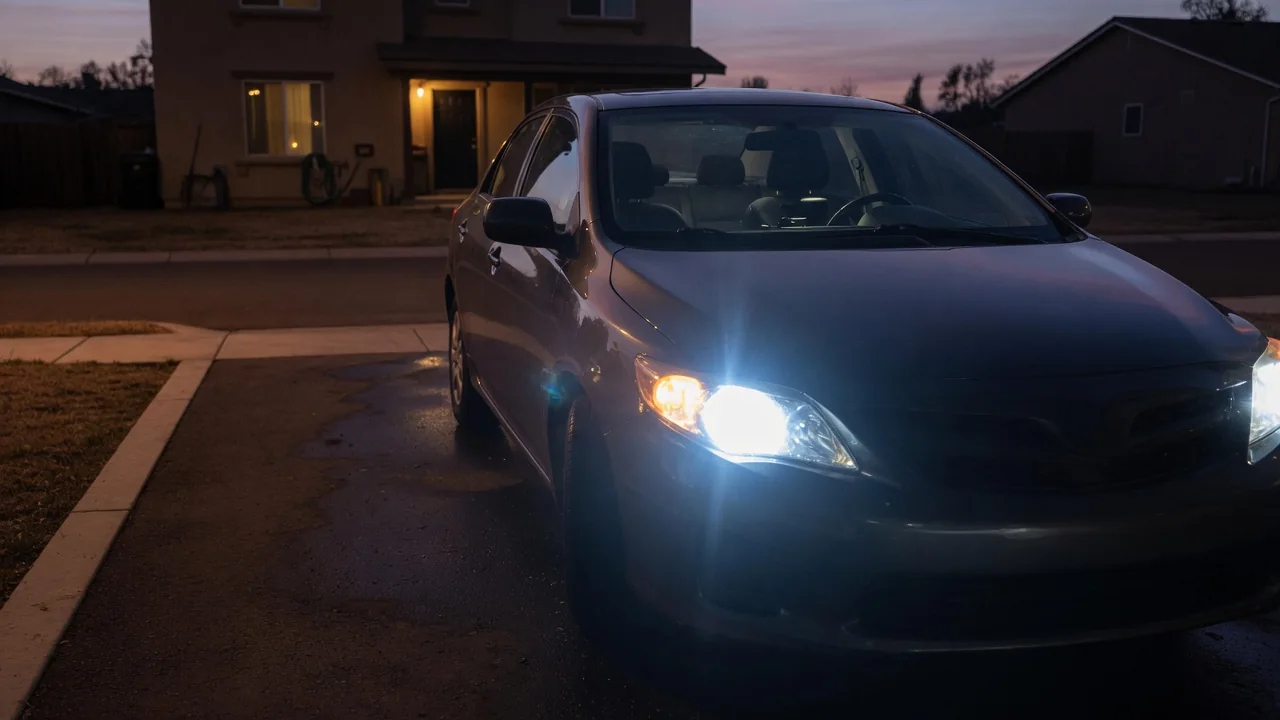
When your low beam headlights are not working but the high beams do, the car can't light the road properly without blinding everyone ahead. The pattern of what works and what doesn't is useful evidence, though. It helps to know why the dipped beam can fail on its own, what one dark side or a total outage suggests, and which checks are safe to do yourself.
Why Low Beams Can Fail While High Beams Still Light Up
Many headlight systems treat the low beam and high beam as separate circuits. Some use a dual-filament bulb such as an H4, with one filament for the dipped beam and another for the high beam, so one can burn out while the other still glows. Other vehicles give each beam its own bulb, fuse, relay or control output. That separation is why the low beams can stop working while the high beams carry on.
Possible causes include burned-out bulbs, a blown low-beam headlight fuse, a failing headlight relay, a worn headlight switch or multifunction switch, corroded connectors, wiring harness damage, or a lighting control module fault. Layouts vary, so confirm your own system in the owner's manual. Working high beams show that power is reaching the headlight area, but they don't identify the failed part. Night driving on high beams alone dazzles other drivers, so treat this as urgent.
Both Low Beams Out vs. Only One Side Dark
When both low beam headlights fail at the same time, suspect something the two sides share, such as a fuse, relay, switch or control circuit. Two bulbs can fail close together, especially if they were installed together, but a simultaneous failure leans toward a shared component. When the low beam is out on one side only, start with that side's bulb, headlight connector or local wiring. Some vehicles also use a separate fuse for each side.
Before any testing, note how the fault behaves. Does the light flicker, come back when you move the stalk or switch, or brighten and dim with engine speed? Switch-sensitive behavior can hint at a poor contact. Changes with engine speed may point to a charging or ground connection issue. Check the dash for bulb-out or lighting warnings too. These clues narrow down where to look, but they don't prove the cause. Electrical testing is still needed.
When High Beams or All Headlights Stop Working Too
If the headlights and high beams are all dead, a single bulb is an unlikely explanation. Losing both high and low beams points toward shared parts: a main headlight fuse, a relay, the headlight switch, a ground connection, or a body or lighting control module. The opposite pattern works the same way in reverse. If the high beams fail but the low beams work, look at the high-beam bulbs or filaments, the high-beam relay and fuse, and the stalk switch.
Check whether other lights misbehave as well. Parking lights, dash lighting and fog lights may share switches, grounds or modules with the headlights, so a wider pattern of dim or dead lamps gives a technician a useful lead. Write down what works and what doesn't before booking the repair. With all the headlights out, the car is unsafe after dark. Don't drive it at night until the fault is fixed and the lights are confirmed working.
LED, HID and Halo Headlight Setups Behave Differently
Factory LED headlights often use built-in light sources powered by an LED headlight driver or module rather than replaceable bulbs. When an LED low beam or high beam stops working, the fix may be a driver, a module or the whole headlight assembly, not a quick bulb swap. Aftermarket LED bulbs and halo rings bring their own problems. Incompatible drivers, loose connections or the car's bulb-check circuits can cause flickering, dash warnings or a beam that cuts out.
Halo headlights where the ring stays lit but the low beam doesn't are a common source of confusion. The halo or accent light usually runs on its own circuit, so a glowing ring says little about the low-beam side. Compatibility depends on the specific product and vehicle, so check it with the parts maker and your manual. HID systems need extra caution. The ballast produces high voltage, so never handle it while it's powered, and leave HID testing to a professional.
Automatic High Beam Systems Not Switching Correctly
Automatic high beam systems generally rely on a forward-facing camera or sensor, a setting on the dash or stalk, and certain speed and lighting conditions before they switch beams on their own. If the system never engages, first confirm the feature is turned on and look for its dash indicator. Keep the windshield clean and clear in front of the camera, because dirt, frost, stickers or cracked glass can block its view.
A camera fault, a software issue or a recent windshield replacement can also stop the system from working properly. Camera recalibration needs dealer or specialist equipment. If a Toyota's automatic high beams aren't switching as expected, check the owner's manual for that model's exact activation conditions rather than relying on generic descriptions. If the high beams also fail when you select them manually, the problem is in the lighting circuit itself, not the automatic feature.
Brand and Model Notes: Jeep, Mazda 6, Outlander, Forester and Toyota
If you're dealing with low beams that won't work on a Jeep, Mazda 6, Mitsubishi Outlander, Subaru Forester or Toyota, start with information for your exact vehicle. Fuse locations, relay layouts and whether the bulbs can be replaced at all vary by model year and trim. The owner's manual fuse diagram and official service information are the reliable references. Advice written for a different year can send you to the wrong fuse or connector.
Your VIN lets a dealer or the manufacturer's official lookup show any open recalls or service bulletins that apply to your vehicle, and that check is worth making before you pay for diagnosis. Many newer vehicles send headlight commands through a body control module rather than a simple switch-and-relay circuit. Diagnosing those systems may need a dealer-level scan tool. Any stored code is evidence to interpret alongside testing, not proof that a part has failed.
How to Fix Low Beams Safely and When to Get Professional Help
To fix low beams that aren't working, start with low-risk steps. Make sure the headlight switch is in the right position, including any auto setting, then park facing a wall and compare both headlights. Check the fuse panel against the owner's manual diagram, and look for moisture, cracks or damage in the housings. Replace a bulb yourself only if the manual allows it. Do it with the vehicle off and the bulbs cool, and never touch bare halogen glass.
If new bulbs and good fuses don't bring the dipped beam back, or a fuse keeps blowing, stop swapping parts and have the circuit professionally tested. Melted connectors, burning smells or repeatedly blown fuses suggest overheating or a short, so get the car inspected before driving further. After any repair, check headlight aim. A new bulb or a disturbed assembly can point the low beams too high, dazzling oncoming drivers and undoing the safety benefit of the repair.