Why Car Headlights Stop Working: Common Causes and Safe Checks
Headlights that stop working turn an ordinary drive into a safety risk. One lamp might be dark, the low beams might quit while the brights still shine, or the headlights and taillights might fail together. Whatever the symptom, what still works is your best clue. Here's why car headlights stop working, how to troubleshoot them safely, and when the fix should go to a professional.
First Checks When Your Car Headlights Are Not Working
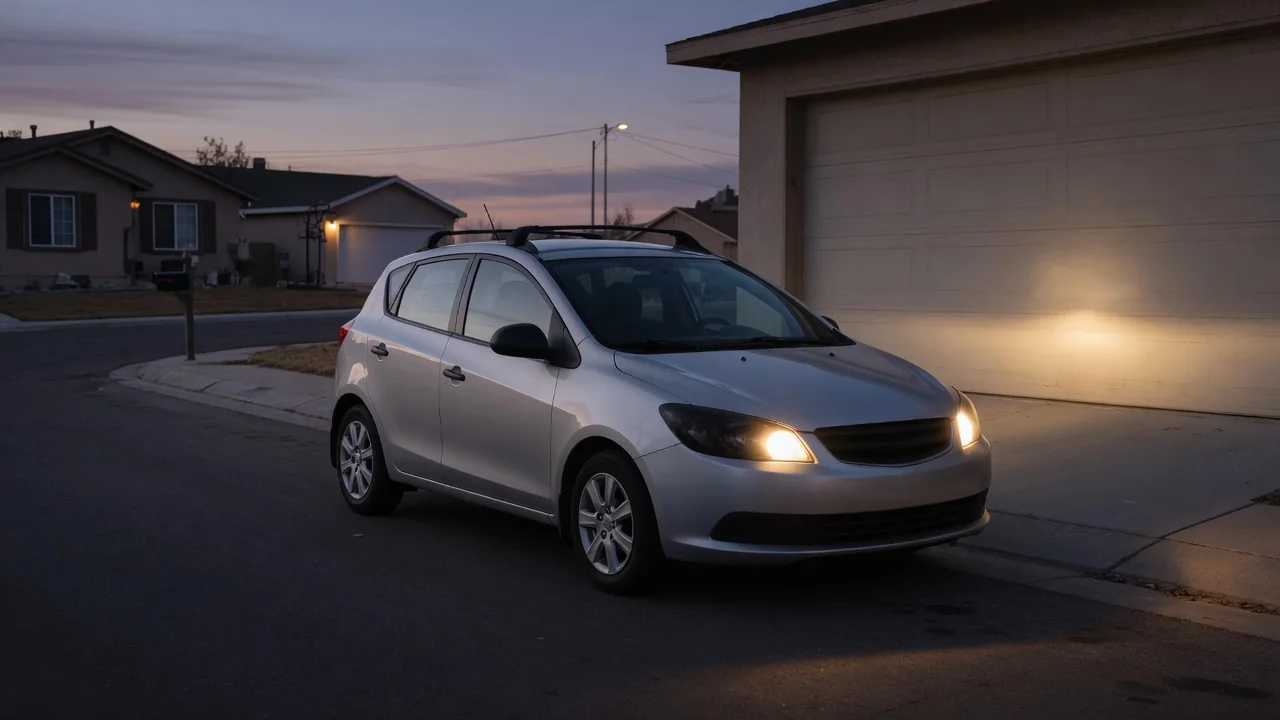
Before you blame a part, check the headlight switch. Many cars have an AUTO setting that uses a light sensor, often on the dashboard near the windshield. In that mode the lights may stay off in daylight, or come on late if a parking pass, dirt, or a dash cover blocks the sensor. Turn the switch to the manual on position and see whether the front headlights respond. Then park safely facing a wall or garage door to see whether both beams are missing or just one.
Next, find the headlight fuses using the fuse chart in your owner's manual. Many vehicles have one fuse box under the hood and another in the cabin. A blown blade fuse usually shows a broken or scorched metal strip through its clear plastic body. Replace it only with a fuse of the same rating, never a higher one. These quick checks narrow things down, but they can't prove the cause, because wiring varies by design. Don't drive at night or in poor visibility until the lights work.
Low Beams Out but High Beams Still Work
When the low beams are out but the high beams still work, start with how your vehicle makes each beam. Some use separate low-beam and high-beam bulbs. Others use a dual-filament bulb, where the dipped beam and main beam share one glass envelope. Still others feed each beam through its own fuse or relay. If both dipped headlights are out while the main beam works, two bulbs failing at the same moment is unlikely. A shared fuse, relay, switch contact, or connector is a better suspect.
If only one low beam is dark, check the bulb on that side and its connector first. Look for corrosion in the bulb socket, which often shows up as green deposits or browned plastic. On some vehicles the low beams stay on when the high beams are switched on, so behavior varies; your owner's manual explains your setup. If a new bulb doesn't help, or the low beams keep failing, have a technician test voltage and grounds with proper equipment instead of swapping parts by guesswork.
One Headlight, Both Headlights, or High Beams Not Working
If one headlight is out, the cause is usually that side's bulb, connector, or local ground, because the working side proves the shared power feed is alive. If both go out at once, look at the parts they share. When only the high beams fail, likely causes include the multifunction switch stalk, a high-beam relay or fuse, or a burned-out high-beam filament. Camera-based automatic high-beam systems such as IntelliBeam add more pieces, and a blocked windshield camera can change when the brights come on.
If the regular headlights and the brights both fail, the problem is probably upstream. It could be a shared power feed, a ground connection, the headlight switch, or a control module that runs both beams. Bulbs on the left and right are usually the same age, so they can burn out within weeks of each other. That's why many owners replace them in pairs. It's a sensible habit, but a fresh pair of bulbs doesn't prove the wiring harness is healthy if a connector has been overheating.
Headlights Out Along With Taillights, Turn Signals, or Blinkers
If the headlights and taillights stop working together, check the parts they share first. Depending on the vehicle, that could be the headlight switch, a common lighting fuse, a relay, or a body control module that switches the exterior lights. Turn signals and blinkers usually run on a separate circuit. So if the headlights are dead but the turn signals still flash, the battery isn't the likely cause. Focus on the headlight power feed and the switch.
If the headlights and turn signals both quit, possible causes include a multifunction switch that controls both, a bad ground shared by the front lamps, or low voltage from a weak battery or charging problem. On vehicles where a control module runs the lights, warning messages and stored codes are manufacturer-specific. Check them against the vehicle's service information, and don't treat a code as proof that a part has failed. When several lighting systems fail at once, a shop with wiring diagrams and a scan tool can trace the fault much faster.
Aftermarket Halo and Projector Headlights That Won't Turn On
Aftermarket halo and projector headlights have their own weak points. Halo rings usually have separate power and ground wires from the main beam, so a halo can stay dark while the low beam works, or the other way around. That's true whether the housings came from Spyder, VLAND, or another maker. Common causes include loose or unplugged connectors and reversed polarity on LED parts. A failed LED driver or HID ballast can also kill a light. Vehicles that monitor bulb circuits may show a bulb-out warning or shut the light off.
Xenon headlights need extra caution. HID ballasts and igniters produce very high voltage, especially at startup, so never open them or probe their wiring. If one seems faulty, replace it as a sealed unit or let a shop diagnose it. Whether a kit works with your vehicle depends on that exact kit and vehicle. Some kits need an extra harness, relay, or decoder to work properly. Follow the kit maker's wiring instructions instead of trusting a universal fix found online.
Model-Specific, Utility, and Off-Road Vehicle Headlight Problems
The basic checks are the same for every vehicle: switch, fuse, relay, bulb, connector, and ground. That's true for a 98 S10, a square body pickup, a G-body Monte Carlo, an MGB or Miata, a PT Cruiser, or a Land Rover Defender or Freelander 2. Heavy trucks, motorhomes, and motorcycles like the Yamaha R1 or V-Strom work the same way. However, fuse locations and wiring differ by model and year. Use your owner's manual or service information for your exact vehicle, not a fix meant for another model.
Utility and off-road machines are often wired differently. A Can-Am Outlander or Commander, Polaris RZR, EZGO golf cart, Bobcat loader, or Husqvarna riding mower may use accessory switches. On some, the lights only get power with the ignition on, or dim at low engine speed. Plow-equipped trucks often have a separate light harness that switches between the truck and plow headlights. Some searches are about video games like Pacific Drive, My Summer Car, or Assetto Corsa, where the game's rules control the lights. Some even concern household products like a Shark vacuum.
How to Fix Headlights Safely and When to Get Professional Help
Most owners can safely replace a bulb or a fuse of the correct rating. Follow the owner's manual, turn the lights and ignition off, and let the bulb cool before you touch it. Don't touch the glass of a halogen bulb with bare hands, because skin oils can create hot spots that shorten its life. Push each connector in until it's fully seated, then make sure the weather seals and dust caps go back on properly. Then test both beams before you drive.
Get professional help if fuses keep blowing, connectors look melted, or flickering affects several systems. The same goes for lighting run by a control module and for HID or matrix LED headlights. After replacing bulbs or headlight assemblies, check headlight aim so your beams don't dazzle oncoming drivers. A shop can adjust it precisely if you're unsure. Lighting laws vary by location, but driving without working headlights is unsafe and may be illegal. Get them working before your next night drive.