How Does a Dynamic Turn Signal Work? LED Segments, Timing, and Service
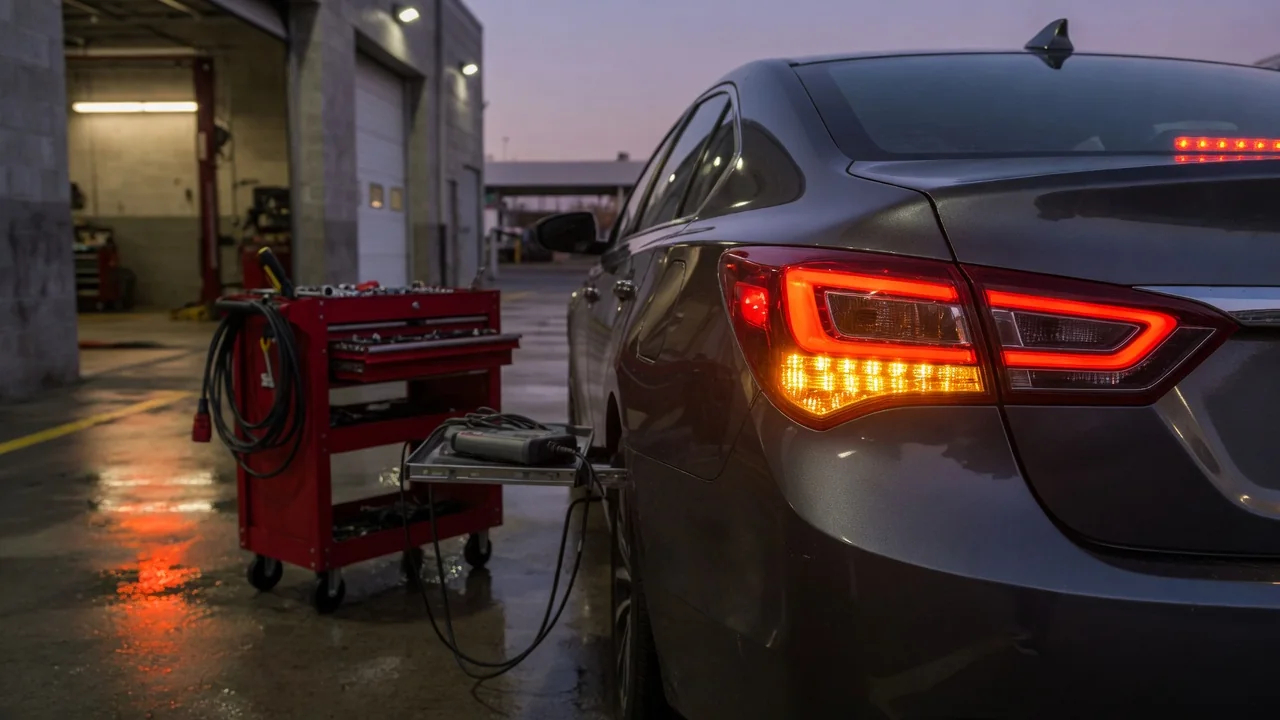
A dynamic turn signal, often called a sequential turn signal, lights its LED segments one after another so the lamp appears to sweep in the direction of the turn. The idea is simple, but the result depends on how the segments are built, how the electronics time the sweep within each flash, and how the system is diagnosed when something goes wrong. This guide explains each part using general principles, since exact designs vary between vehicles and lamp suppliers.
LED Segments: How the Lamp Is Built
The visible turn signal area in a dynamic lamp is divided into a row of segments, each made up of one or more amber LEDs. Light guides, reflectors, or lens optics spread each segment's output so it reads as a band of light rather than a cluster of individual points. When the segments switch on in order, the eye perceives motion across the lamp. LEDs suit this job because they reach full brightness almost instantly when current is applied. A filament bulb needs time to heat up and cool down, so a sequence built from incandescent bulbs would look soft and smeared, while an LED sequence can produce a crisp, clearly defined sweep.
Each segment needs its own switched channel so it can be controlled independently. In many designs, a small driver circuit inside the lamp housing does this work, using LED driver chips that regulate current to every channel. Constant-current regulation matters because LED brightness follows current rather than voltage, and steady current keeps the segments evenly lit as supply voltage and temperature change. Some architectures place the sequencing logic inside the lamp, so the vehicle only sends a basic turn command. Others let a central body control module or lighting controller command the lamp over a data connection. Which approach a given vehicle uses is a design choice, and the service information for that vehicle is the reliable reference.
Timing: How the Sweep Fits Into Each Flash
A dynamic turn signal still flashes on and off like any conventional indicator. The overall flash rhythm comes from the vehicle's turn signal logic, typically in a body control module or a dedicated flasher function, and that rhythm is constrained by lighting regulations in the markets where the vehicle is sold. Sequential turn signal operation happens inside the on phase. When the on phase begins, the innermost segment lights first, then the next, and so on toward the outer edge of the vehicle. Segments usually stay lit once they turn on, so the bar fills progressively until the whole signal area glows. The lamp then holds fully lit for the rest of the on phase, and all segments switch off together.
This structure explains why the sweep must be quick. The sequence has to finish early enough that the lamp spends most of its on time fully illuminated, giving other road users an unmistakable signal. A microcontroller or timing circuit sets the delay between segments, and those delays are fixed in hardware or software by the manufacturer rather than tuned by the owner.
Synchronization is the other half of timing. Front lamps, rear lamps, and any side or mirror repeaters should start each flash together, so the controller that sets the flash rhythm also coordinates when every lamp begins its sequence. In hazard mode, both sides run at once. Some vehicles also use the same segments for welcome or farewell animations when locking or unlocking, but those are separate lighting functions and should not be confused with turn signal operation.
Service: Diagnosing and Repairing Dynamic Turn Signals
Common symptoms include one or more dark segments, a sequence that stalls partway, a lamp that flashes all at once instead of sweeping, a completely dark signal, a faster than normal flash rate on some vehicles, or a lamp fault message on the instrument cluster. Many vehicles monitor turn signal circuits and treat an abnormal current draw or a fault report from the lamp electronics as an outage, which is why a partial failure can trigger the same warning as a completely failed lamp.
Basic diagnosis follows the same logic as other lighting circuits. Check the relevant fuse, inspect the connector for corrosion, bent pins, or water intrusion, and confirm power and ground at the lamp. Look inside the housing for condensation, since moisture can damage driver electronics and LED boards. A scan tool capable of reading the body or lighting module can show stored fault codes and, on some vehicles, run an output test that helps isolate whether the problem lies in the lamp, the wiring, or the controller.
Repair options depend heavily on construction. In many lamps the LEDs and drivers are soldered to boards sealed inside the housing, so a failed segment generally means replacing the lamp assembly rather than an individual LED. Some designs use separately serviceable LED modules or driver units. After replacement, certain vehicles require the new lamp to be registered or coded with a diagnostic tool before it operates correctly or before warnings clear. Retrofit and aftermarket sequential lamps can raise their own issues, including false outage warnings, mismatched synchronization, and legality questions that differ by jurisdiction, so checking local rules and compatibility before installation is sensible.
Practical Implications and Limits
For other road users, the sweep adds a visual cue about direction, but the meaning of the signal is the same as a conventional flash. Drivers and pedestrians respond to the blinking amber light, so a dynamic signal is a refinement of an existing function rather than a new kind of warning. It does not replace the need to signal early and check surroundings before turning or changing lanes.
For owners, the main tradeoffs are cost and repairability. Because the sweep relies on integrated electronics, minor impact damage, a cracked lens, or moisture intrusion can turn into a full lamp replacement. The behavior is also generally not something owners can adjust. If a car that normally sweeps begins flashing as a single block, that change is worth investigating rather than ignoring, since it can indicate a fault or a fallback state, although on some vehicles it may simply reflect equipment level or a configuration setting. Keeping lenses clean and free of ice or road film matters more than usual, because a partly obscured lamp hides the very segments that create the effect. The owner's manual and the manufacturer's service information remain the best guide to how a particular vehicle is meant to behave.