Why Do Tires Have Different Tread Blocks? Grip, Noise and Wear Explained
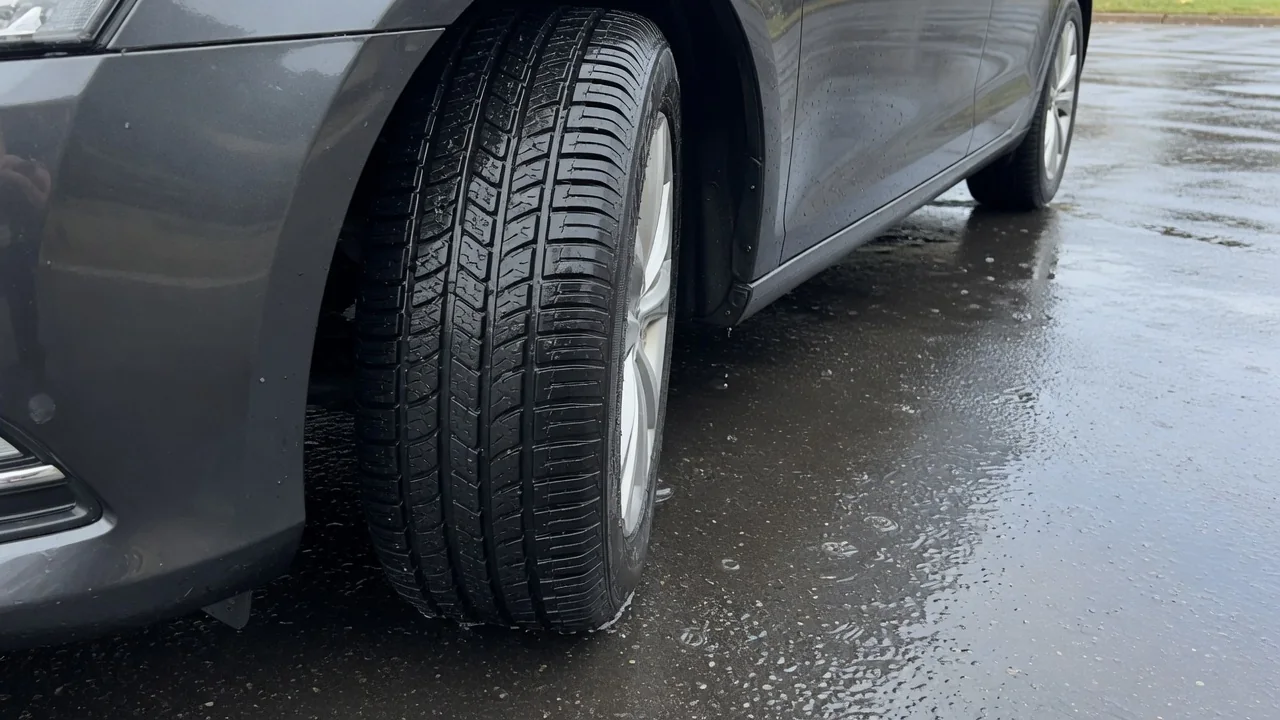
Look closely at almost any tire and you will see that the tread is not a uniform grid of identical shapes. Blocks near the shoulders usually differ from those in the center, and even neighboring blocks around the circumference can vary in length. That variety is deliberate. Tire tread block design balances three competing demands: creating edges that grip the road, keeping noise under control, and helping the tread wear evenly. Those trade-offs explain why tires have different tread blocks.
Grip edges
Much of a tire's traction on wet, snowy or loose surfaces comes from the edges of its tread blocks. As a block rolls into the contact patch, its leading edge can break through a thin film of water and catch on texture in the road surface. More grooves and slots create more edges, and the groove network gives water a path out of the contact patch, which helps the tire resist hydroplaning. The catch is that every groove removes rubber that could otherwise be touching the road, so designers cannot simply add edges without limit.
Where a block sits on the tread matters. The center of the tread carries load during straight-line braking and acceleration, so it often uses continuous ribs or closely spaced blocks that stay stable under those forces. Shoulder blocks take on more work in corners, when load shifts toward the outer edge, so they are commonly larger and stiffer to resist being pushed over. Lateral grooves in the shoulders help move water out to the sides. Sipes, the thin slits cut into many blocks, add extra biting edges without opening large voids, which is why they are common on winter and all-season designs.
Edges come at a cost. Small blocks and dense siping make each piece of rubber more flexible, and a block that bends too much under load can make steering feel less precise on dry pavement. Varying block size and stiffness across the tread lets designers place flexible, edge-rich sections where grip on slippery surfaces matters most and stiffer sections where stability matters more.
Noise
A rolling tire makes noise in several ways. Each block strikes the pavement as it enters the contact patch, and air trapped in the grooves is squeezed and then released as blocks enter and leave contact. Grooves running around the tire can also behave like tubes that resonate. If every block were the same length, these impacts would happen at perfectly regular intervals, concentrating sound energy at one frequency and its harmonics. The result would be a distinct tonal whine that rises with speed.
To avoid that, many tires use pitch sequencing: blocks of several different lengths are arranged around the circumference in a carefully chosen order. Because the impacts no longer arrive at a single steady rhythm, the sound energy is spread across a wider range of frequencies and tends to be heard as a broad hum rather than a sharp tone, which most people find less intrusive. This is one of the main reasons adjacent blocks often differ in length. Designers may also angle groove edges so blocks meet the road gradually, or offset blocks between rows so they do not all strike at once.
Noise control often competes with grip. A deep, open pattern intended for mud or snow generally produces more sound on pavement than a closed, rib-style pattern. How loud a tire seems also depends on things outside the tread, such as road surface, speed and the vehicle's own sound insulation, so the same tire can sound different on different cars.
Wear
Wear is closely tied to how much a block moves. When a flexible block squirms in the contact patch, it slides slightly against the road surface, and that sliding scrubs rubber away. Larger, stiffer blocks move less and tend to wear more slowly. Some designs connect neighboring blocks with tie bars, raised bridges of rubber at the base of a groove, to stiffen them without filling the groove completely.
Block shape also affects how evenly the tread wears. Separate blocks can develop heel-and-toe wear, where one edge of each block wears faster than the other and the tread takes on a sawtooth profile. Rib edges can feather, and shoulders may wear at a different rate from the center because they experience different loads and motion. By tuning the size, angle and stiffness of blocks across the tread width, designers try to keep the center and shoulders wearing at a similar pace. Even wear matters beyond lifespan, because irregular wear tends to increase noise and can change how a tire feels.
Tread behavior also changes over the life of the tire. As blocks get shorter they become stiffer, sipes become shallower and may eventually disappear, and the grooves hold less water. Some designs use sipes that change shape with depth to keep them working longer, but every tread pattern performs differently when worn than when new.
Practical implications and limits
For drivers, the tread pattern is a useful clue to a tire's intended use, but it is not the whole story. Rubber compound, internal construction, size and inflation pressure all shape grip, noise and wear. Two tires that look alike can behave quite differently, so appearance alone is a poor basis for judging performance. The manufacturer's stated intended use and the markings on the sidewall are more reliable guides than the look of the blocks.
A well-designed tread only delivers its intended balance when the tire is maintained. Keep inflation at the pressure listed on the vehicle's placard or in the owner's manual, follow the rotation schedule the vehicle maker recommends, and have the alignment checked if wear looks uneven. Directional and asymmetric patterns must be mounted the right way, using the rotation arrow or the outside marking, and that can limit which rotation patterns are possible. Vehicle-specific factors such as weight distribution, drive layout and suspension geometry also influence how the tread wears, so the same tire may last differently on two different vehicles.
No block layout eliminates the underlying trade-offs. A tire tuned for quiet comfort gives up some traction on snow or loose surfaces, and an aggressive pattern usually costs some refinement on pavement. If you notice a sawtooth feel when running a hand across the tread, or a new hum developing over time, treat it as a prompt to check inflation, alignment and rotation, and replace tires according to legal requirements and the tire maker's guidance.