Why Do Tire Pressures Differ Front to Rear?
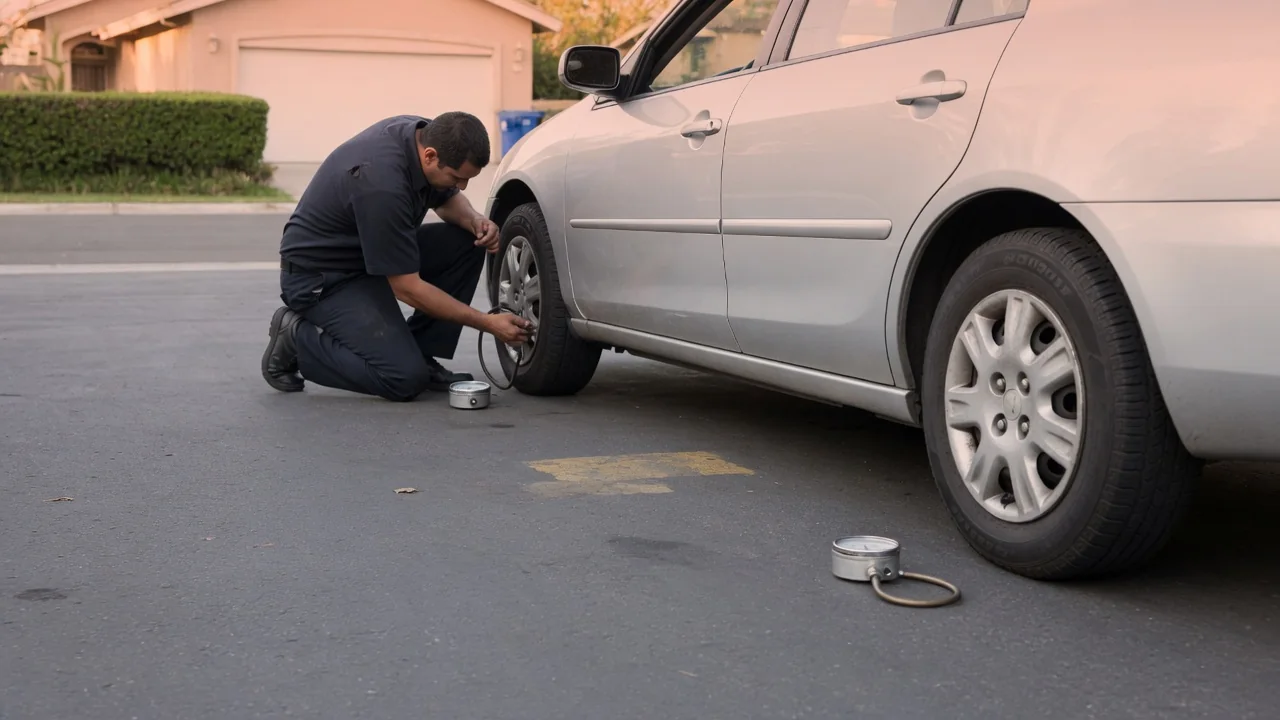
Many drivers notice that the sticker in the door jamb lists one pressure for the front tires and another for the rear, and wonder why do tire pressures differ front to rear. The short answer is that each axle carries a different share of the vehicle's weight, and engineers also use inflation as a tuning tool for handling, ride comfort, and braking stability.
Placard values
The tire and loading placard, usually found on the driver's door jamb, door edge, or inside the fuel filler flap, lists the cold inflation pressures the manufacturer chose for that specific vehicle. When the front and rear numbers differ, it reflects how weight sits on each axle. A front-engine, front-wheel-drive sedan carries its engine and transaxle over the front wheels, so the front tires often get the higher figure. A rear-engine sports car or a pickup rated for heavy cargo may show the opposite pattern.
Those values are not only about supporting weight. Engineers adjust the front-to-rear split to shape how the car responds near the limit of grip, typically favoring mild, predictable understeer over a sudden tail slide. A few pounds of difference changes how much each tire's sidewall flexes and how its contact patch behaves in a corner. Note that the number molded into the tire sidewall is the tire's maximum pressure, not the recommendation, and that placard figures vary by model, trim, and tire size.
Load changes
Axle load is not fixed. Passengers in the back seat, luggage in the trunk, or a trailer's tongue weight all press down mainly on the rear axle, while the front load stays comparatively stable. A tire carrying more weight at the same pressure deflects more, builds more heat, and wears its shoulders faster. That is why some manufacturers publish two sets of figures, one for normal or light use and another for full load, with the rear pressure rising more than the front.
Pickup trucks and vans show this most clearly. An empty bed leaves the rear axle lightly loaded, yet the placard may still specify a high rear pressure because the vehicle is rated to haul substantial cargo. Some owner's manuals also list separate pressures for sustained high-speed driving or towing. Whether your vehicle has a single recommendation or several depends on the make and model, so the placard and manual for that exact vehicle are the references to follow rather than a general rule.
Check when cold
Placard pressures are cold pressures, meaning the tires have sat for several hours or been driven only a short distance. Driving flexes the rubber and warms the air inside, which raises the reading. The front and rear tires do not necessarily warm at the same rate either, since the more heavily loaded or driven axle tends to work harder, and brakes add heat near the wheels. Measuring hot can therefore blur or exaggerate the intended front-to-rear difference.
Checking first thing in the morning, before sunlight hits one side of the car, gives the most consistent comparison. Outside temperature matters as well; pressure falls as the weather cools, so a set that was correct in summer can read low on the first cold morning of autumn. If you must add air to warm tires, avoid bleeding pressure from a hot tire to reach the placard number, because it will end up underinflated once it cools down again.
Everyday Use and Observations
Keeping the specified split has effects you can feel. With the rear tires low relative to the front, the back of the car can feel vague or slow to settle after a lane change. With the fronts low, steering becomes heavier and less precise, and the outer shoulders of the tread wear faster. Too much pressure at either end tends to produce a harsher ride and wear concentrated toward the center of the tread, along with a smaller footprint on wet pavement.
Tire rotation is where staggered pressures are most often forgotten. When wheels move from one axle to the other, each tire needs to be reset to the figure for its new position, not left at its old one. Many tire pressure monitoring systems warn only when a tire falls well below its specification, so a small front-to-rear error may never trigger the dashboard light. A simple gauge check every few weeks catches what the warning lamp will not, including slow leaks.
Limits and Next Steps
The placard assumes the original tire size and type. If the vehicle now wears a different size, a different load rating, or light-truck tires in place of passenger tires, the factory numbers may no longer be appropriate, and the correct pressure should be confirmed with a tire professional using load and inflation data for that tire. Likewise, some cars with different wheel sizes front and rear have pressures tailored to each, and compact spares usually carry their own, much higher requirement.
If one axle repeatedly loses pressure, or a tire wears unevenly even with correct inflation, the cause may lie elsewhere, such as a puncture, a leaking valve stem, a corroded wheel bead seat, or an alignment or suspension problem. A monitoring system warning is a prompt to measure and investigate, not proof that a sensor or tire has failed. Start with the door placard and owner's manual, set each axle accordingly, and have a shop inspect anything that does not hold steady.