What Is Rear Overhang on a Car?
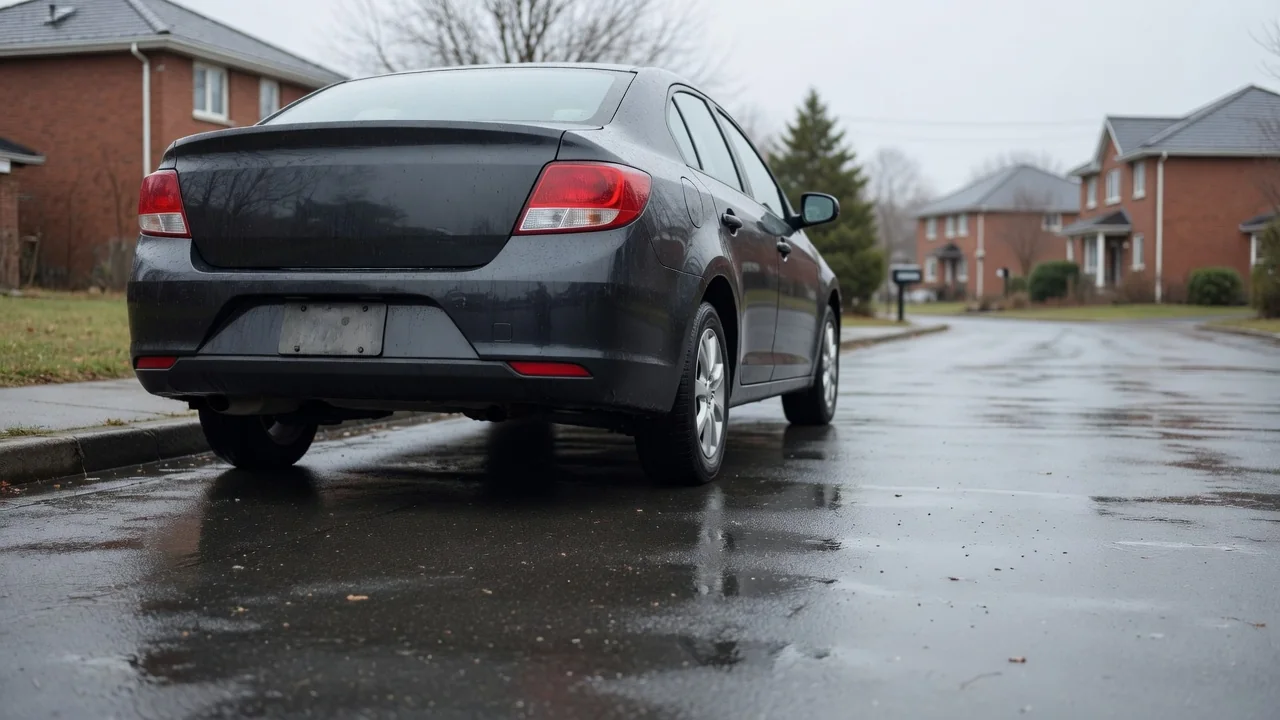
Anyone asking what is rear overhang on a car is really asking about the portion of the body that extends behind the rear wheels. It is the length of bodywork, trunk floor and bumper that hangs past the rear axle, and it shapes how a vehicle carries cargo, swings through corners and fits into tight spaces.
Measurement
Rear overhang is measured horizontally from the centerline of the rear axle, which lines up with the middle of the rear wheel hub, to the rearmost point of the vehicle. That rearmost point is usually the bumper cover, though a tow hitch receiver, a mounted spare tire or a bike rack can extend the practical length beyond the published figure. The measurement is taken along the ground plane, not along the sloping surface of the body, so a raked tailgate does not change the result.
You can estimate it yourself by parking on level pavement, holding a straight edge vertically against the back of the bumper, and measuring along the ground to a point directly below the wheel center. Manufacturers often list overhang in dimension charts alongside wheelbase and overall length, since those three figures together with front overhang add up to the full length. Published numbers differ between body styles of the same model, so a sedan and a wagon sharing a wheelbase may not share an overhang.
Loading and turning
Weight placed behind the rear axle behaves differently from weight placed between the axles. The axle acts like a pivot, so heavy cargo far back in the trunk or bed pushes down on the rear suspension while slightly lifting load off the front tires. A long overhang gives that cargo more leverage. You may notice the rear sitting lower, the headlights aiming higher and the steering feeling lighter when a long-tailed sedan or pickup is loaded near the tailgate rather than close to the axle.
Turning brings a second effect called tail swing. As the vehicle pivots, the body behind the rear wheels sweeps outward in the opposite direction of the turn, and the longer the overhang, the wider that sweep. On most passenger cars the movement is small, but on long pickups, vans, motorhomes and buses it can be enough to brush a post or a neighboring vehicle when pulling away from a curb. Hitch-mounted carriers add to the effect because they lengthen the swinging portion.
Parking clearance
When backing into a space, the rear overhang is the part of the car you cannot see beneath the window line, and it reaches obstacles before the tires do. A wheel stop or curb that halts the rear tires on a short-tailed hatchback may let the bumper of a long-tailed sedan hang over a sidewalk or touch a wall. Backup cameras and parking sensors help, yet they are calibrated to the factory bumper and may not account for a hitch or rack added afterward.
Vertical clearance matters as well. The departure angle is the steepest slope a vehicle can drive off without the rear bodywork scraping, and it is set by the overhang length combined with how high the bumper sits. A long, low tail drags on steep driveway aprons, parking garage ramps and speed humps more readily than a short, high one. Scrape marks under the bumper lip or on the exhaust tips are a visible sign that the car is meeting those transitions at its limit.
Everyday Use and Observations
In daily driving, overhang shows up mostly as a trade between space and maneuverability. Sedans and wagons with a long tail tend to offer a deep trunk or cargo floor, because that volume sits behind the axle. City hatchbacks push the wheels toward the corners, giving up some luggage room in exchange for a body that is easier to place in parallel spots. Looking at a car in profile and comparing the distance behind the rear wheel with the wheel's own diameter gives a quick visual sense.
Proportions also vary by drivetrain layout and purpose. Pickup trucks often carry a noticeable bed length past the axle, and long-bed versions usually extend it further. Off-road oriented SUVs commonly keep the tail short and high to protect departure angle, sometimes mounting the spare on the tailgate, which adds back length. Sports cars with engines behind the cabin may have a pronounced rear deck. None of these patterns is universal, so the dimension chart for the specific vehicle remains the reliable reference.
Limits and Next Steps
Overhang is a description of shape, not a rating. It does not tell you how much weight a vehicle can carry or tow; those limits come from the payload, axle and hitch ratings the manufacturer publishes on the door jamb label and in the owner's manual. A long tail does not mean the rear can be loaded freely, and a short one does not guarantee stable handling under load. Suspension design, tire capacity and weight distribution all contribute alongside the body dimensions.
If the dimension matters for a decision, such as fitting a garage, choosing a hitch carrier or clearing a steep driveway, measure the actual vehicle with its accessories installed and compare that with the space involved. Some regions also regulate how far a load or accessory may project beyond the rear, and the rules differ by jurisdiction, so local requirements are worth checking before carrying long items. For loading questions, placing heavy cargo forward and low and staying within the labeled ratings is the sound starting point.