Why Do Some Dashboards Wrap Around the Driver?
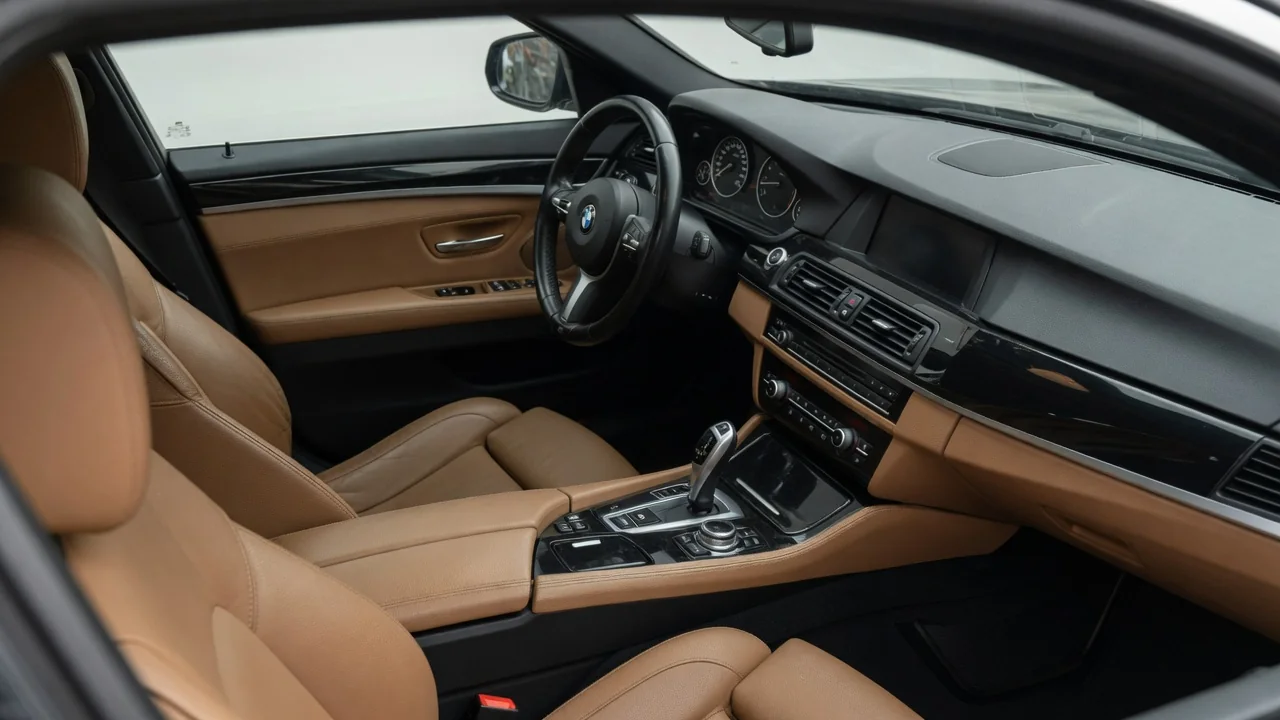
In some cars the dashboard curves toward the driver. The center stack angles in, a console rises beside the driver's leg, and the instrument panel forms a pocket around the steering wheel. This driver-focused dashboard design is a deliberate choice, not only a styling decision. The reasons come down to three linked factors: how easily the driver can reach the controls, how the visual layout directs attention, and what the arrangement gives to or takes from the front passenger.
Control reach
The most practical reason for a wraparound dashboard is reach. When a driver sits with hands on the wheel and back against the seat, the controls they can comfortably operate fall within a roughly curved zone around the shoulder. Designers often call this zone a reach envelope. A flat dashboard running straight across the car can place the far side of the center stack outside that zone, which forces the driver to lean forward or stretch sideways. Angling the center panel toward the driver brings buttons, knobs, and screens back toward the arc the arm naturally follows.
The same logic applies to the center console. When the console is raised and tilted, the gear selector, drive mode controls, and other frequently used switches sit closer to where the driver's inboard hand naturally rests. Less shoulder movement means less time with a hand away from the wheel and less change in posture while driving. Designers can also group controls by how often they are used. Functions needed while moving go nearest the wheel, and occasional settings go farther away.
Reach is not only a matter of distance. A control angled toward the driver is approached more directly, so the wrist bends less and the fingertips meet the face of a button rather than its edge. This can make physical switches easier to find and press without a long look away from the road. It is part of why a cockpit-style layout is associated with a focused driving position.
Visual layout
A wraparound dashboard also shapes where the eyes go. The instrument cluster, the center screen, and in some vehicles a head-up display are arranged to keep key information close to the driver's forward line of sight. When the center display turns toward the driver, it is viewed more nearly head-on. That can reduce off-angle distortion and side reflections and make text easier to read at a glance. The goal is to shorten the distance the eyes travel between the road and the information, and the time needed to refocus.
There is a perceptual side as well. When the dash rises around the driver and trim lines sweep from the door panel across the instrument binnacle and down into the console, it creates a defined space that reads as a cockpit. Interior designers often draw on aircraft and motorsport cabins to signal that a car is built around the act of driving. Contrasting materials, a distinct color on the driver's side, or a hood over the instruments can strengthen this impression even when the physical angle of the panel is modest.
Visual layout also covers what stays out of view. A wraparound panel can conceal ducts and wiring, frame the windshield, and influence how much of the dashboard top reflects in the glass. The drawback is that tall surfaces around the driver can make the cabin feel tighter, so designers weigh a sense of enclosure against an open, airy feel.
Passenger space
Any part of the dashboard turned toward the driver is turned away from the passenger. In a strongly driver-oriented layout, the passenger may see the center screen at a steeper angle and find the climate or audio controls slightly farther away. Some interiors offset this with separate passenger-side controls or voice operation of the infotainment system. The basic trade-off remains, though: the center of the dashboard is prioritized for one occupant.
The console that forms one side of the driver's pocket also acts as a wall for the passenger. A tall, wide console can limit knee and leg room on both sides and make the cabin feel narrower, especially in smaller vehicles. Some passengers, however, like the defined, enclosed seat it creates. The console also often provides storage, cupholders, and an armrest that both front occupants share.
Because of this trade-off, wraparound designs tend to suit vehicles positioned around driving involvement. Vehicles intended for shared or family use more often favor a symmetrical, horizontal dashboard that treats both front seats more equally. This is a general tendency rather than a fixed rule, and many interiors combine elements of both approaches.
Practical implications and limits
For an owner or shopper, the practical question is whether a particular layout suits their body and habits. A reach envelope is designed around a range of drivers, so the actual benefit depends on how the seat, steering wheel, and mirrors are adjusted. A driver who sits much closer or farther than the designers assumed may find the angled controls less convenient than intended. A better guide than photos is to sit in the car in a normal driving position and reach for the controls used most often.
Large touchscreens have changed how much a wraparound shape helps. When most functions move into menus, an angled screen still improves viewing, but the reach advantage depends on how many physical controls remain. A cockpit look created mostly with trim, lighting, and color may also offer little real change in reach. For where specific functions are located in a given vehicle, the owner's manual and the car's actual control layout are the reliable reference.
Manufacturing and packaging also set limits. A vehicle sold in both left-hand-drive and right-hand-drive versions needs a mirrored dashboard, which makes a strongly asymmetric design more complex to produce. Airbag locations, crash structures, and the climate hardware behind the panel restrict how far the dash can be angled or enclosed. In short, a dashboard wraps around the driver to bring controls closer, keep attention forward, and create a focused feel, at some cost to passenger convenience and cabin openness.