Why Do Car Dashboards Develop Sticky Surfaces?
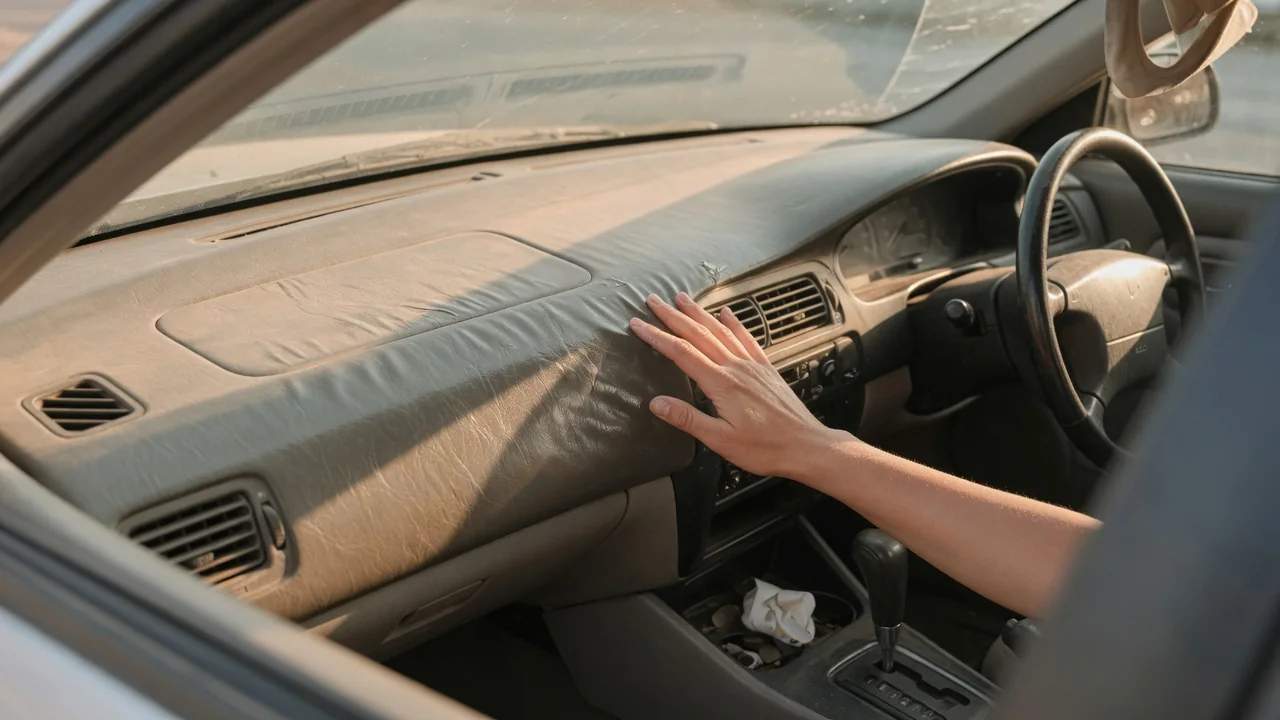
A dashboard that feels tacky, shiny or gummy to the touch is usually showing its age rather than simple dirt. Understanding why car dashboards develop sticky surfaces starts with the materials themselves: plastics, vinyl skins and soft-touch coatings change chemically after years of heat, sunlight and humidity. Knowing what is happening helps owners choose gentle cleaning, realistic repairs and sensible prevention.
Identify the material
Most dashboards are built in layers: a rigid plastic structure, a foam pad in many cases, and an outer skin made of vinyl, thermoplastic or urethane. Some trim pieces also carry a thin soft-touch paint that gives a rubbery, matte feel. Each of these ages differently. Vinyl skins rely on plasticizers to stay flexible, and those oily additives can migrate toward the surface over time, leaving a film that feels greasy and attracts dust.
Soft-touch coatings fail in another way. Heat and moisture can break down the coating's polymer binder, so the finish turns gummy, marks with a fingernail and may transfer onto skin or cloth. Looking closely helps tell the two apart: a migrating film usually wipes away and returns, while a degraded coating smears, peels or shows bare plastic underneath. Material choices vary by manufacturer, model year and trim level, so two similar-looking dashboards can behave very differently.
Cleaning cautions
Because the surface is already chemically weakened, aggressive cleaning often makes stickiness worse. Strong solvents, alcohol-heavy products, degreasers and abrasive pads can soften vinyl further, strip the remaining coating or leave shiny patches that reflect in the windshield. A safer starting point is a soft microfiber cloth lightly dampened with water and a small amount of mild, pH-neutral interior cleaner, tested first on a hidden area such as the lower edge near the door.
Watch what comes off on the cloth. Gray or brown dirt suggests accumulated grime and old dressing, which gentle cleaning can genuinely improve. Color matching the dashboard itself suggests the surface layer is dissolving, and continued rubbing will only remove more material. Silicone-rich protectants deserve caution too, since a glossy layer can mask tackiness briefly while trapping dust. Keep liquids away from airbag seams, speaker grilles, vents and instrument cluster openings, where moisture can reach electronics.
Repair options
Repair choices depend on how deep the damage goes. When only a soft-touch coating on a trim panel has failed, a trim specialist can sometimes remove the degraded finish and refinish the part with an interior-grade coating, restoring an even, dry surface. Where the dashboard skin itself has turned tacky across large areas, refinishing is less predictable, because the underlying material may keep releasing plasticizer and undermine the new finish from below.
Other routes include a fitted dash cover or molded cap, professional re-skinning by an upholstery shop, or replacement of the dashboard pad. A cover is the least invasive and also shades the surface from further sun exposure, though it changes the look of the cabin. Any work near the passenger airbag door needs particular care, since covers, coatings and adhesives must not interfere with deployment. It is also worth asking a dealer whether the manufacturer has issued guidance for that specific vehicle.
Everyday Use and Observations
Day-to-day patterns give useful clues. Stickiness commonly appears first on the top of the dashboard nearest the windshield, where glass concentrates solar heat and ultraviolet light, while shaded lower panels stay dry. Many owners notice the surface feels worse on hot, humid afternoons and firmer on cold mornings. Vehicles parked outdoors in warm climates tend to show the change sooner than garaged ones, though age, material formulation and previous cleaning products all play a part.
Other signs accompany the tackiness. A hazy film building on the inside of the windshield can come from vapors released by interior plastics, a process often called outgassing. Glare may increase as the once-matte finish turns glossy, and phone mounts, papers or parking permits may leave imprints. Simple habits slow the progression: using a windshield sunshade, parking in shade, venting cabin heat where it is safe to do so, and avoiding objects that rest on the softened surface.
Limits and Next Steps
It helps to be realistic about what cleaning can achieve. Material degradation is a chemical change, not a deposit, so no cleaner reverses it; at best, careful cleaning removes surface residue and makes the dashboard more pleasant for a while. If tackiness returns within days or weeks, the material is still breaking down, and repeated scrubbing shortens the life of what remains. At that point, protection or repair becomes a better investment of effort than further products.
A sensible next step is to document the condition with photos, note where the stickiness is concentrated, and confirm the dashboard material through vehicle-specific information or a trusted trim shop. Ask for an assessment before committing to refinishing, since results vary with the substrate and the extent of damage. Severe glare that affects visibility, or deterioration around airbag covers, deserves prompt professional attention. For milder cases, shading the cabin and gentle maintenance may keep the surface acceptable for years.