Why Do Some Cars Use Contrast Stitching?
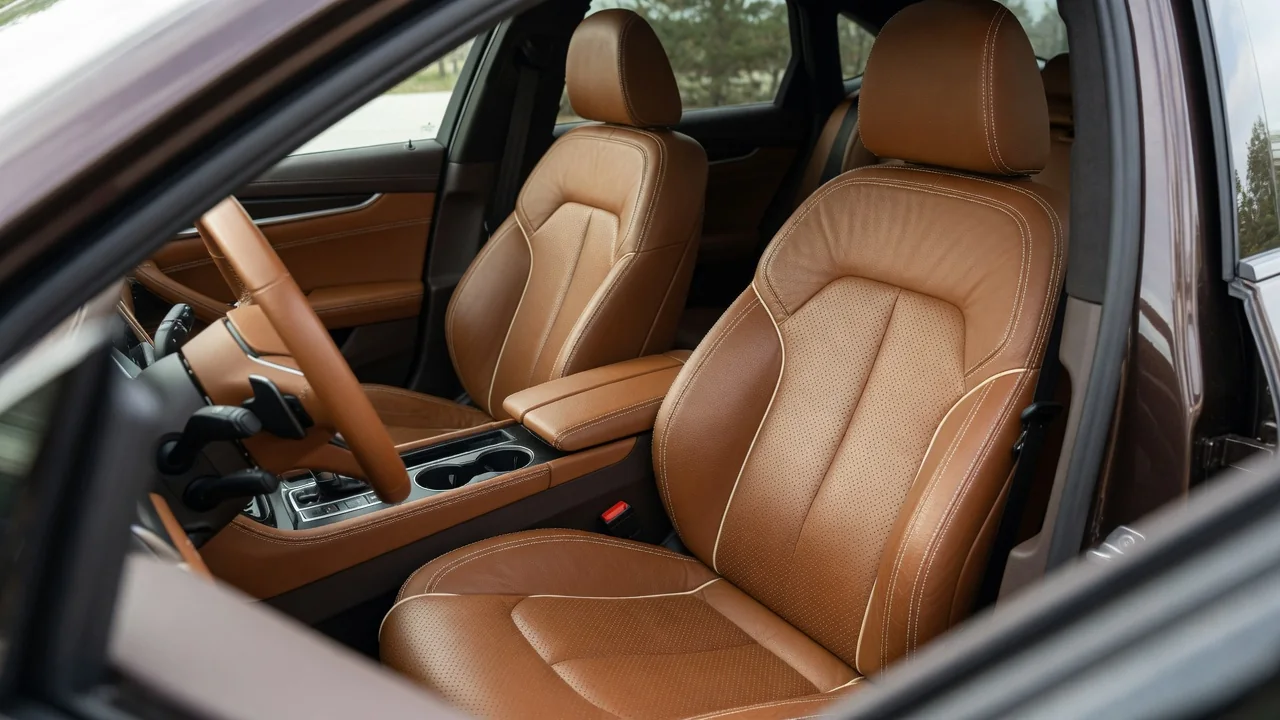
Contrast stitching is thread in a color that stands out from the material it holds together, such as light gray on black leather, red on charcoal fabric, or tan on dark brown. Why do some cars use contrast stitching when matching thread would be less noticeable? Designers want certain seams to be seen. The thread outlines shapes, signals a trim's character, and draws attention to craftsmanship. It still does the structural job every upholstery seam must do.
Visual accent
Interior design relies on lines to guide the eye, and every seat, door panel, and steering wheel is assembled from several separate pieces. When the thread matches the material, those seams fade into the background. When the thread contrasts, each seam becomes a visible line drawn across the surface. Designers use that effect to emphasize contours such as seat bolsters, the curve of a dashboard cover, or the rim of a steering wheel. This makes shapes look more sculpted and three-dimensional. On large dark surfaces, a few lines of lighter thread can also keep the cabin from looking flat or monotonous.
Color is the second reason. Contrast stitching is a simple way to tie an interior together without adding new materials. The same thread color can repeat on the seats, armrests, shift boot, and steering wheel to create a consistent theme. Some manufacturers associate particular thread colors with sporty or upscale trim levels, or echo an exterior paint or badge color inside the cabin. Each brand sets these associations, and they can change between model years, so a thread color has no universal meaning. The trim or package description is the reliable reference for a specific vehicle.
Visible stitching also borrows from traditional leatherwork, such as saddles, shoes, and handbags, where neat seams signal careful construction. In a car, it tells the eye that a surface is cut and wrapped rather than simply molded. Not every visible stitch is structural, however. Some panels use decorative thread that does not hold separate pieces together. Others use stitch patterns molded or embossed directly into plastic or synthetic skins. These approaches deliver a similar look with different levels of construction complexity.
Upholstery seams
A seat cover is made from panels cut to shape, typically a center insert, side bolsters, and borders. These are sewn together and pulled over foam. The joining seam usually sits on the underside, out of sight. On car seats, what most people notice as contrast stitching is often topstitching: one or two rows of stitches running along the visible surface beside the seam. Topstitching holds the seam allowance flat, reinforces the joint, and gives the edge a crisp line. Quilted patterns work differently. Their stitches pass through the cover and a thin padding layer to create raised sections between the thread lines.
Automotive upholstery thread is generally a heavy synthetic type, such as bonded nylon or polyester. It has to resist abrasion, repeated flexing, and sunlight coming through the glass. Durability matters even more for contrast thread, because fading, yellowing, or graying on a light thread is easy to see against a dark seat. Contrast stitching is also unforgiving in production. Uneven stitch spacing, a wandering line, or puckered material can disappear when the thread matches, but these flaws stand out when it does not. Consistent, straight contrast seams depend on careful pattern cutting and sewing.
Some seams also have safety roles. On seats equipped with side airbags, specific seams are designed to open when the airbag deploys. The thread color does not reliably show where those seams are. A label or marking on the seat, along with the owner's manual, identifies seats with built-in airbags.
Care
Thread sits slightly above the surrounding surface and has a fibrous texture, so it collects dirt, body oils, and dye transfer from clothing, especially dark denim. On a light contrast thread, this buildup often becomes visible before the panel itself looks dirty. Routine care starts with vacuuming along the seams with a soft brush attachment. Then wipe the area with a clean, slightly damp microfiber cloth.
For deeper cleaning, use a product made for the specific upholstery material, whether genuine leather, synthetic leather, or fabric, and test it on a hidden spot first. Work a soft-bristled brush gently along the stitch line rather than scrubbing across it, which lifts grime without fraying the fibers. Avoid bleach, strong solvents, and abrasive melamine sponges. They can fuzz the thread, alter its color, or damage the surface around it. Wipe away all residue afterward, because cleaner or conditioner left in the stitch holes can attract dirt or darken the thread. The owner's manual may list approved products or methods for a particular interior.
Inspect the stitching from time to time as well. Loose, broken, or frayed stitches usually appear first in high-wear spots, such as the outer bolster of the driver's seat that rubs during entry and exit. A small break caught early is easier to repair before the seam begins to open.
Practical implications and limits
For a buyer, contrast stitching is a styling choice rather than a functional upgrade. A seam sewn with contrasting thread is not inherently stronger, more comfortable, or longer lasting than one sewn with matching thread. Whether it is worth choosing depends on taste and on how the car will be used. A vehicle that carries children, pets, or work clothing will show soiling along light thread sooner and may need more frequent attention to stay looking fresh.
Repairs carry their own trade-offs. Restitching a damaged contrast seam means matching both the thread color and the stitch pattern, and even a skilled upholstery shop may produce a result that looks slightly different from the factory work. Replacing a whole cover panel can give a closer match but is a larger job. Seats with built-in side airbags deserve extra caution. Seam repairs and seat covers in those areas should follow the manufacturer's procedures, and aftermarket covers should be designed to work with seat-mounted airbags.
Finally, details vary widely. The manufacturer, model, trim, and model year determine which surfaces receive contrast stitching, which colors are offered, and whether the stitching is sewn or simulated. Simulated stitching molded into a panel cannot be restitched at all, so damage there usually means repairing or replacing the panel. When the exact construction matters, the vehicle's documentation or a dealer parts reference is the most dependable source.