Why Do Some Cars Have Electric Water Pumps?
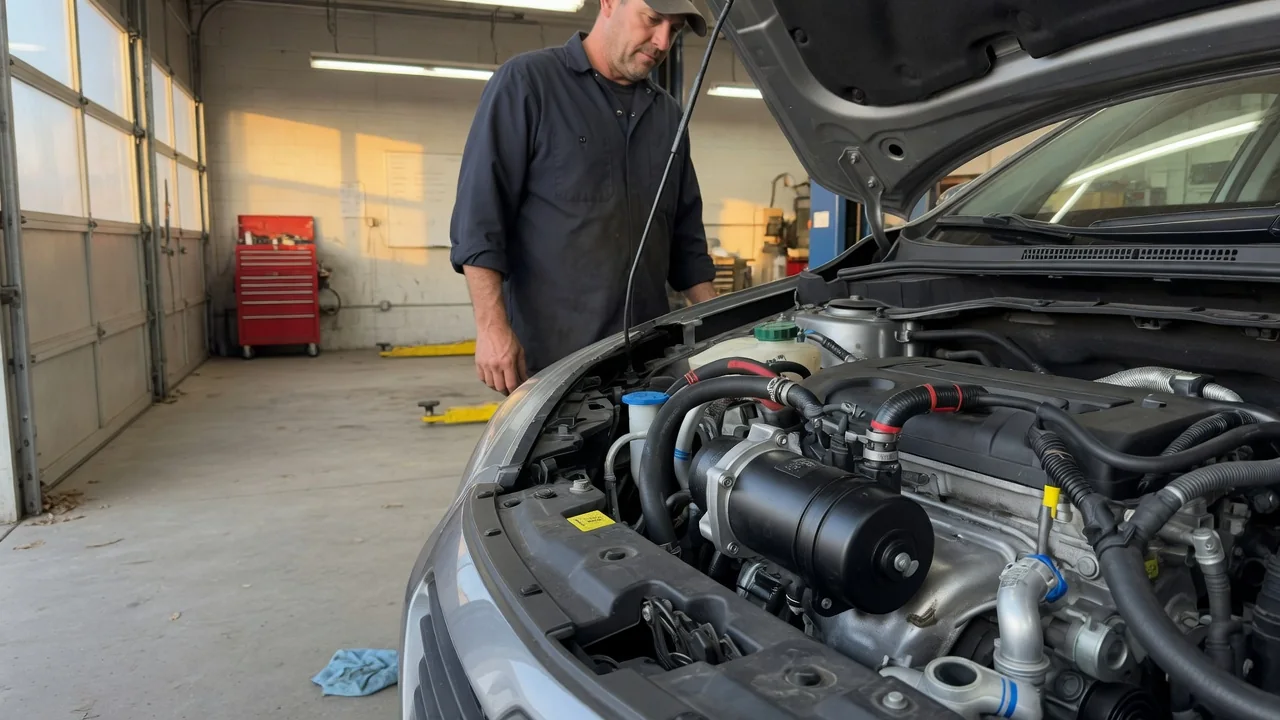
Most engines have traditionally driven their water pump with a belt or gear, so coolant flow rises and falls with engine speed. Some vehicles instead use an electric engine water pump, which is controlled by a computer rather than the crankshaft. The reason some cars have electric water pumps comes down to control. Coolant can move exactly when needed and in the amount needed, including when the engine is not running.
Variable flow: matching coolant to demand
A conventional pump is mechanically tied to the engine, so the pulley or gear ratio fixes its speed to crankshaft speed. Engineers have to size it to move enough coolant in the toughest conditions, such as idling in traffic on a hot day with a heavy load. As a result, at higher engine speeds the pump often moves more coolant than the engine needs, and the thermostat has to restrict flow to keep temperature in range. The pump still absorbs engine power while doing that extra work.
An electric water pump breaks that link. A control module drives its motor and can set pump speed from inputs such as coolant temperature, engine load, ambient temperature and requests for cabin heat. The system can raise flow when heat output is high, even at low engine speed, and cut it back when the engine needs little cooling. Each manufacturer writes its own control strategy, so the details vary between vehicles. The general principle is the same: coolant flow follows thermal demand instead of engine rpm.
Variable flow also helps during warm-up. A cold engine has higher internal friction and typically produces more emissions until it reaches operating temperature. Running the pump slowly, or in some designs pausing circulation briefly, lets the engine warm up faster. Because the pump no longer runs off the accessory drive, it also takes a load off the belt. That slightly reduces parasitic losses and gives designers more freedom in where they mount the pump. Each of these gains is modest, but together they are among the reasons manufacturers adopt the design.
Engine-off cooling
A belt-driven pump stops the moment the engine stops, but the heat does not go away when the ignition is switched off. Hot metal in the cylinder head, and especially in a turbocharger, keeps passing heat into the surrounding coolant and oil. Without circulation, local temperatures can climb after shutdown. This can stress the oil in turbocharger bearings and cause coolant to boil in hot spots. An electric pump can keep coolant moving for a while after the engine is off, often together with the radiator fan, to carry that heat away. On vehicles designed this way, a pump or fan running for a while after parking is normal behavior rather than a fault.
Engine-off cooling matters even more when the engine stops often during a drive. In start-stop systems and hybrids, the combustion engine may shut down at traffic lights or during low-speed driving. A mechanical pump would stop with it, cutting off coolant flow to the heater core and the engine. An electric pump can keep warm coolant circulating, so the cabin stays heated and engine temperature stays steadier for the next restart. Hybrid and fully electric vehicles also commonly have separate cooling loops for the battery, power electronics and electric motors. With no engine to drive a pump, those loops rely on electric pumps. Some vehicles keep a mechanical main pump and add a smaller electric auxiliary pump for jobs such as heater circulation or cooling the turbocharger after shutdown.
Faults: what goes wrong and how it shows
An electric water pump has the same mechanical wear points as any pump, such as bearings and shaft seals. It also has an electric motor and usually built-in control electronics. Faults can therefore come from several directions: a worn seal that leaks coolant, a failed motor or circuit board, a corroded connector, damaged wiring, or a blown fuse or faulty relay in the supply circuit. The engine control module often monitors the pump or communicates with it, so a problem may set a diagnostic trouble code and turn on a warning light or message. A worn mechanical pump often gives notice through noise or a slow leak, but an electronic failure can stop the pump abruptly.
Typical signs include a rising temperature gauge, overheating at idle or in slow traffic, weak or no cabin heat, a coolant warning, or visible coolant leaks near the pump. Some vehicles also reduce engine power to protect the engine. Air in the cooling system deserves particular attention. A pump running with air trapped around it can lose prime, run noisily, or overheat its own seals and electronics. Many vehicles call for a specific bleeding procedure after coolant work, and some require a scan tool to switch the pump on during bleeding.
Overheating does not automatically mean the pump has failed. A stuck thermostat, a faulty temperature sensor, a failed fan, a clogged radiator or simply low coolant can cause similar symptoms. Diagnosis usually starts with reading stored codes and checking power and ground at the pump connector. Where the equipment allows, a technician then commands the pump to run and confirms flow. The vehicle's service information is the reliable reference for test values and procedures.
Practical implications and limits
For owners, the most important consequence is that the cooling system now depends on the electrical system. A weak battery, poor ground connections or charging problems can affect a part that used to need only a healthy belt. Coolant choice matters as well. The coolant specified in the owner's manual protects seals and internal parts, and mixing coolant types or running plain water can shorten pump life. If the pump and fan run after shutdown, that is generally intended operation. Disconnecting the battery or pulling fuses to stop them defeats the protection they provide.
The design also has limits. An electric pump is not inherently more durable than a mechanical one. Replacement can be more involved because the part includes electronics and may need diagnostic equipment for bleeding or testing. It does not replace the rest of the cooling system either: the radiator, thermostat, hoses and fan still have to work. Control logic differs between manufacturers, so normal pump noise, after-run duration and warm-up behavior should be judged against that vehicle's documentation rather than general expectations. Finally, a pump warning or overheating calls for the same caution as any cooling failure. Stopping the engine promptly is far cheaper than repairing heat damage.