Why Do Cars Have Steering Wheel Reach Adjustment?
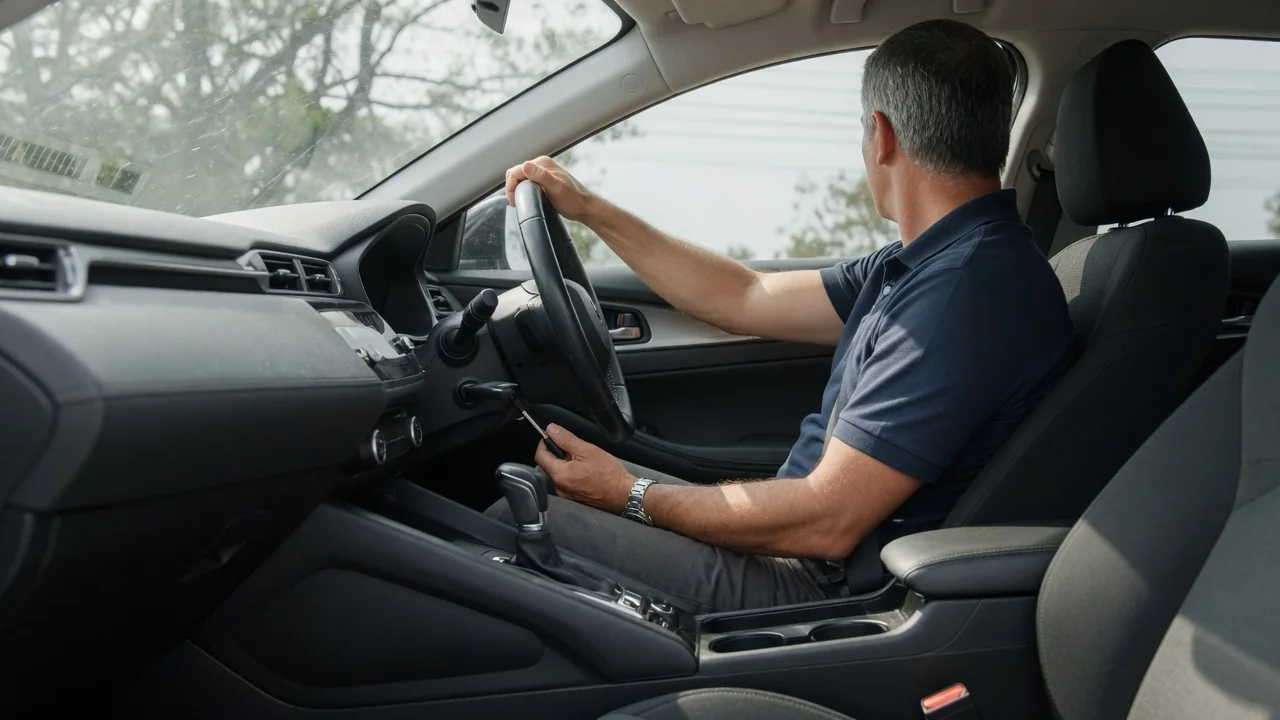
Drivers come in very different shapes, and a seat that slides back and forth cannot fit all of them alone. So why do cars have steering wheel reach adjustment? A telescoping steering column lets the wheel move toward or away from the driver, so arm position, pedal distance, and airbag spacing can each be set properly rather than traded against one another.
Reach versus tilt
Tilt, sometimes called rake, pivots the wheel up and down, changing its height and angle relative to the driver's lap and chest. Reach, or telescoping adjustment, slides the wheel along the axis of the column, moving the rim closer to or farther from the dashboard. The two movements solve different problems: tilt mostly affects thigh clearance and the view of the gauges, while reach determines how far the arms must extend once the seat has been positioned for the pedals.
The distinction matters most for drivers whose proportions are not average. Someone with long legs and shorter arms must slide the seat rearward to work the pedals comfortably, which leaves a fixed wheel too far away; a telescoping column brings it back within reach. A driver with a short lower body and long arms faces the opposite issue. Not every vehicle offers both adjustments, and the range of travel differs between models, so the owner's manual is the reliable reference for a particular car.
Visibility and control access
Wheel position changes what the driver can see. If the rim sits too high or too close, its upper arc can block part of the instrument cluster, hiding the speedometer, warning lamps, or a driver information display. Moving the wheel in or out along the column, combined with a small tilt change, usually shifts the rim so the gauges appear through the opening. In vehicles with a head-up display or a camera-based driver monitoring system, wheel placement can also affect how well those features work.
Reach also governs access to controls. Turn signal and wiper stalks, shift paddles, and steering wheel buttons travel with the column in most designs, so pulling the wheel closer brings them within fingertip range without lifting a hand from the rim. A wheel set too far away encourages drivers to lean forward off the seatback to operate them, which reduces support during cornering and braking. Layouts differ, however, and some vehicles mount certain switches on the dashboard, where column position makes no difference.
Safe adjustment
Adjustment should be done with the vehicle parked, because releasing the column lock while moving lets the wheel shift unexpectedly. Manual columns typically use a lever beneath or beside the column that unlocks both movements together and must be clamped firmly afterward; powered columns use a switch and may store positions with seat memory. After any change, a gentle push and pull on the rim confirms that the column has locked and does not slide.
The airbag is a major reason distance matters. The driver airbag deploys from the wheel hub, and sitting very close to it increases the risk of injury from the inflating bag. Safety guidance commonly suggests keeping generous space between the chest and the hub and aiming the hub toward the chest rather than the face. Reach adjustment helps here: drivers can set the seat where the pedals work and then position the wheel so their arms stay slightly bent, instead of crowding the hub simply to hold the rim.
Everyday Use and Observations
A widely used check is to sit with shoulders against the seatback and extend an arm over the top of the wheel; if the wrist rests on the rim without the shoulder lifting, the distance is about right. With hands on the sides of the rim, elbows should remain comfortably bent. Arms locked straight tend to produce shoulder and neck fatigue on long drives and leave less leverage for a quick steering input, while a cramped position restricts how freely the hands can turn.
Shared vehicles show the benefit most clearly. When two drivers of different heights use one car, each will likely need a different combination of seat and column settings, and memory functions, where fitted, restore both together. Some vehicles also retract the wheel automatically when the ignition is switched off to ease entry and exit, then return it on startup. Drivers may notice that telescoping travel feels short in some cars and generous in others; that range is a design choice that varies by vehicle.
Limits and Next Steps
Reach adjustment cannot fix everything. If the column runs out of travel before a comfortable position is found, seat height, seatback angle, and cushion tilt are the next things to revisit, since each changes the relationship between shoulders and wheel. Some vehicles offer adjustable pedals as well. Aftermarket spacers or modified wheels are a different matter, because the column, airbag, and collapse mechanism are engineered together for crash protection, and changes there deserve professional advice.
A column that will not stay locked, slips under hand pressure, feels loose, or makes clunking noises when adjusted warrants inspection by a qualified technician rather than continued use, since the steering column is a safety-critical assembly. Power columns that stop responding may involve a switch, motor, or electrical fault that needs proper diagnosis. For normal setup questions, the owner's manual describes the lever or switch location and any memory features for that specific vehicle, and a test drive confirms whether the position suits real driving.