Why Do Cars Have More Than One Fuse Box?
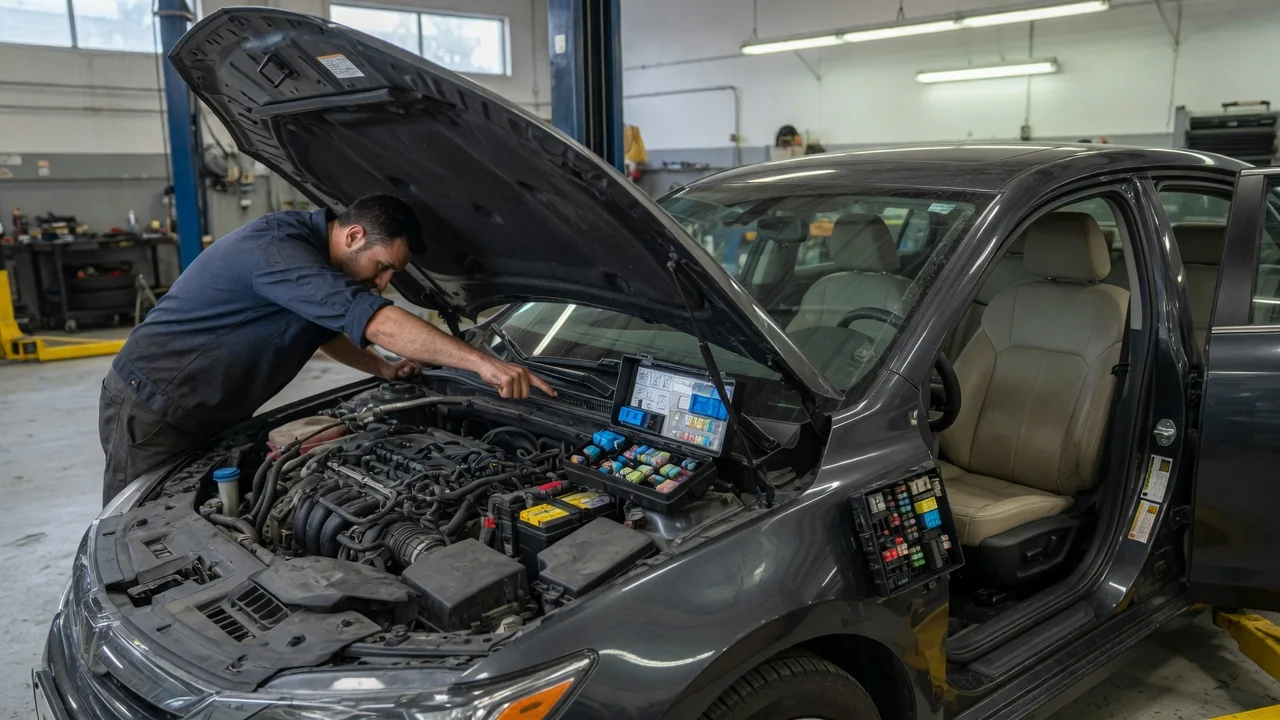
Open the hood of almost any modern car and you will likely find a fuse box. Look under the dashboard or behind a side panel and you will often find another, and sometimes there is a third in the trunk. This is not redundancy. Multiple vehicle fuse boxes are a deliberate part of electrical architecture. They group circuits by current and environment, keep protection close to the loads it serves, and make service manageable. Here is why cars have more than one fuse box and what that means for owners.
Circuit grouping
A fuse protects the wiring, not the device. Its job is to open the circuit before a short or overload heats a wire enough to damage the insulation or start a fire. Each wire is sized for the current its load draws, so the fuses protecting those wires vary widely. Small blade fuses protect circuits such as a dome light or radio memory. Large cartridge or bolt-down fuses guard the main feeds from the battery and alternator. Grouping circuits with similar demands in the same box lets engineers match the box construction, terminal size, and heat handling to the job.
High-current loads are commonly fed from a power distribution box near the battery. These include the starter circuit, radiator fan, ABS pump, headlamps, rear defroster, and blower motor. That box usually also holds the relays that switch those loads. A relay lets a small control current from a switch or module turn on a large current, so heavy wire does not have to run into the cabin. Lower-current comfort and convenience circuits are typically grouped in a cabin box near the switches and modules they serve. Examples include interior lighting, power outlets, audio, the instrument cluster, and many control module feeds.
The boxes are also arranged as a hierarchy. A large fuse in the main box often feeds an entire secondary box, which then splits that supply into smaller protected branches. Because of this staging, a fault in one small branch opens only its own fuse, while the upstream fuse protects the thick cable that carries power between boxes. On many newer vehicles, the cabin box is integrated with a body control module or smart junction box, which combines fuses, relays, and electronic switching in one unit.
Location
Wire length largely determines where a fuse box sits. Every foot of cable adds weight, cost, and resistance, and high-current circuits lose voltage over long runs. A distribution box close to the battery keeps the heaviest cables short. A second box inside the cabin lets dozens of thin circuits branch out to nearby switches and modules, so each one does not have to travel individually from the engine bay. Splitting distribution across several points can reduce total harness size compared with routing everything to one central location.
Environment matters too. An underhood box must tolerate heat, vibration, road spray, and temperature swings, so it usually has a sealed, gasketed, or latched cover. An interior box is protected from the weather and can be less heavily sealed, which suits circuits that do not need that protection. Common interior locations include the end of the dashboard behind a side panel, beneath the steering column, behind the glove box, and a passenger footwell kick panel.
Some vehicles have a third box or more. If the battery is mounted in the trunk or under a seat, a fuse block is often placed near it to protect the cables leaving the battery. A rear-mounted box can also serve circuits concentrated at the back of the vehicle, such as trailer wiring, power liftgates, rear seat heaters, or accessory outlets. Some designs place a fuse assembly directly on the battery terminal. The exact number and placement of boxes vary by manufacturer, model, and equipment level.
Service
Separate boxes make diagnosis easier when you know which one to check. The owner's manual normally shows where every fuse box is located and lists each fuse position, rating, and protected circuit. Many boxes also carry a diagram on the inside of the cover. One platform may be built with different options, though, so a cover diagram can show positions that are empty on a particular vehicle. The manual for the exact model and year is the better reference.
Do basic fuse checks with the ignition and accessories switched off. Many boxes include a plastic fuse puller, and some also hold spare fuses. A replacement must match the original's rating and type, because a higher-rated fuse can let wiring overheat before it opens. If a fuse blows again soon after replacement, the circuit has a short, a failing component, or an overload. That underlying problem needs diagnosis, not another fuse.
Large main fuses, fusible links, and bolt-in cartridge fuses in the underhood or battery-mounted box are a different job. They sit on circuits connected directly to the battery, so service manuals generally call for disconnecting the battery first, and some are not designed as routine owner replacements. Hybrid and electric vehicles have separate protection devices for the high-voltage system, and only trained technicians following manufacturer procedures should service them. The familiar fuse boxes on these vehicles typically handle the conventional low-voltage system.
Practical implications and limits
With several boxes, the first box you open will not always explain a dead circuit. A feature may depend on a fuse in the cabin box and also on an upstream feed fuse or relay under the hood. A fuse that looks intact can still be faulty, since hairline breaks are not always visible. Many blade fuses have small test points on top for checking with a test light or multimeter without removing the fuse.
Not every protected circuit has a replaceable fuse. Some power window and seat motor circuits have used resettable circuit breakers. Newer vehicles increasingly protect certain circuits electronically inside control modules. There, a fault may be stored as a diagnostic trouble code rather than show up as a blown fuse, so a scan tool and the service information become more useful than a fuse puller.
Spare or empty positions also do not make a fuse box a convenient place to add accessories. Tapping into an existing circuit can overload it or interfere with module monitoring. Adding loads without proper protection near the power source removes the safety margin the architecture was designed around. For aftermarket equipment, follow the vehicle manufacturer's guidance or use a dedicated, properly fused feed to keep the original circuit grouping intact.