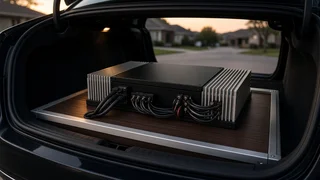
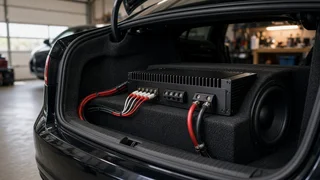
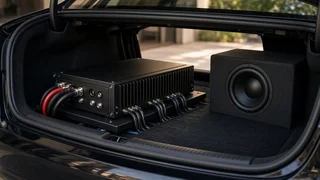
Car audio amplifier fuse
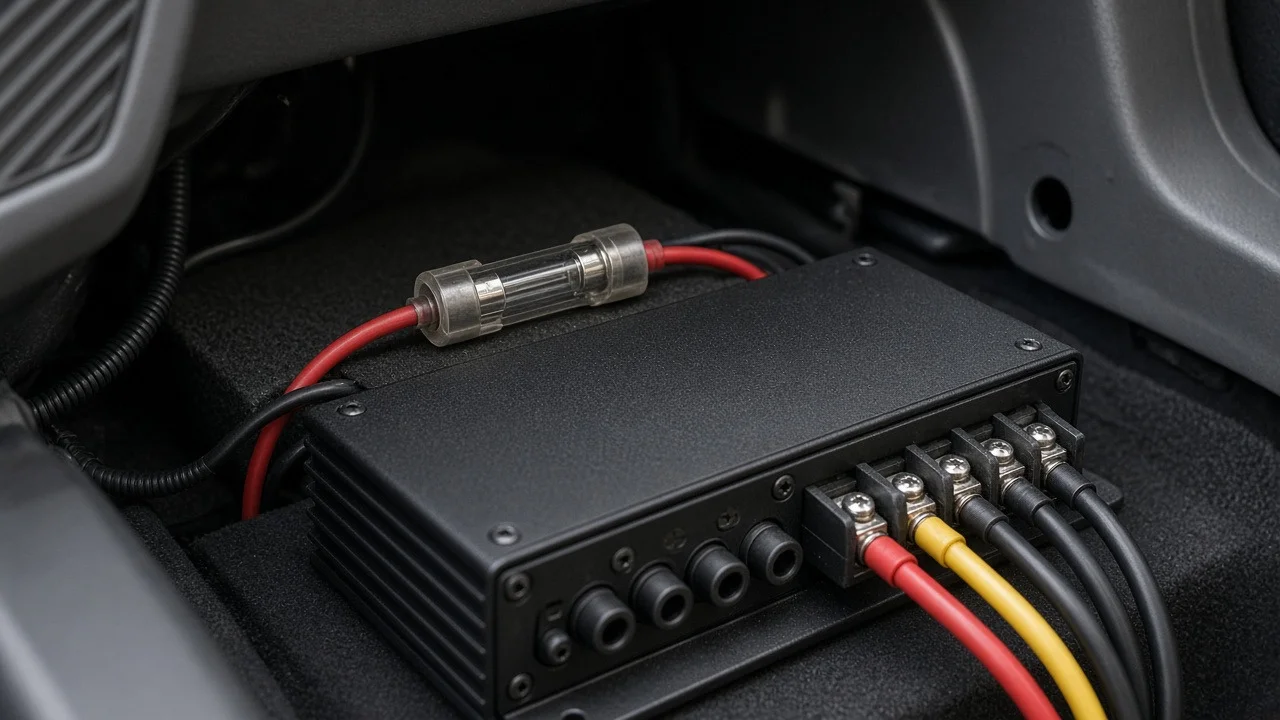
A car audio amplifier fuse is the first line of defense for the amplifier, its power cable, and the vehicle electrical system. When current flowing from the battery exceeds the fuse rating, the fuse link melts and opens the circuit before wiring overheats or the amp sustains damage. Choosing and diagnosing this component involves more than matching a number; the audio source, head unit signal, speaker wiring, signal reception, and overall vehicle integration all shape how much current the system draws. A blown fuse is a symptom of an underlying electrical condition, not simply a failed part to swap.
Essential answer
A car audio amplifier fuse protects the power feed between the battery and amplifier from excessive current. Because an amplifier can draw significant amperage during loud musical passages, the fuse must be sized to the power wire and expected load, not chosen arbitrarily. If the wire shorts against a metal edge or the amplifier develops an internal fault, the fuse opens to stop current before the cable jacket melts or a fire starts. This makes the fuse a circuit-protection device rather than a tuning component.
In most installations, the fuse is placed near the battery on the positive power cable. That location protects the longest run of wire even when the amp is mounted in the trunk or under a seat. If you use a distribution block for multiple amps, each branch may carry its own smaller fuse. A blown fuse typically points to a short, reversed power and ground, an undersized cable, or an amplifier failing internally. Confirm the wiring before replacing the fuse and reapplying power.