Why Can Two Panels on One Car Look Like Different Colors?
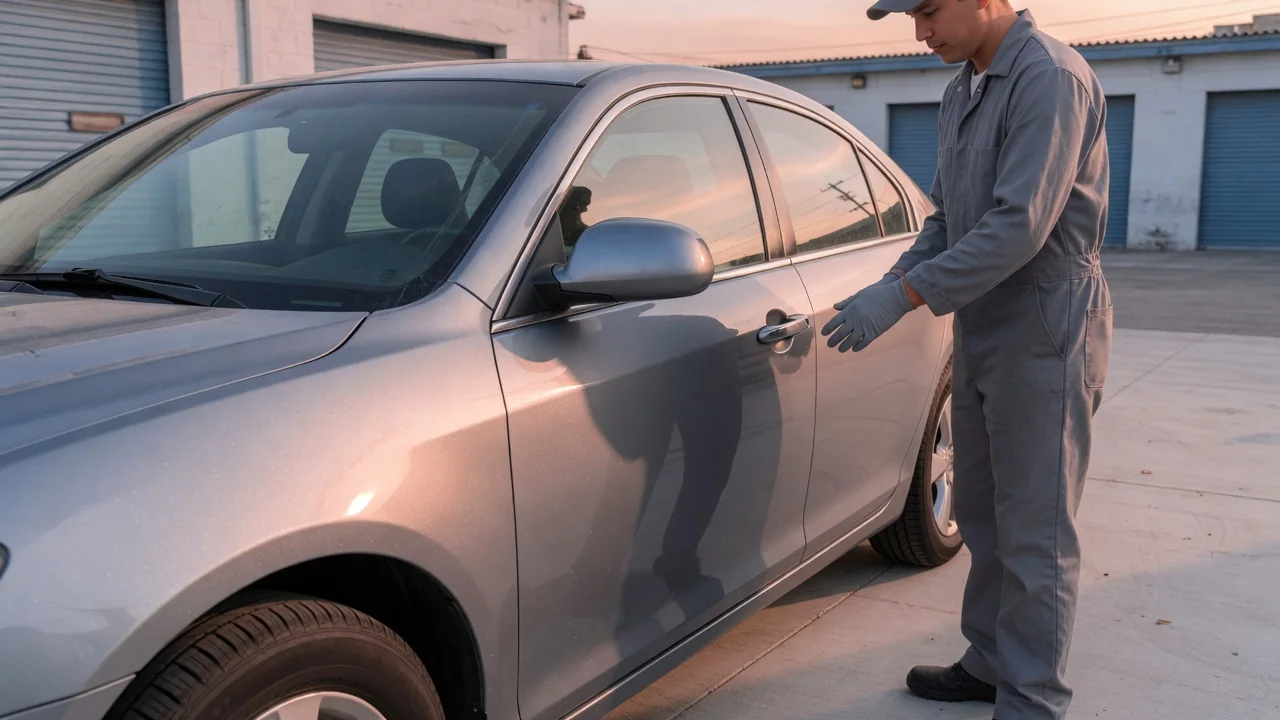
A car panel color mismatch can show up on a vehicle that has never been repaired, and it can also appear after bodywork that was done carefully. Two panels may share the same paint code and still look different because perceived color depends on more than the paint itself. The material underneath, the way the coating was applied, how the finish has aged, and the light and viewing angle all shape what your eyes register.
Material and light
Many modern finishes contain effect pigments such as aluminum flakes or pearlescent particles. These tiny platelets reflect light directionally, so the color you see changes with the angle between the light source, the panel and your eyes. Painters call this change the flop or travel of a color: a silver may look bright when viewed straight on and noticeably darker when viewed at a steep angle. If the flakes in one panel lie flatter or more randomly than in the next panel, the two surfaces can match head-on and diverge from the side, or the reverse. Solid colors without effect pigments are generally less sensitive to angle, though they are not immune to the other factors below.
The substrate matters too. Bumper covers, mirror housings and other plastic parts are often painted separately from metal body panels, sometimes with different primers, adhesion promoters or flexible additives, and not necessarily at the same time or place. Small differences in film build or flake orientation that result from those separate processes can become visible once the parts are bolted together. Panel geometry adds to the effect: a curved bumper corner and a flat door skin sitting side by side present different angles to the same light, so they can read as different shades even when the paint is identical.
Lighting and age complete the picture. Two paint films can match under one light source and look different under another, a phenomenon known as metamerism, which happens when the pigments in each film reflect parts of the spectrum differently. Sunlight, overcast daylight, fluorescent tubes and LED fixtures can each reveal or hide such a difference. Over time, ultraviolet exposure, heat and weathering also change a finish, and horizontal surfaces like the hood and roof usually receive more direct sun than vertical doors. A panel that was replaced or refinished years later starts from a different point in that aging process.
Repair blending
A paint code identifies a color, not an exact recipe for every car wearing it. Paint suppliers often publish several variants of a single code to reflect production differences, and the panels on an older vehicle have aged from their original state. Refinishers therefore treat the code formula as a starting point. They may compare variants against the car, adjust the mix with tints, and spray test cards, often called spray-out cards, to check the result in daylight and at several angles before painting the vehicle. Some shops also use electronic color-measuring instruments to help choose or adjust a formula, though the final judgment is usually visual.
Even a well-matched mix can look wrong if it is applied differently from the original. Spray gun setup, air pressure, distance, overlap, the number of coats, film thickness and the time allowed between coats all influence how effect pigments settle. A wetter application can let flakes lie differently than a drier one, changing lightness and flop. Clearcoat thickness and texture affect gloss and how much orange peel is visible, which in turn changes how the color is perceived. This is why consistent technique matters as much as the formula.
Blending is the main tool for hiding the small differences that remain. Instead of stopping the new color at the edge of the repaired panel, the painter fades the base coat gradually into the adjacent panel or panels, then clears the area so the transition happens across a wider surface. The eye is far less sensitive to a gradual shift than to a hard line at a panel gap. Blending does mean refinishing more area than the damaged part alone, and practical limits apply: the layout of body lines, trim and panel edges determines where a blend can reasonably end.
Inspection
Judging a mismatch fairly starts with clean, dry paint. Dirt, water spots, wax residue and oxidation can all change how a surface reflects light, so compare panels after washing. Then look at the car in more than one setting: direct sun, open shade or overcast sky, and indoor lighting if possible. Walk around the vehicle and view each pair of adjacent panels head-on and from a low, steep angle, since effect colors often reveal differences only at grazing angles. A difference that appears only under one specific light may point to metamerism rather than a wrong color.
Beyond color itself, other clues help explain what you see. Compare surface texture and gloss between panels; a noticeably smoother or rougher finish on one panel can indicate it was refinished. Look for overspray on rubber seals, trim or under-hood components, tape lines along edges, and paint in door jambs or under the hood and trunk lid that differs from the outside. A paint thickness gauge can show whether film build varies between panels, which may suggest added coats, but readings need careful interpretation because original thickness also varies. These observations support conclusions; none of them proves a repair history on its own.
Practical implications and limits
For owners receiving a car back from a body shop, it helps to agree on how the result will be judged before work begins, including whether blending into neighboring panels is planned and under what lighting the match will be checked. A perfect match under every light and angle is not always achievable, particularly with multi-stage pearl colors or a finish that has aged unevenly, so a realistic standard is a match that does not draw attention in normal viewing conditions.
For anyone evaluating a used vehicle, a difference between bumper covers and adjacent fenders may reflect factory processes rather than damage, while a single metal panel that differs in shade and texture is a stronger reason to ask questions or request a professional inspection. The absence of a visible mismatch is not proof that a car was never repainted, either. How a specific model's parts are painted, and which of its colors are harder to match, varies by manufacturer and is not something a general explanation can settle; manufacturer repair information, paint supplier data or a qualified refinisher are the appropriate sources for those details.