What Is a Period-Correct Paint Color?
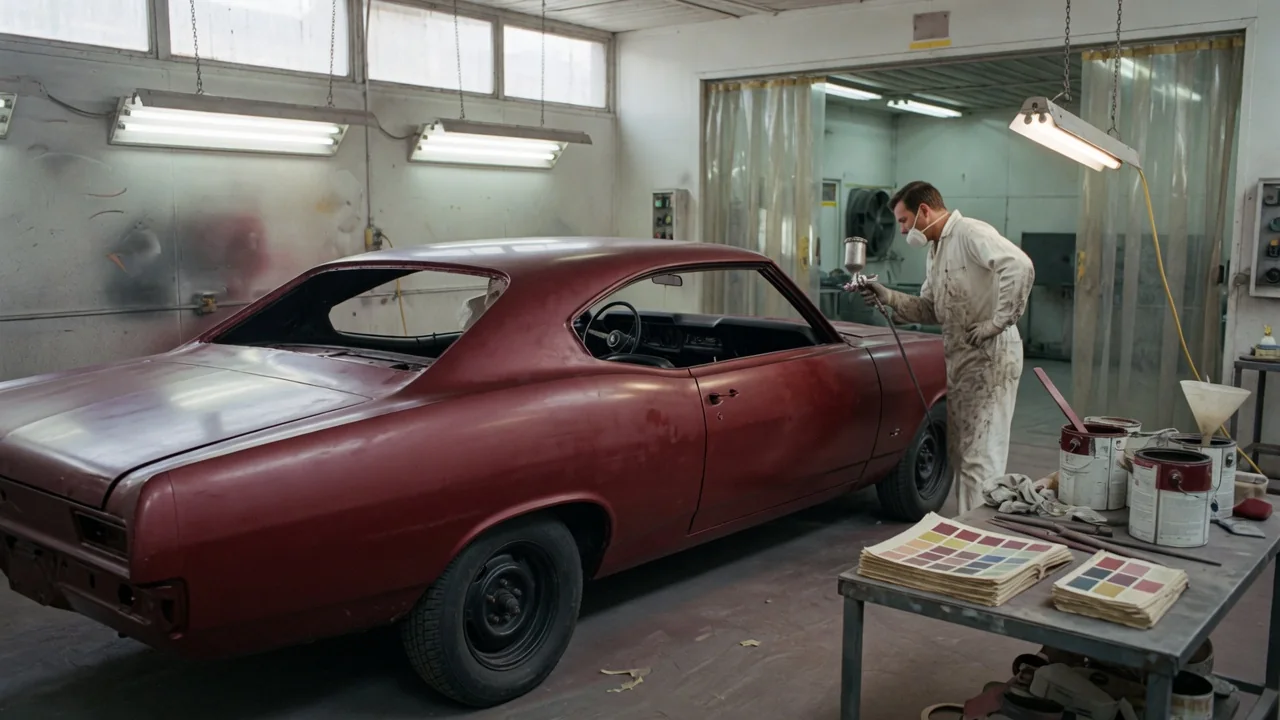
A period-correct paint color is a finish that matches what a manufacturer actually offered for a vehicle in its production era, in both hue and overall appearance. For anyone restoring a classic car, the term sounds simple, but it raises practical questions. Which records prove what was offered? How much did the original shade really vary? How much freedom does an owner have when choosing a color for a restored body?
Historical references
The most direct reference is usually on the car itself. Many manufacturers recorded the factory color as a paint code on a body tag, data plate, cowl tag, door-jamb label or similar identification point. If that code survives and is legible, it identifies the color the car was built with. Decoding it often requires the manufacturer's own documentation for that period, because code systems changed over time and were not standardized across companies. Some cars also retain build sheets, window stickers or original invoices that list the color by name or code.
Printed material from the era adds context. Factory sales brochures, dealer color charts and paint suppliers' chip books showed which colors were offered for a given model line and year. These sources are useful for confirming that a color existed and was available. They are imperfect color records, though, because ink, paper and age all affect how a sample looks today. Many restorers therefore use paper references to confirm the color's name and code, not as an exact visual target.
Original paint that has been protected from sunlight is often the best physical reference. Areas behind trim, under weatherstripping, inside door jambs, beneath dash panels or inside the trunk may hold paint that faded less than exposed panels. These surfaces can still be contaminated, oxidized or previously resprayed. Before treating any one spot as the original standard, check several locations and look for signs of overspray or repair.
Color variation
Even a correctly identified paint code does not describe a single, perfectly fixed color. Production paint was mixed in batches, sometimes supplied by more than one paint company, and applied at different assembly plants with different equipment and procedures. In general, these factors could produce visible differences between cars wearing the same code. They also explain why two original examples may not match exactly when parked side by side.
Metallic and pearl finishes add another layer of variation. Their appearance depends on how the flakes settle and orient in the paint film. That is influenced by spray technique, gun settings, film thickness and drying conditions. The same formula can look lighter or darker, or shift differently with viewing angle, depending on how it was applied. Solid colors are less sensitive to this effect, although film thickness and gloss still change how they look.
Paint chemistry also shapes the look. Older finishes were commonly single-stage lacquers or enamels, while many modern refinish systems use a basecoat with a separate clear coat. Modern reformulations of old colors may use different pigments, because some historical ingredients are no longer used or are restricted. The result can be a close hue with a different depth, gloss or texture. That is why a period-correct color is about overall appearance, not only about a code.
Owner choice
Owners generally choose among a few reasonable definitions of correct. The strictest is the original factory color documented for that specific car. A broader option is any color the manufacturer offered for that model and year. This keeps the car within its era, even though it changes the car's original identity. Some manufacturers also accepted special-order or fleet colors, but claiming one usually requires documentation tied to the individual vehicle.
The right choice depends on the car's purpose. A vehicle intended for judged events may be evaluated against a specific standard, and originality rules differ between clubs and shows. Owners taking that path usually check the relevant judging guidelines before any paint is mixed. A car restored for driving and personal enjoyment allows more latitude, including an era-appropriate color the owner simply prefers. Neither approach is inherently wrong; what matters is knowing which standard applies.
Documentation and resale are worth considering too. Moving a car away from its recorded factory color can matter to some buyers and collectors, while others focus on condition and presentation. Whatever color goes on the car, keep records of the original code, the evidence found on the body and the reasoning behind the final choice. This gives future owners a clear history.
Practical implications and limits
In the shop, period-correct car paint usually depends on matching a physical reference rather than trusting a formula alone. Refinish suppliers can often read a protected original area with a color-measuring instrument and adjust the mix. Spraying test panels with the planned paint system lets the owner judge the color in daylight and indoor lighting before the whole car is painted. Spray the test panels with the same primer color, film build and clear coat plan as the car, because each one affects the final appearance.
Finish character deserves the same attention as hue. A single-stage look, a modest gloss level or some surface texture may suit an older car better than a deep, glassy clear coat. Other owners prefer the durability and shine of modern systems. Local regulations and shop practices can limit which paint types are available, so the most authentic chemistry is not always an option.
There are limits to what can be known. Faded references, inconsistent printed samples and variation in original production mean that no single source guarantees an exact replica of how a color looked when new. A practical goal is a color that is documented, plausible for the era and suited to the owner's plans for the car, backed by records showing how the decision was made.