What Does a Car's Paint Code Tell You?
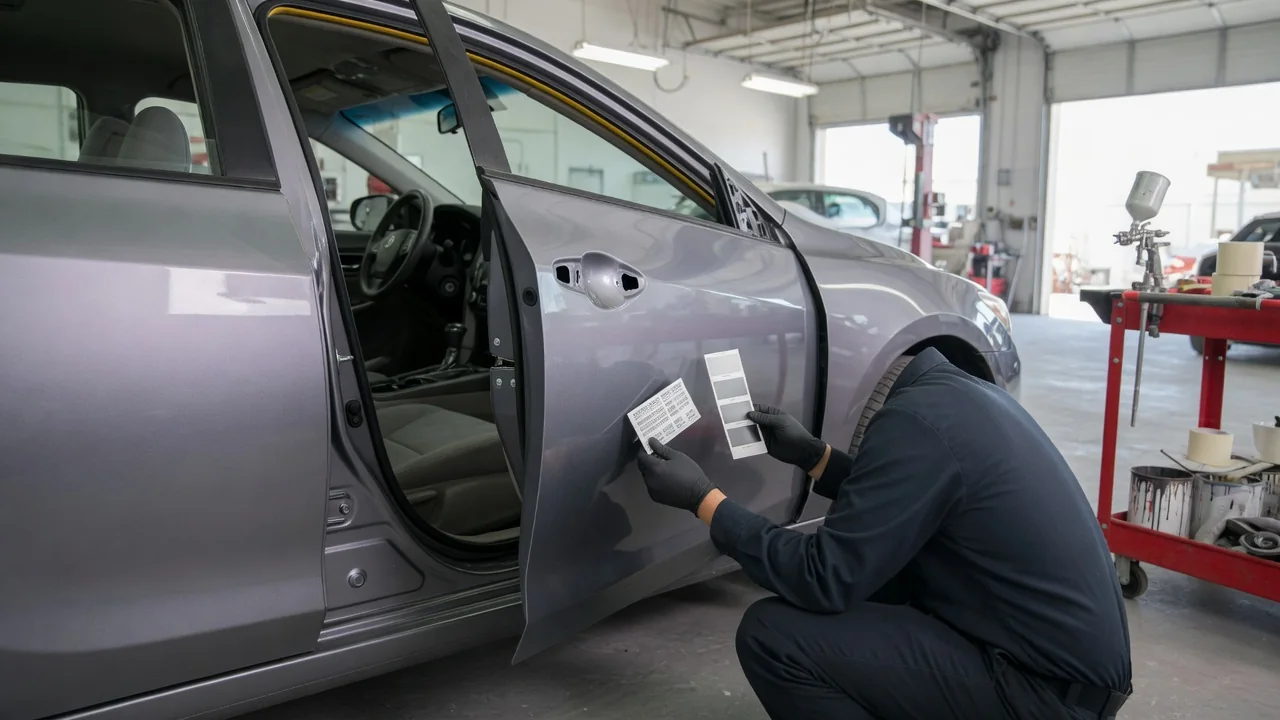
A car's paint code is a short manufacturer identifier that points to the factory color specification the vehicle was built with. It is the starting point for ordering touch-up paint, matching a repaired panel, or confirming that a body part is the right color. Understanding the vehicle paint code meaning also means knowing what it cannot tell you, because a code describes a formula, not the current condition of the finish.
Code Location: Where the Paint Code Is Usually Found
Most manufacturers record the paint code on an identification label or plate attached to the vehicle body. A common area is the driver's side door jamb or door-opening pillar, often on a sticker that also carries certification or tire information. Other locations used by various manufacturers include the underside of the hood, the front of the engine compartment, the inside of the trunk lid, the spare-tire well, and the glove compartment. Because placement varies by brand, model and production period, the owner's manual or a factory service manual is the most reliable guide for a particular vehicle.
Finding the label is only half the task, since the code is rarely marked simply as a paint code. It may appear next to abbreviations such as PAINT, EXT, COLOR, or C/TR, the last of which often combines the exterior color with an interior trim code. Codes are typically short combinations of letters and numbers, and their length and structure differ between manufacturers. Some labels list more than one exterior code, which can indicate a two-tone scheme or a separate roof color. If the label is missing, damaged or painted over, a dealer parts department can often look up the original color from the vehicle identification number using factory build records.
Color Variants: Why One Code Can Look Different
A paint code identifies a color as the manufacturer specified it, but it does not guarantee that every car carrying that code looks identical. Production paint can shift slightly between assembly plants, paint suppliers, model years and individual batches. Spray conditions on the line, film thickness and the way metallic or pearl particles settle all influence how the finished color appears. For this reason, refinish paint suppliers commonly publish more than one formula for a single code, often called variants or alternates, each describing a slightly lighter, darker, coarser or more saturated version of the same color.
Effect colors add another layer of complexity. Metallic finishes contain fine aluminum flakes that reflect light differently depending on their orientation, so the same color can look different when viewed straight on and at a steep angle. Pearl and tri-coat finishes rely on a base color, a translucent mid-coat and a clear coat, which means the visible result depends on how many layers were applied and how thick they are. Marketing color names can also be similar across different codes or change between markets and model years. The code, not the name, is what identifies the specification.
Repair Use: How Owners and Body Shops Rely on the Code
For small chips and scratches, the paint code is what a parts counter or paint retailer needs to supply matching touch-up paint, whether in a brush bottle, pen or aerosol can. For larger repairs, a body shop enters the code into a paint mixing system to retrieve the formula, then selects the variant that best matches the car. Technicians usually confirm that choice by comparing physical color chips or by spraying a test card and checking it against the vehicle in good light, and some shops also use a spectrophotometer to measure the existing finish.
Because even a well-chosen formula may not perfectly match aged or variant paint, refinishers often blend the new color into adjacent panels rather than stopping at a panel edge. Blending gradually transitions new paint into old so that small differences are less noticeable. With tri-coat colors, shops may prepare a let-down panel, a test piece showing how the color changes with different numbers of mid-coat layers, to decide how to reproduce the original appearance. In each of these steps, the code serves as the reference point that narrows the search, while the final match is achieved through comparison and technique.
Practical Implications and Limits
For an owner, a useful habit is recording the code before it is needed, since labels can fade, peel or be lost during collision repair. Quoting the code rather than a color name when ordering parts or paint reduces the chance of receiving the wrong shade. When buying replacement panels that arrive pre-painted, the code is a starting point, but the part should still be compared with the car before installation.
The code also has clear limits. It records what the factory applied, not what is on the car today. Sun exposure, oxidation, washing habits and environmental contamination change the appearance of paint over the years, and a later repaint in a different color does not update the original label. A paint code therefore cannot confirm that a vehicle has never been repainted, and it says nothing about paint thickness, the condition of the clear coat or the quality of earlier repairs. Comparing panels under good light, or having a body professional inspect the finish, answers those questions more reliably.
Some parts may not follow the body code exactly. Bumper covers, mirror housings and other plastic components are painted on a different material, sometimes separately from the body, and can look slightly different even when the specification is the same. Trim pieces, wheels and accent areas may carry their own color designations or none at all on the main label. When a repair involves these components, checking factory parts information or consulting a dealer is more dependable than assuming the body paint code applies to everything on the vehicle.