Identify a car's make and model by VIN or model code
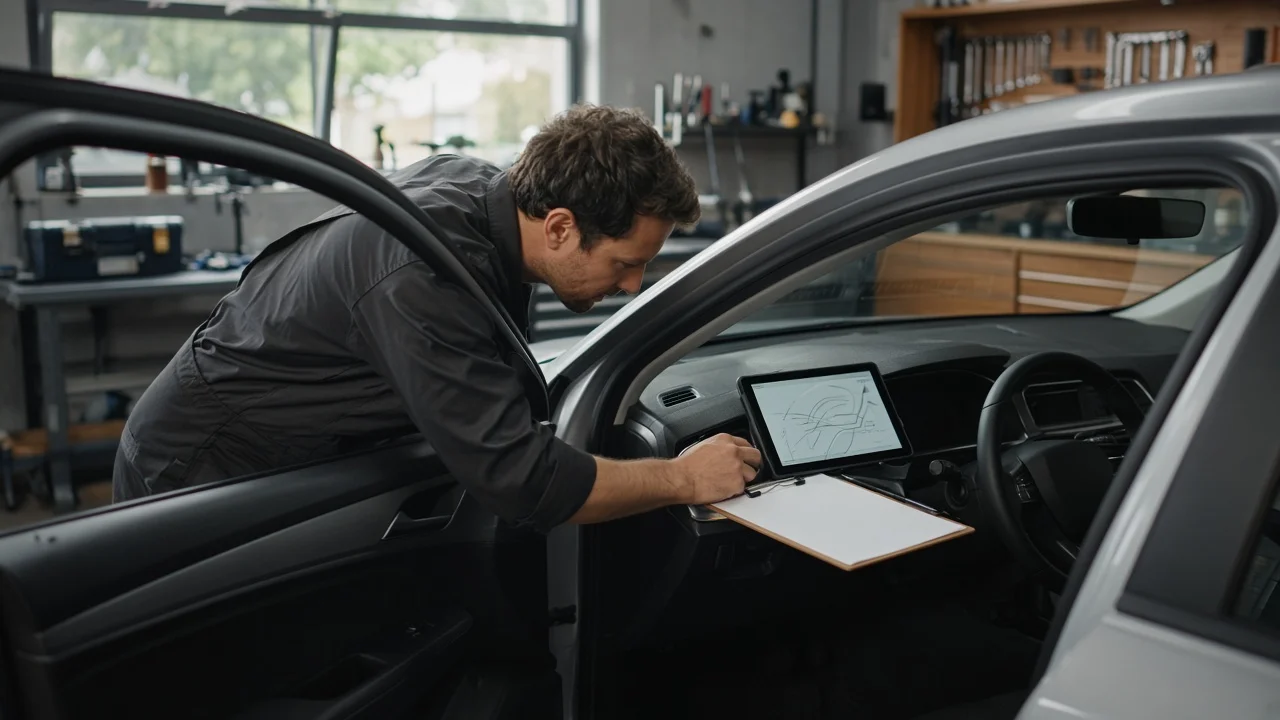
A vehicle identification number (VIN) is usually the most reliable way to confirm a car's make and model. On road vehicles built for the US market from the 1981 model year onward, the VIN is a standardized 17-character code. Its first characters identify the manufacturer, and the middle section describes the vehicle's model and key attributes. A model code is a different identifier. Manufacturers use it internally to designate a specific model, body, or generation, and its format and location are not standardized across brands.
The short answer
To find a car's make and model from its VIN, enter the full 17-character number into a VIN decoder. In the US, NHTSA offers a free public decoder that returns information manufacturers report to the agency. Many automaker, dealer, and parts-catalog tools offer similar lookups. A decoder reliably tells you the manufacturer and model year. It usually also gives the model and often the body style and engine. Exact trim level, factory options, and paint or interior codes are less consistently available from a basic decode, so these may require manufacturer or dealer records.
Two qualifications change this answer. First, vehicles from before the 1981 model year do not follow the 17-character standard. Their VINs vary in length and format by manufacturer, so a generic online decoder may not read them. Second, vehicles built for markets outside North America follow the international VIN framework but may encode details differently. Some imported vehicles, particularly certain Japanese-market cars, are identified by a chassis or frame number rather than a 17-character VIN.
Where to find the VIN
Check that the VIN matches in more than one place before relying on it. Common locations on US-market vehicles include:
Dashboard plate: visible through the windshield at the lower corner on the driver's side. Driver-side door jamb: printed on the manufacturer's certification label, which is often on the B-pillar or door edge. Ownership documents: the title, registration, and insurance card or policy. Service and purchase records: repair invoices, dealer paperwork, and recall notices. Other stampings: some vehicles also carry the VIN on the engine bay, frame, or body panels. Exact locations depend on the manufacturer and model.
The exact placement of labels and stampings varies by make, model year, and body style. Confirm locations against the owner's manual or service documentation for that vehicle.
How a 17-character VIN is structured
A modern VIN is divided into three sections. The VIN standard does not use the letters I, O, and Q, because they are easily confused with the numbers 1 and 0. If you think you see one of those letters, it is almost certainly a digit.
Position: 1 2 3 | 4 5 6 7 8 | 9 | 10 | 11 | 12 13 14 15 16 17; Section: WMI | VDS |check|year|plant| serial number
Positions | Name | What it tells you; 1–3 | World Manufacturer Identifier (WMI) | Manufacturer and, through the first character, the region or country of origin. This is where the make is identified. 4–8 | Vehicle Descriptor Section (VDS) | Model, body type, restraint system, engine, or similar attributes. The meaning of each position is set by the manufacturer. 9 | Check digit | A calculated character used to detect transcription errors. It is required for North American VINs. 10 | Model year | A letter or number that represents the model year. It is not necessarily the production date. 11 | Plant code | The assembly plant, as defined by the manufacturer. 12–17 | Sequential number | The production serial number that makes the VIN unique.
Positions 4 through 8 identify the model, so you cannot read them with one universal key. The same character in the same position can mean different things for different manufacturers, or for the same manufacturer in different years. This is why a decoder that draws on manufacturer-supplied data is more dependable than decoding by hand.
The model-year character in position 10 follows a repeating cycle, so the same character can stand for two years several decades apart. Use the vehicle's general age and other VIN details to tell the possibilities apart. A decoder handles this automatically for vehicles in its database.
What a model code is and how it differs from the VIN
Manufacturers use model codes, chassis codes, and platform codes internally to tell vehicles apart, and enthusiasts and parts suppliers often use them too. The terms overlap, but they usually mean different things:
Model code: a manufacturer designation for a specific model variant. It often reflects body style, drivetrain, or engine. Chassis code: a designation for a particular generation or body of a model. Owners and parts catalogs often use it to separate generations that share a model name. Platform code: a designation for the underlying engineering architecture. One platform may be shared by several different models, sometimes across brands within the same group.
A VIN identifies one individual vehicle, and its format is standardized. A model code identifies a type of vehicle, and its format is set by each manufacturer. Decoding a VIN sometimes reveals the model or chassis code, but not always. Many owners look up the model code when buying parts, because two cars with the same model name and year can belong to different generations or variants.
Where to find a model or chassis code
There is no single standard location for a model code. Depending on the manufacturer and market, it may appear in any of these places:
An identification plate in the engine bay or on a door jamb. The certification label or a separate manufacturer label near it. A service-parts or option label, sometimes inside the glovebox, trunk, or spare-tire area on certain makes. The owner's manual, window sticker, or original sales documents. Dealer or parts-catalog lookups that convert a VIN into the matching model and chassis code.
On some imported vehicles, especially certain Japanese-market cars, the frame number begins with a prefix that serves as the chassis code. This differs from a North American 17-character VIN, and it may not decode in US-focused tools.
Avoiding common mix-ups
VIN versus engine number: an engine may carry its own serial or code. That number identifies the engine, not the vehicle. VIN versus paint or trim codes: these short codes on the certification or option label describe color and interior, not the model. Model year versus build date: the 10th VIN character shows the model year. The certification label usually shows the month and year of manufacture, which can fall in the preceding calendar year. Model name versus model code: a single model name can cover several generations or chassis codes. The code is often the more precise identifier.
Limits of a VIN lookup
A free VIN decode confirms what the manufacturer encoded at the factory. It cannot confirm the car's current condition, later engine or body swaps, or whether the VIN plate has been tampered with. Results are only as complete as the manufacturer's reported data. Older, low-volume, grey-import, and pre-1981 vehicles may return partial or no results. If the decoder returns an error, check first for a mistyped character, then compare the VIN across the dashboard, door label, and documents. If the VINs on the car and its paperwork do not match, have the vehicle inspected before you buy it or register it.
Note on sources: this guide describes the general VIN structure used in the US and widely documented decoding practice. It does not cover make-specific code tables. For exact model-code meanings and label locations, use documentation for the specific manufacturer, model year, and market.