Why Does a Car's Paint Look Different Under Streetlights?
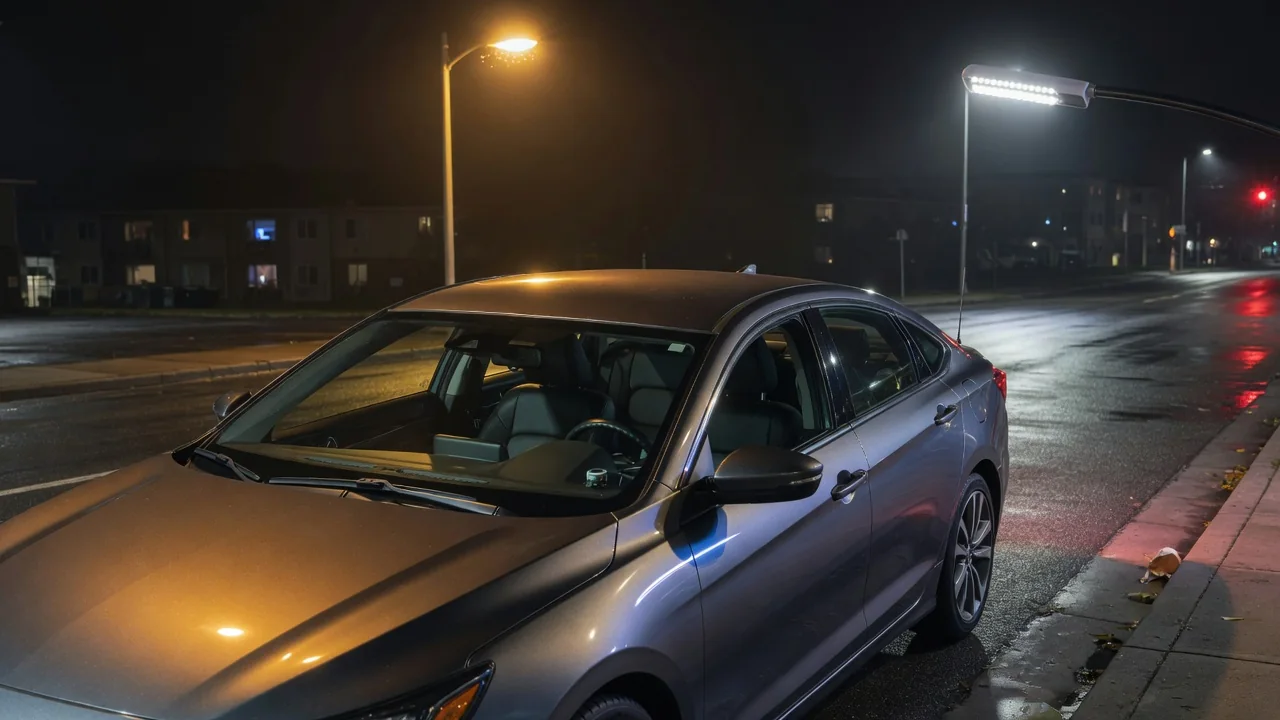
A car that looks deep red in the afternoon can turn brownish or almost black under a streetlight, and a silver metallic finish might take on an orange or bluish cast. The paint has not changed. What has changed is the light reaching it and the way your eyes process that light. Car paint color at night comes down to three things: the spectrum of the light source, how the finish reflects it, and how you check the true color.
Light Spectrum
Paint does not produce color by itself. Its pigments absorb some wavelengths of light and reflect others, and the color you see is the mix of wavelengths that reaches your eye. Daylight contains a broad, fairly continuous spread of wavelengths across the visible spectrum, so pigments have the full range to work with. A red paint reflects the long red wavelengths present in sunlight, and a blue paint reflects the shorter blue ones. When a light source is missing part of the spectrum, a pigment cannot reflect what is not there.
Streetlights are often far from daylight. High-pressure sodium lamps, still used in many areas, put most of their energy into the yellow-orange range and provide comparatively little blue or green. Under them, blue and green cars can look dull gray or nearly black, reds can shift toward brown, and whites and silvers pick up an amber tint. Low-pressure sodium lamps, now less common, emit nearly a single yellow color, so almost every paint looks like a shade of yellow-gray. LED streetlights have a broader spectrum, but their output varies widely. Many have a cool, bluish white character, and a bright white light can still reproduce colors less faithfully than daylight.
Lighting engineers describe this with color rendering, often expressed as a color rendering index, which indicates how faithfully a source reveals colors compared with a reference light. A related effect, metamerism, means two colors that match under one light can look different under another. Two panels painted with slightly different pigment mixes may look identical in sunlight yet separate noticeably under a streetlight, or the reverse.
Surface Reflection
Automotive finishes are layered, and each layer handles light differently. On most modern cars, a colored base coat sits under a transparent clear coat. Some light reflects straight off the glossy clear coat like a mirror. This specular reflection carries the color of the lamp, not the paint. The rest passes into the base coat, where pigments absorb and scatter it, producing the diffuse reflection we read as the car's color. Daylight from an open sky arrives from many directions, so diffuse color dominates. A streetlight is a small, intense overhead source, which creates sharp highlights surrounded by darker areas where little light is returned toward the viewer.
Effect paints amplify this. Metallic finishes contain small aluminum flakes that act like tiny mirrors, so their brightness depends strongly on the angle between the light, the panel and your eye. Pearlescent or mica finishes use interference pigments that can change hue with viewing angle, a property often called color flop or color travel. Under a single overhead lamp, the flakes are lit from one direction only, so one part of a panel can look bright along a curve while an area a few inches away looks flat or dark. Solid, non-metallic colors are less angle-sensitive, although their gloss still produces highlights.
Your vision also changes in dim conditions. As light levels drop, the eye relies more on rod cells, which are most sensitive to blue-green light and do not distinguish color well. This shift, known as the Purkinje effect, makes reds appear darker relative to blues and greens and reduces overall color saturation, adding to the changes caused by the lamp itself.
Checking Color
To see a car's true color, view it in natural daylight, ideally on a bright overcast day or in open shade, where light is diffuse and broad in spectrum. Early morning and late afternoon sun is warmer and can tint the finish, while direct midday sun can create glare. Clean the area first, since road film and residue change how the surface reflects. Then look at each panel from several angles, including straight on and at a low angle, because metallic and pearl finishes may reveal a mismatch only from certain positions.
For identification rather than appearance, rely on the paint code. Manufacturers typically record it on a label or plate on the vehicle, often in a door jamb or under the hood, though the location and format vary by brand and model; the owner's documentation or a dealer can help find it. The code identifies the factory color, but it does not account for fading, variants within the same code or previous repairs, so it is a starting point rather than proof of an exact match.
Body shops verifying a match generally go further. Common practices include spraying test cards and comparing them against the car, inspecting under lamps designed to approximate daylight, and measuring the finish with a spectrophotometer that records reflectance across wavelengths. Comparing under more than one type of light helps catch metameric mismatches before they show up at night.
Practical Implications and Limits
These effects matter most when you are making a decision based on how a car looks. Inspecting a used vehicle under parking lot or street lighting can hide repainted panels, mismatched bumpers and faded areas, or it can make a sound finish look patchy. Choosing a color from a car seen only at night carries a similar risk. If appearance affects the decision, arrange a daytime viewing before committing, and treat impressions formed under artificial light as provisional.
Photographs add their own variables. A phone or camera adjusts white balance automatically and may try to neutralize the orange cast of sodium lighting or the blue tint of some LEDs. The result can match neither what you saw in person nor the car's daylight color, so night photos are weak evidence of what a finish really looks like.
Understanding the mechanisms explains why a color shifts, but it cannot predict exactly how a particular finish will look under a particular lamp. That depends on the specific pigments, flake type, clear coat condition and light source involved. Night appearance is also not a measure of paint quality on its own; a car that looks odd under streetlights may have a perfectly sound finish. When an exact match matters, such as for a repair or touch-up, a professional assessment under controlled lighting is more reliable than any visual judgment made after dark.