Why Do Cars Use Different Color Temperatures in Lighting?
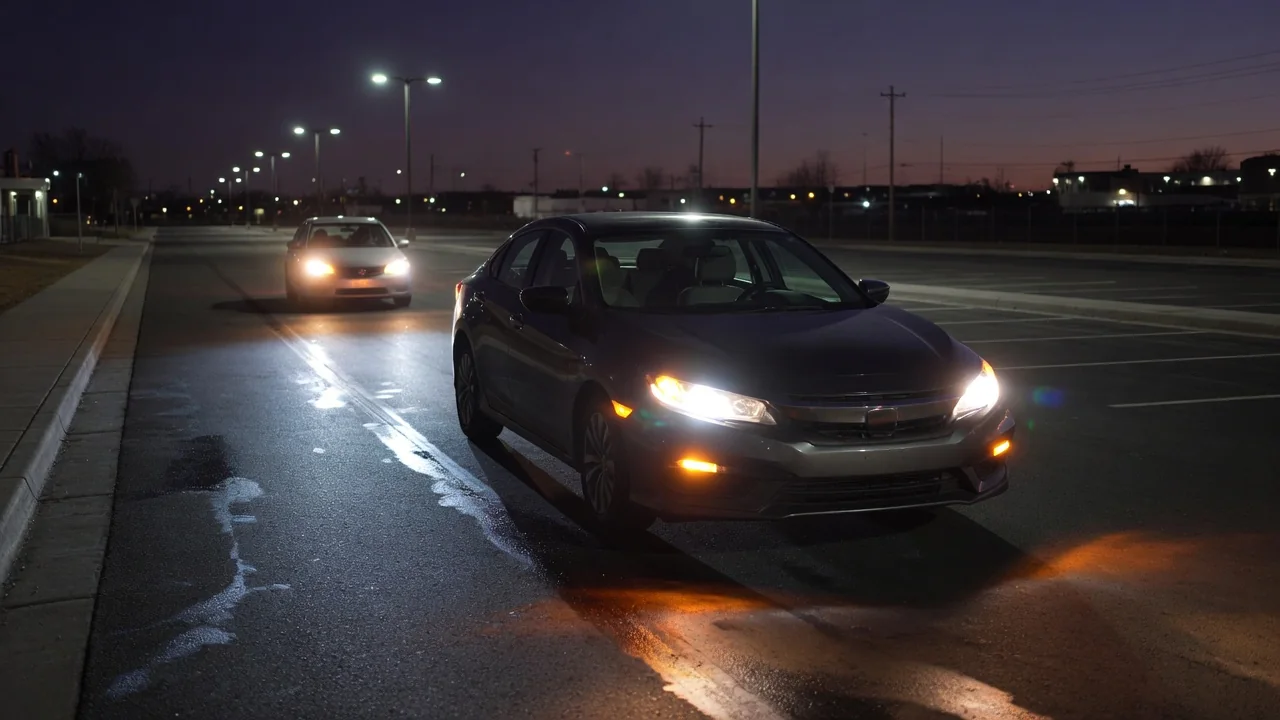
Watch traffic at night and you will see headlights ranging from yellowish white to crisp bluish white. That spread has causes. Car light color temperature reflects the light source a vehicle uses, the look its designers wanted, and trade-offs in how the human eye sees the road after dark. This guide explains why cars use different color temperatures in lighting, covering appearance, visibility, and matching, and it separates general principles from details that depend on a specific vehicle.
Appearance: What Color Temperature Describes
Color temperature, expressed in kelvin (K), describes the tint of white light. Lower values look warm and slightly yellow. Higher values look neutral, then cool and bluish. Strictly speaking, the term used for lamps is correlated color temperature, and it only applies to white light. It does not describe red tail lamps or amber turn signals, whose colors are set by lighting regulations for signaling purposes. A higher kelvin number also says nothing about brightness. Light output is measured separately, in lumens or candela, and a cooler-looking lamp is not automatically a stronger one.
The light source sets the starting point. A halogen bulb produces light from a heated tungsten filament, and that process naturally yields a warm white, typically around 3,000 to 3,500 K. HID, or xenon, lamps create light with an electric arc through gas, and factory units usually look noticeably whiter, commonly in the 4,000 to 5,000 K range. White LEDs generally use a blue-emitting chip coated with phosphor, and the phosphor recipe determines the final tint. That gives manufacturers wide freedom, and many LED headlamps are tuned toward a cool white that resembles daylight.
Styling also plays a part. Cooler white light has become visually associated with newer lighting technology, so it often appears in daytime running light signatures and modern headlamp designs. Inside the cabin, many vehicles use warmer or adjustable ambient lighting to create a particular mood, while displays and switch backlighting follow the brand's interior design language. These are design decisions, and they vary from one manufacturer and model to another.
Visibility: How Color Temperature Affects What You See
Night driving puts the eyes in a middle zone between daylight vision and full darkness, known as mesopic vision. In this range, the rod cells in the retina contribute more than they do in daylight, and rods are relatively more sensitive to bluish-green light. As a result, cooler light can appear brighter than its standard photometric rating suggests and may help with spotting objects at the edges of the field of view. Light closer to daylight can also render colors more naturally, which can make signs, markings, and road surfaces easier to read.
The trade-off is glare. Light rich in short, blue wavelengths is widely associated with more discomfort glare for oncoming drivers and pedestrians, and the aging eye tends to scatter that light more inside the lens. Rain, snow, and fog add another complication: water droplets reflect light back toward the driver. Scattering from droplets of that size is not strongly dependent on color, so warmer light does not cut through fog in a physical sense, but many drivers find it less harsh in those conditions. That is one reason dedicated fog lamps are sometimes made in warm white or selective yellow.
Color temperature is only one factor in how well a lamp works. Beam pattern, aim, cutoff sharpness, and total output usually matter more. Very blue appearances can even come at a cost: bulbs that get their tint from a colored glass coating filter out part of the light they produce, so they can deliver less usable illumination than a standard bulb of the same type.
Matching: Why Consistent Color Matters
Left and right headlamps should look the same. A mismatched pair appears uneven, can make one side seem dimmer, and may suggest a fault to other drivers or inspectors. Light sources change as they age. Halogen bulbs gradually lose output, and HID bulbs commonly shift in tint over their service life, so a new HID bulb next to an old one often looks visibly different. For that reason, replacing headlamp bulbs in pairs is a widely recommended practice. LED lighting tends to fade gradually rather than fail suddenly, and on many vehicles the LED source is part of a sealed module rather than a separate bulb.
Matching also applies across lighting functions. Low beams, high beams, fog lamps, and running lights are usually coordinated at the factory so the front of the vehicle presents a consistent look. Upgrading only some of these lamps can create two distinct tones, such as cool white low beams beside warm halogen fog lamps. Some owners accept or prefer that contrast, and some fog lamps are intentionally a different color. Inside the car, replacing a few incandescent dome or map bulbs with LEDs can leave a patchwork of warm and cool lighting.
When buying replacements, compare like with like. Choosing the same light source technology, and ideally the same product line, is the most reliable way to keep both sides and all functions consistent.
Practical Implications and Limits
The biggest practical risk is not the tint itself but how a light source behaves in a housing designed for something else. A headlamp built around a halogen filament places the light at a precise point in the reflector or projector. Fitting an LED or HID retrofit bulb can move that point and distort the beam, causing glare for others and weaker illumination where the driver needs it. Rules on lighting equipment differ by country and state. In the United States, vehicle lighting falls under the federal standard FMVSS 108, headlamps must emit white light, and many aftermarket retrofit bulbs are not certified for on-road use. Check the owner's manual for the specified bulb types and confirm local rules before changing anything.
Kelvin ratings also have limits as a buying guide. The number on a package is nominal and does not describe the full spectrum or color rendering quality, so two lamps with the same rating can look different. Lens condition changes the result as well: a hazed or yellowed headlamp lens shifts color and scatters light regardless of the bulb inside. Perception differs between people too, especially with age and eye health.
In short, no single color temperature is best for every driver or every vehicle. Factory lighting reflects a balance between light source technology, design intent, visibility, and glare control. Keeping lamps clean, correctly aimed, and matched within the same technology usually does more for night driving than chasing a particular kelvin figure.