What Is a Work Light for Car Inspection?
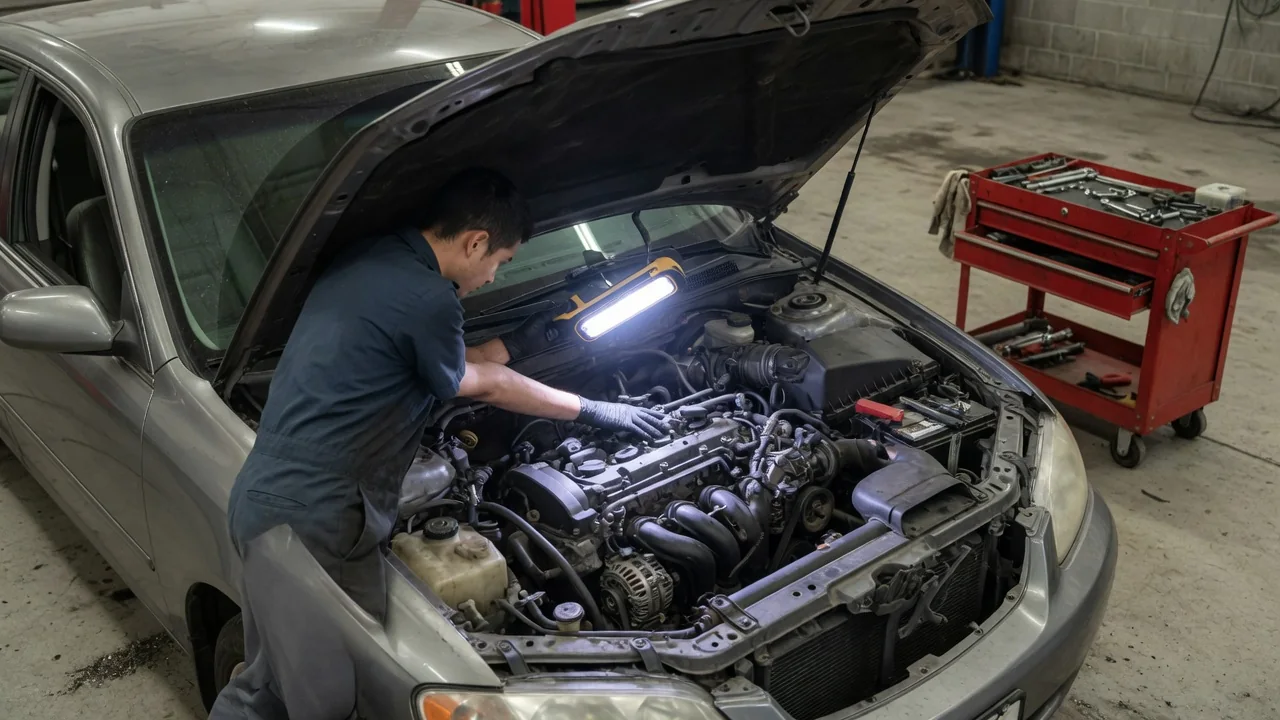
Anyone asking what is a work light for car inspection is really asking how to see a vehicle clearly enough to judge its condition. A work light is a portable lamp built for the garage: tough, easy to aim, and bright enough to reveal leaks, cracks, corrosion and wear that daylight or a ceiling fixture leaves hidden in shadow.
Positioning
Where the light sits matters more than how bright it is. A beam aimed straight at a surface flattens it, while light striking from a low side angle throws small shadows that make a hairline crack in a drive belt, a weeping gasket seam or a scuffed brake hose stand out. Under the hood, a lamp hung from the hood latch or clipped to a brace floods the bay from above, and a second, smaller light held low fills the gaps beside the engine and behind the radiator.
Good positioning also keeps the beam out of your eyes. Placing the lamp behind or beside your line of sight prevents glare from polished metal and wet surfaces. Many inspection lights use magnetic bases, hooks or swivel heads for this reason, though mounting points differ between vehicles: aluminum hoods and plastic covers will not hold a magnet, and crowded modern engine bays leave fewer places to hang a lamp. Under the car, a light resting on the floor and angled upward shows suspension bushings and exhaust joints well.
Heat and moving parts
An engine bay that has just been running holds several hazards for a lamp and the hand placing it. Exhaust manifolds, turbocharger housings and radiator hoses stay hot long after shutdown, and a plastic light body resting against them can soften or melt. Older incandescent and halogen work lights add their own heat, which can scorch wiring insulation or burn skin on contact. LED lamps run far cooler, which is one reason they have become the usual choice for close inspection work around hoses and harnesses.
Moving parts deserve the same respect. If the engine is running for a check, the accessory belt, pulleys and cooling fan can catch a dangling cord, a lanyard or a loosely hooked lamp in an instant. Electric cooling fans on many vehicles may start without warning, even with the engine off, depending on the design. Secure the light firmly, route any cable well away from rotating components, and confirm that nothing can fall into the belt path before the engine is started.
Safe power
Rechargeable cordless lights have largely replaced corded ones for inspection because they remove the trailing cable altogether. With no cord to snag on a jack handle or lie in a puddle of coolant, they are simpler to use around a vehicle. Battery life and charging methods vary between products, so it helps to check the charge before starting a longer job. A lamp that dims halfway through an underbody check tends to encourage rushed looking, and details get missed.
Corded lights still have a place where long, steady runtime is needed, but they call for more care. A damaged cord, a wet floor or an ungrounded outlet raises the risk of shock, so the cable should be inspected for cuts and kept clear of fluids and sharp edges. Fuel vapor is a further concern: any lamp used near an open fuel system or a leaking line should be a sealed type suited to that environment, since a broken bulb or a spark can ignite fumes.
Everyday Use and Observations
In routine use, a work light turns vague impressions into things you can describe. Shining it across the engine reveals whether a damp patch is fresh, glistening oil or old, dust-coated residue. Along the fluid reservoirs, light held behind translucent plastic makes coolant and brake fluid levels easier to read against the markings. At the wheels, a beam through the spokes can show how much brake pad material remains and whether the rotor surface looks scored, though access differs with wheel design.
Tires and the underbody benefit just as much. Raking light across a tread exposes uneven wear, embedded stones or nails, and small sidewall cracks that are invisible in shade. Beneath the vehicle, it picks out torn rubber boots on axle joints, rust scale on brake lines and wet tracks left by a leaking shock absorber. Color quality matters here too: a lamp with a neutral white output helps you tell reddish transmission fluid from brown engine oil or green, orange or pink coolant.
Limits and Next Steps
A work light shows what is visible, and nothing more. It cannot reveal an internal bearing fault, a weak fuel pump or a failing sensor, and a clean-looking component is not proven healthy by appearance alone. The same caution applies to what you do see. A stain, a crack or a loose connector is an observation that needs interpreting, and in the same way a stored fault code points toward an area to investigate without proving that a particular part has failed.
Useful next steps start with recording what the light revealed. Note the location, take a photo, and check again after a few days of driving to see whether a leak has grown or a mark has changed. Compare findings with the owner's manual for the vehicle, since layouts and component locations vary by make and model. Anything involving brakes, steering, fuel or structural corrosion, or any check that would require lifting the vehicle without proper equipment, is better handed to a qualified technician.