How to Check for Fluid Leaks Without Guessing by Color
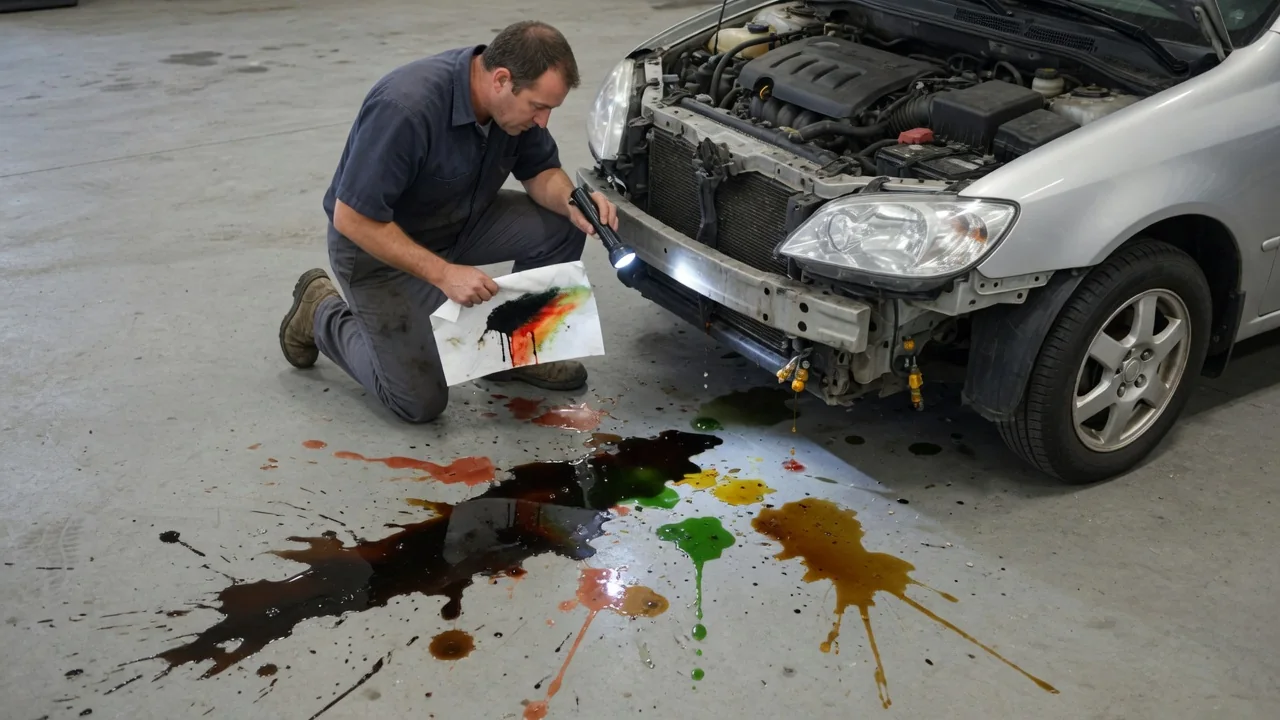
Color is an unreliable witness. Fluids darken with age, manufacturers use different dyes, and a drip can pick up grime before it reaches the ground. Learning how to check for fluid leaks without guessing by color means relying on stronger evidence: where the drip lands, which reservoir level is dropping, and how the vehicle behaves. Together, those clues narrow the possibilities far more dependably.
Park on clean surface
Start by giving the leak a clean background. A level stretch of dry concrete works, but a large sheet of plain cardboard or a light-colored drip pan slid under the vehicle after a normal drive works better, because it records exactly where each drop falls. Leave the car parked for several hours or overnight. Some leaks only appear with a warm engine and pressurized systems, while others seep slowly once everything has cooled and contracted, so a single quick glance can miss them.
Before moving the vehicle, mark the cardboard with the position of the front wheels and the bumper edge. That turns a stain into a map. A spot near the front center points toward different components than one behind a front wheel, under the middle of the cabin, or near the rear axle. Note the size of the spot and whether it is a single drop or a spreading patch. Remember that layouts differ: engine orientation, drivetrain type, and underbody shields all change where fluid finally drips.
Trace source
A drip on the ground shows where fluid left the vehicle, not necessarily where it escaped. Fluid runs downhill along hoses, crossmembers, and splash shields, and airflow at speed pushes it rearward. With the engine off and cool, look above the stain with a flashlight and follow the wet trail upward to the highest damp point. Fresh wetness, washed-clean streaks through road dust, or a buildup of oily grime around a gasket, hose connection, or seal usually marks the origin better than the puddle does.
Then compare the trail with fluid levels. Check the engine oil dipstick, the coolant reservoir against its marks, the brake fluid reservoir, and power steering or transmission fluid where the vehicle provides a way to check them; many newer transmissions have no dipstick, and electric power steering uses no fluid at all. A level that keeps dropping identifies the system involved. Feel and smell help too: coolant is watery and often sweet-smelling, oil is slippery, brake fluid is thin and slick, and clear, odorless water under the dash area is typically air-conditioning condensation.
Seek service
Some findings call for professional attention rather than further watching. A falling brake fluid level, a brake pedal that feels soft or sinks, or wetness on the inside of a wheel or along a brake line should be treated as a safety issue, and the vehicle should not be driven until it is inspected. Any fuel smell or visible fuel drip carries a fire risk and deserves the same urgency. A rising temperature gauge with coolant loss, or an oil pressure warning, means stopping the engine promptly to avoid serious damage.
A shop can confirm what a driveway inspection only suggests. Technicians can raise the vehicle, remove shields, pressure-test the cooling system, and add ultraviolet tracer dye to pinpoint a seep that hides behind other parts. Bring your notes: where the spot landed, how large it grew overnight, which level dropped, and any change in shifting, steering effort, or braking feel. If a warning light or fault code is present, treat it as a clue to interpret alongside the physical evidence, since a code alone does not prove a specific part has failed.
Everyday Use and Observations
Routine driving offers steady evidence if you pay attention. Glance at your usual parking spot as you back out, and notice whether a mark is new or growing. Check levels on a regular schedule under the same conditions, such as a cold engine on level ground, so the readings are comparable. A photo of each reservoir or dipstick makes slow losses obvious over weeks. Small top-offs are worth recording too, because how quickly a level falls says more about severity than the look of the drip.
Symptoms behind the wheel connect the stain to a system. Steering that groans or grows heavy at parking speeds suggests hydraulic assist fluid loss on vehicles so equipped. Delayed or flaring gear changes can accompany low transmission fluid. A sweet smell from the vents, fogged glass, or a damp passenger footwell may point to coolant reaching the heater core. Burning-oil odor after a drive often means oil is landing on hot exhaust parts. Meanwhile, water dripping near the firewall on humid days with the air conditioning running is normally harmless.
Limits and Next Steps
Location, level, and symptoms narrow the field, but they have limits. Several fluids can share the same area of the engine bay, and an old leak can leave residue that looks active. Shields and undertrays may catch fluid and release it far from the source, and some systems are sealed with no owner-accessible check. Hybrids and electric vehicles add separate coolant loops for batteries and electronics, and components near high-voltage parts, typically marked with orange cabling, should be left to trained technicians. The owner's manual shows which reservoirs apply to your vehicle.
Once you have a likely system, decide the next step by risk. A light seep with a stable level can often be monitored and mentioned at the next service visit, while a steady drip, a level that needs repeated topping up, or any change in braking, cooling, or steering warrants a prompt appointment. Use only the fluid type specified for the vehicle, since mixing incompatible fluids can cause harm. Wipe up spills and keep pets and children away from puddles, because coolant in particular is toxic and can taste sweet to animals.