Why Brake Lights Stop Working: Symptoms, Likely Causes and Safe Checks
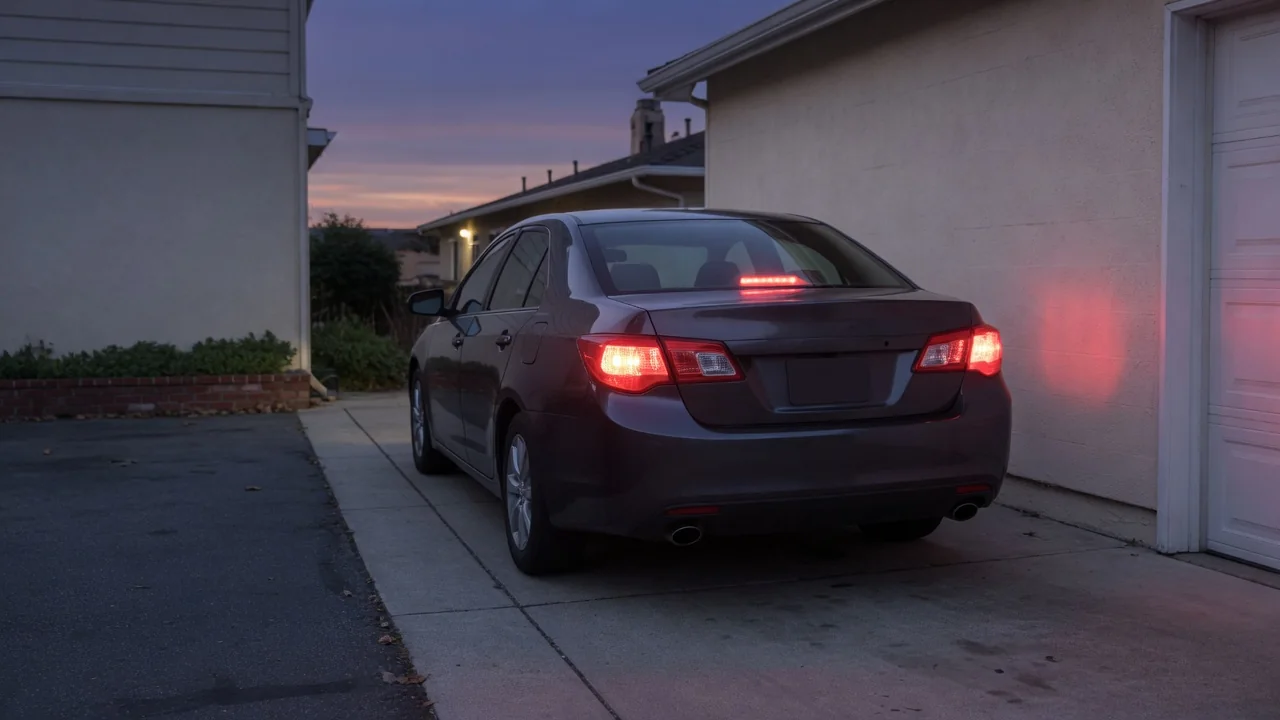
When your car's brake lights are not working, the car may feel normal from the driver's seat. The drivers behind you, though, lose their clearest warning that you are slowing. Most failures follow patterns you can recognize. Whether the cause is a tired bulb, a faulty brake light switch or a corroded ground, knowing why brake lights stop working helps you check safely and decide when a technician should take over.
What It Means When Your Brake Lights Are Not Working
Brake lights, also called stop lamps, tell following traffic that you are slowing before your speed visibly changes. If they fail, the steering and brakes still work normally, but the risk of a rear-end collision rises, especially in stop-and-go traffic or at night. To confirm the problem, have a helper stand behind the car while you press the pedal. You can also park with the rear facing a garage door or wall, set the parking brake, and watch the reflection.
Before buying parts, note the exact pattern. Are all of the rear brake lights out, or only one? Does the center high-mount stop lamp work while the lower lights stay dark? Are the tail lights affected too? The pattern narrows down where to look, and guessing without it wastes time and money. Most faults fall into a few groups: bulbs or LEDs, sockets and connectors, a blown fuse, the brake light switch, wiring and grounds, or a lighting control module.
No Brake Lights at All When You Press the Pedal
If none of the brake lights come on when you press the pedal, including the third brake light, look first at what they share. Three bulbs rarely fail on the same day. Common suspects are the stop lamp fuse, the brake light switch near the pedal arm, and a shared section of the wiring harness. The switch completes the circuit when the pedal moves. If it wears out or drifts out of adjustment, the lights may flicker, work only sometimes or stop working while driving.
On many vehicles, the same switch or pedal signal also feeds cruise control, the shift interlock or stability systems. If the brake lights and cruise control stop working together, that is a useful clue, but confirm it with information for your vehicle instead of assuming every car is wired this way. A safe first check is to find the fuse location in the owner's manual and inspect the fuse with the ignition off. Also watch for any lamp-out message on the dash. Intermittent or pedal-related faults call for proper electrical testing, not repeated parts swaps.
Brake Lights Out but Tail Lights or the Third Brake Light Still Work
It is confusing when the brake lights fail but the tail lights still work. Many vehicles use one dual-filament bulb or one rear lamp assembly for both jobs. The dim filament can still glow for the running lights while the brighter brake filament is broken, so working tail lights don't prove the brake circuit is healthy. If the third brake light works but the lower lights stay dark, the switch is probably sending a signal and the fault likely sits further downstream. Circuit layouts vary by vehicle, though.
Some drivers find that the brake lights barely brighten when they brake with the headlights on. A poor ground can let current leak between the two filaments, and the wrong bulb type can cause the same effect. Other possible causes are worn bulbs, corroded or damaged sockets, loose connectors and, on some modern vehicles, a lighting or body control module that drives the lamps. Check the owner's manual or service information for your vehicle's lamp layout before drawing conclusions.
When Tail Lights, Brake Lights or Reverse Lights Fail Together
When the tail lights and brake lights fail together, or the brake and reverse lights go out at the same time, think about what those functions share. A common ground, harness connector, fuse or lamp assembly is more likely than several separate bulbs. Some visual checks are safe to do yourself. Look for water or condensation inside the lamp housings, green corrosion on connectors, and chafed or pinched wiring where the harness bends at the trunk lid, liftgate hinge or hitch area.
Recent work is a strong clue. Body repair, a new trailer hitch, a spliced-in trailer wiring connector or aftermarket lighting can disturb rear wiring, overload a circuit or leave a ground loose. If the trouble started soon after such work, tell whoever diagnoses the car. Shared-circuit faults usually need a wiring diagram, a multimeter and an understanding of how power and ground reach each lamp. At that point, a qualified technician usually saves you time.
Brake Lights Still Not Working After Replacing the Bulbs
It's common for brake lights to stay dark even after new bulbs go in. The new bulb may be the wrong type. A single-filament bulb may have been fitted where a dual-filament bulb belongs. A keyed bulb may be turned the wrong way, so the brake filament never touches its terminal. New bulbs can also be defective out of the box. Inspect the socket as well, because corrosion, burned contacts or heat damage can keep a good bulb from making reliable contact.
LED bulbs bring their own problems. Aftermarket LED bulbs draw much less current than incandescent bulbs. On vehicles that monitor bulb circuits, that can cause flickering, dim lights or lamp-out warnings, and some LED bulbs won't light properly in housings that weren't designed for them. Confirm the correct bulb specification in the owner's manual or with a parts supplier for your exact vehicle. If the correct bulbs still don't light, the fault is likely in the switch, fuse, wiring or a control module.
Brake Light Problems on Specific Vehicles, Motorcycles, RVs and Trailers
Every vehicle follows the same basic diagnostic logic. That includes older models like the Chevy C10, MGB and Jeep CJ7, as well as the C5 Corvette, Crown Victoria, BMW E36, Ford F-250, Fiat 500, Acura Integra, Chevy HHR, Pontiac G6 and Vibe, and the PT Cruiser. It also applies to the Mini, Smart car, Mk4 Golf, Land Rover LR3, Peugeot Partner, Ford Transit and Transit Connect. What changes is the switch location, fuse layout and lighting electronics, which vary by model and year. Use service information for your model, and check official manufacturer or recall resources.
Motorcycles such as Harley-Davidson models usually have separate front and rear brake light switches. Check whether the light works with one brake control but not the other, and confirm the details for your model. Utility vehicles like the Polaris Ranger also have their own layouts. Motorhomes and heavy trucks from Freightliner, Peterbilt, Mack, International or Isuzu often have longer harnesses and more connectors, so professional diagnosis is more likely to be needed. 'Caravan' can mean a towed travel trailer or the Dodge Caravan minivan. On a towed trailer, check the tow connector, the ground connection and any wiring adapter.
Is It Illegal to Drive Without Brake Lights and When to Get Professional Help
Is it illegal to drive without working brake lights? In general, yes. Road vehicles in the US are required to have working stop lamps, and a failure can lead to a traffic stop, a ticket or a failed safety inspection. Rules and penalties vary by state. The bigger issue is safety. Avoid driving at night, in heavy traffic or on the highway without working brake lights, and get the vehicle repaired promptly. Hand signals and hazard flashers are not a real substitute.
Knowing how to fix brake lights includes knowing when to stop. See a technician if the lights stay dark after the fuse and bulbs check out, or if failures come and go. The same applies if you smell burning, find melted connectors, keep blowing fuses or see related warning lights. Don't bypass the switch, jump circuits or splice wiring without proper knowledge. Makeshift fixes can create a fire risk, disable connected safety systems and hide the real fault.