Cruise Control Not Working? Common Causes and Safe Checks
When cruise control is not working, the cause is rarely the cruise system alone. The feature depends on switches, sensors and other control modules all agreeing that conditions are safe. This guide explains why cruise control refuses to set or cancels unexpectedly, what a driver can safely observe, and when a car, pickup, heavy truck or motorcycle needs professional diagnosis.
Why Cruise Control Refuses to Engage or Keeps Cancelling
Cruise control engages only after the vehicle confirms several conditions at once. The engine control module wants a believable signal from the vehicle speed sensor, brake and clutch pedal switches reporting that the pedals are released, and no stored faults that block the feature. That is the plain answer to why cruise control is not working in most cases: one of those inputs is missing, implausible or contradicted by another system, so the module declines the request.
The two complaints point in different directions. A system that never engages suggests a constant problem, such as a dead control input, a blown cruise control fuse, a pedal switch stuck in the applied state or a fault held by another system. One that sets and then cancels unexpectedly leans toward an intermittent electrical fault, a marginal switch or a speed signal that drops out. Minimum set speeds and cancel conditions vary, so read the owner's manual first, and note whether the cruise control indicator light comes on, stays lit or flashes.
Cruise Control Buttons, Set Switch and Stalk Problems
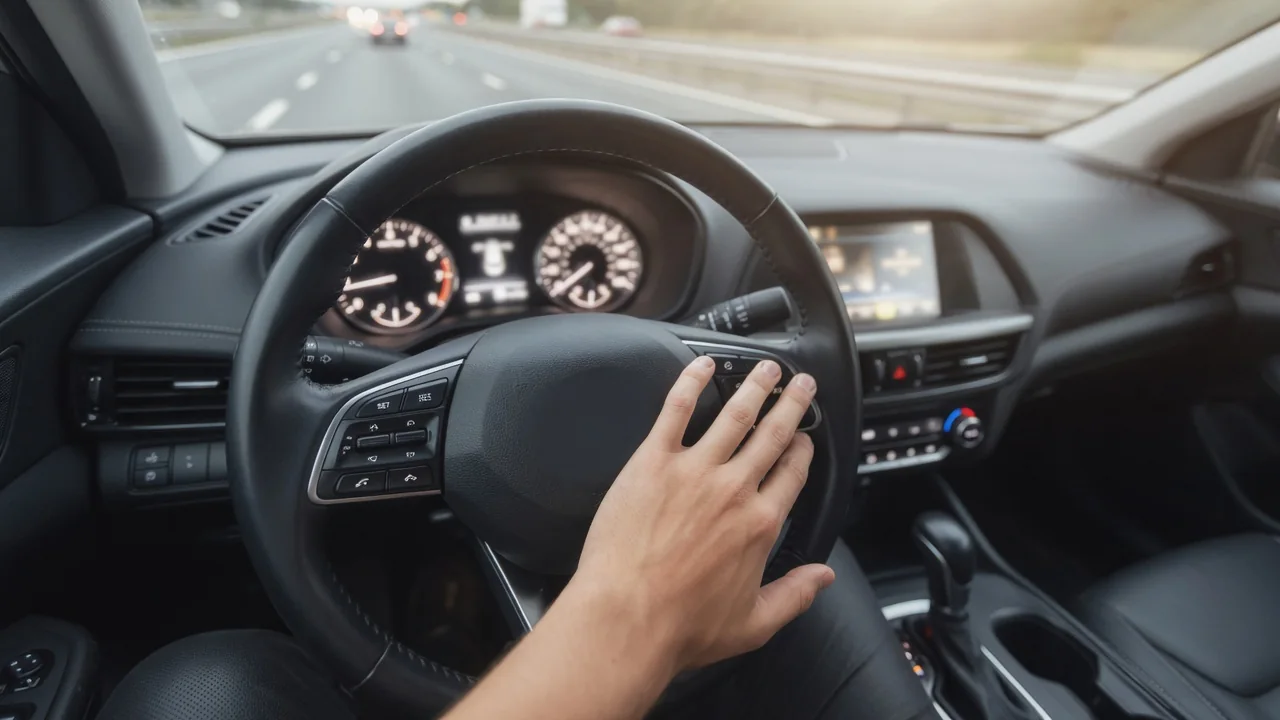
A worn steering wheel control switch tends to fail unevenly. One button stops responding while others still work, response comes and goes, or the function only registers under a hard press. It also helps to separate the main on/off switch, which arms the system, from the set and resume buttons, which issue commands. If the main switch never arms the system, the cruise control set button not working may be only the visible symptom.
Controls sit on the steering wheel in some vehicles and on a column stalk in others, and the signal path differs accordingly, so the failure points do too. Useful observations cost nothing: check whether audio or phone buttons on the wheel still respond, and whether the cruise control buttons not working changes with steering angle, cold mornings or a hot cabin. Opening the switch assembly is another matter, because it usually sits beside the airbag module, and that work belongs with a qualified technician.
When the Horn and Cruise Control Stop Working Together
When the horn and cruise control are not working at the same time, two unrelated failures are unlikely. Both circuits commonly pass through the rotating connection behind the steering wheel, known as the clock spring or spiral cable, which lets the wheel turn while keeping electrical contact. A break in that ribbon can silence several wheel-mounted functions together. Depending on how the vehicle is wired, a shared fuse, ground or connector can produce the same pattern, so those need checking too.
Watch for company: an airbag warning light or other wheel buttons going dead strengthens the case for a shared path, and the airbag light adds urgency because the driver's airbag may rely on that same connection and might not deploy in a crash. Clock spring work sits directly next to the airbag system and requires professional service. A silent horn is also a safety problem in its own right, so this repair should not be postponed.
Brake Switch, Warning Lights and Check Engine Light Clues
The brake light switch tells the vehicle the pedal is pressed, and cruise control must release the instant that happens. If the switch is faulty or misadjusted, the module may see a permanent or flickering brake input and refuse to hold speed. A safe check is to have a helper stand behind the vehicle and confirm the brake lights come on and go off with the pedal. Cruise control not working and a check engine light together is often deliberate: many vehicles disable cruise whenever an engine fault or an ABS and traction control warning is active.
Reading diagnostic trouble codes is a sensible first step, but a code is evidence to interpret, not proof that a part has failed, and many definitions are manufacturer-specific and must be confirmed against information for the exact vehicle. Cruise control not working after an oil change deserves the same caution; a disturbed connector, a newly lit warning lamp or plain coincidence are all possible. Write down when the fault began, what work was done just before and which lights are on.
Cruise Control Problems in Heavy Trucks: Freightliner, Peterbilt, Kenworth and More
On heavy trucks, cruise behavior depends on more than a switch. Engine control settings, transmission type, clutch and service brake switches, and inputs from braking or driver-assistance systems all have a say. Whether the complaint is Freightliner Cascadia cruise control not working, an older Freightliner Columbia, a Kenworth T680, a Peterbilt 379 or 579, an International or a Scania, record the symptoms precisely: dropping out on grades, refusing to set above a certain speed, or cancelling alongside other warnings.
Fault codes on these trucks are often specific to the manufacturer and the engine, and reading them correctly takes the right dealer or fleet diagnostic tool. Road speed limits, cruise limits and other operating parameters may also be programmed by the fleet, so a truck that will not set at a given speed may be doing as instructed. Check with fleet maintenance before assuming a failure, and leave diagnosis to a qualified heavy-duty technician; improvising with switches or wiring on a commercial vehicle is not advisable.
Notes for Pickups, SUVs, Older Cars and Motorcycles
Cruise designs have changed over the years. Older vehicles may use different hardware to hold speed than newer ones built around electronic throttle control, where the engine computer does the work, so confirm which type a given model and year uses before troubleshooting. That matters for an 08 F250 or any other Super Duty, and for Tacoma and 4Runner owners as well; manufacturer service information and bulletins for the exact year are more reliable than general advice.
On older enthusiast cars such as the NA Miata and S2000, age is the theme: wiring, connectors and any factory or aftermarket cruise components deserve inspection, and equipment should be verified, not assumed. For Harley-Davidson motorcycles, brake and clutch lever inputs and the handlebar switch housings are common checkpoints, though details vary by model. Town and Country and G37 owners face the same rule as everyone else: diagnosis has to be specific to the model, and parts should not be bought on guesswork.
What You Can Safely Check and When to Get Professional Help
For anyone asking how to fix cruise control not working, the safe owner checks are short. Read the manual for the engage conditions, confirm the brake lights work, inspect the cruise control fuse using the fuse chart in the owner's manual, and note every warning light. A basic code scan can show stored engine faults, but it may not reach body, brake or steering-column modules, and some cruise-related faults are visible only with manufacturer-level tools.
Guessing gets expensive. Replacing a cruise control switch or sensor without testing often costs money and leaves the fault in place. Professional diagnosis is the right call when an airbag or ABS light is on, when the fault is intermittent, when steering wheel electrics are involved, or on any commercial vehicle. Cruise control is a convenience, and the car can be driven without it, but warning lights for brakes, airbags or stability control should be resolved before regular driving continues.