Why a Power Window Stops Working: Symptoms, Safe Checks and Likely Causes
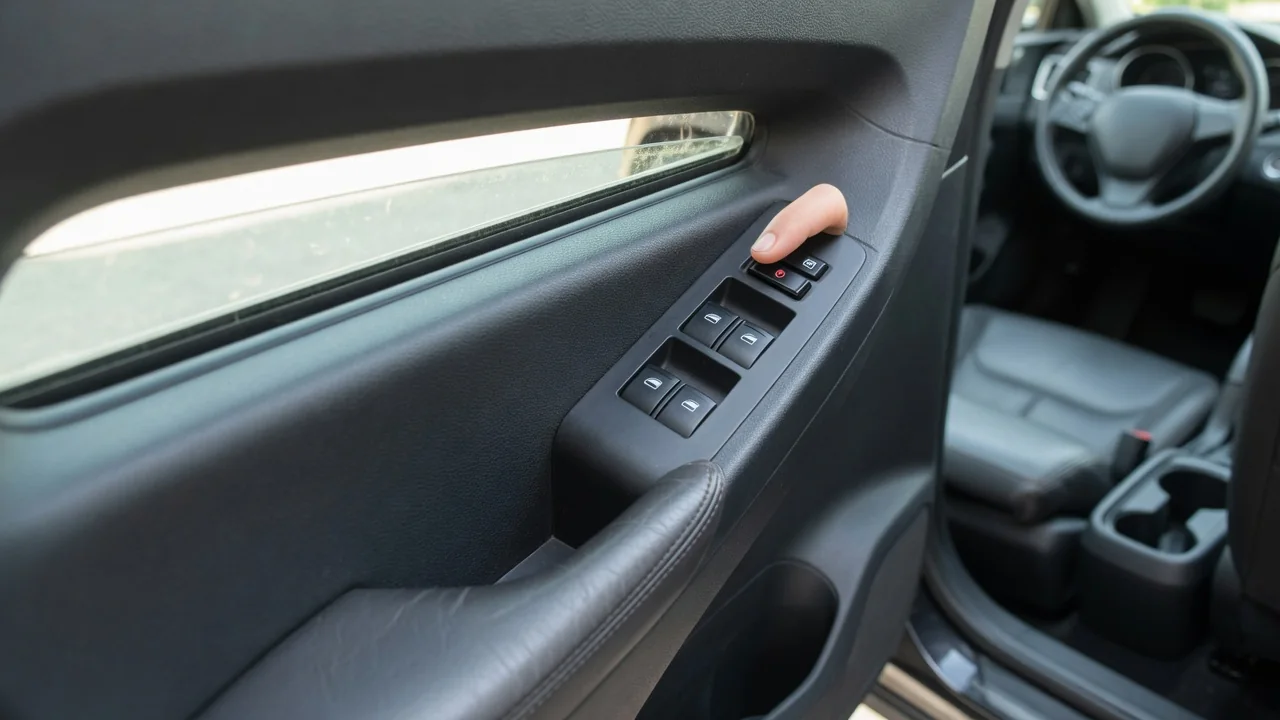
When a power window is not working, the cause can be anywhere from the switch under your fingertip to the regulator hidden inside the door. The glass might not move at all, it might move slowly, or the one-touch feature might have quit. In each case, paying close attention to the symptoms narrows the list of causes. This guide explains why a car power window stops working, what you can safely check yourself and when a technician should take over.
Why a Power Window Stops Working: Reading the First Symptoms
Most failures come down to a few suspects. These are the window switch, the door wiring harness or its connectors, a window fuse or power window relay, the window motor, the window regulator, and the body control module that runs the circuit on many newer vehicles. Symptoms help sort these out, but they can't confirm a cause. Start from the seat with the ignition on and listen. Total silence, a single click, a hum or whir with no glass movement, slow or jerky travel, and glass that moves only one way all point in different directions.
Note the timing too. If the window works on and off, or the trouble began after rain, a car wash, a hard door slam or recent door work, moisture, a loose connector or disturbed wiring may be involved. These clues narrow the possibilities, but they don't replace electrical testing, and window circuits differ widely between vehicles. During any check, keep hands, arms, pets and objects clear of the window opening. The glass can move suddenly if a weak connection briefly makes contact.
One Window Dead vs. Several: What the Pattern Suggests
If only one power window is not working and the rest work normally, a shared supply such as the main fuse is less likely to blame. Look instead at that door's switch, motor and regulator, and at the wiring that flexes where the door meets the body. If several windows quit at once, or the power windows and door locks stop working together, a shared fuse, relay, ground, control module or door wiring harness becomes more likely, depending on how the vehicle is built.
Before assuming a part has failed, check the window lock button on the driver's master switch panel. When it's on, the passenger switches don't work, and a bumped lock button explains many sudden complaints. If the right side power window is not working, try it from both the driver's master switch and the passenger's own switch. Carmakers wire windows and locks together in different ways, so check the owner's manual or vehicle-specific service information before drawing conclusions.
When the Power Window Button Is the Problem
A worn or faulty switch usually shows itself through inconsistency. The window may work from one switch but not another, respond only when the button is pressed at an angle, or work one day and ignore you the next. When a car power window button is not working, common reasons include spilled drinks, moisture getting into the door panel and worn internal contacts. How often each one happens depends on the vehicle and how it's used.
Comparing the two switches helps. If a window works from the master switch but not from its own door switch, that door switch or its nearby wiring becomes a strong suspect. If it's the other way around, look at the master switch or the wiring between the two switches. However, a power window button can seem to work while sending too little current to drive the motor. Replacing it on a guess may waste money, so have the circuit tested before buying parts.
Motor, Regulator or Glass Track: Telling Them Apart
The window motor provides the turning force, and the window regulator is the cable, arm or track mechanism that uses that force to lift the glass. A power window motor that isn't working is usually silent, or it works only after you tap the door, which can point to a worn motor or a weak connection. A failing regulator more often grinds, clicks or whirs while the glass stays put, drops, tilts or binds partway. Slow travel can come from either part, or simply from friction.
Dirty, dry or damaged window channels and seals add friction that slows the glass and strains the motor. Without taking the door apart, look for torn rubber, debris or one edge of the glass riding unevenly. Fixing the window starts with diagnosis, followed by repair or replacement of the switch, motor, regulator or wiring. Many doors contain airbag parts, sharp edges, pinch points and glass that can fall. If the glass is loose, stuck open or off its track, get professional help, and cover the opening temporarily with heavy plastic to keep the cabin dry.
Auto-Up and One-Touch Window Features That Stop Working
If the automatic one-touch feature stops working but manual up and down still work, the problem is usually the window's control logic, not a dead motor. One-touch and auto-up features often depend on a stored window position and on the anti-pinch function. On many vehicles, disconnecting the battery, losing power or a recent window repair erases that memory. A one-touch window that quits afterward may just need a reset or relearn. The exact steps vary, so take them from the owner's manual.
If auto-up reverses or stops partway, the anti-pinch system may be sensing resistance and treating it as an obstruction. Binding channels, swollen seals or a sagging regulator can trigger that response. Cleaning visible debris out of the channel is reasonable. Never bypass or disable pinch protection, though, because it exists to keep fingers and children from being hurt. If the reset procedure in the manual doesn't bring the feature back, have a professional diagnose it.
Power Window Not Working in Cold Weather
A power window not working in cold weather is often a friction problem first. Ice can freeze the glass to its seals, water can freeze in the channels, and grease in the regulator stiffens at low temperatures. Each one adds load, so the motor strains, the glass crawls or nothing moves at all. Trying a frozen window over and over can overheat the motor, stretch a cable regulator or tear the rubber seal.
Rather than forcing it, let the cabin warm up with the heater running and clear ice from the outside of the glass with a plastic scraper. Don't pour hot water on cold glass, which can crack it, and keep sharp tools away from the seals. Once the car is fully warm, try the window again. If it still doesn't work, the cold probably isn't the whole story, and an electrical or mechanical fault needs further diagnosis.
Make and Model Differences: Hummer H3, Kenworth, Miata and Others
Whether you drive a Hummer H3, a Mazda Miata or a heavy truck, the symptoms described here still apply. However, switch layout, circuit design, lock-out behavior and reset steps differ by make, model and year. Commercial trucks such as Kenworth models may use different electrical setups than passenger cars, so use truck-specific service information or a qualified heavy-truck technician. For an H3 or Miata power window that isn't working, check the owner's manual and vehicle-specific service data instead of assuming one generic fix applies.
Good notes speed up any diagnosis. Before visiting a shop, write down which windows are affected, whether the locks misbehave too, and what you hear, such as silence, clicking, humming or grinding. Note when the problem happens, including cold weather, rain, car washes or bumpy roads. Also mention any recent door repairs, battery work or water exposure. That history helps a technician figure out why your power window is not working more quickly, especially when the fault comes and goes.