One Power Door Lock Not Working: Causes, Safe Checks and Next Steps
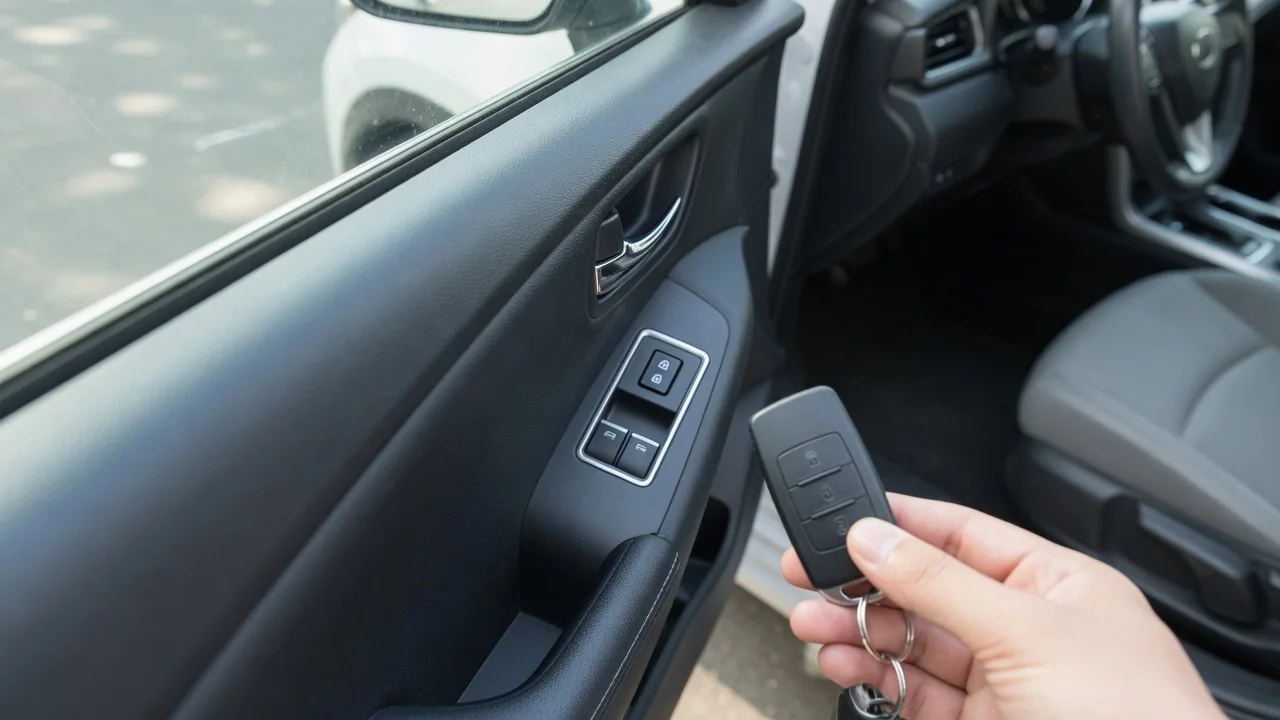
When a power door lock is not working on the driver's side or on one passenger door while the rest of the central locking behaves normally, the fault is usually narrower than it first seems. This guide explains why a power lock stops working on one door, what you can safely observe yourself, and when professional testing makes sense.
Why a Power Lock Can Fail on Just One Door
If the other doors still lock and unlock on command, the shared parts of the system are probably doing their job. The fuse, the main power supply and the control signal that starts every lock cycle are common to all doors, so a failure there would normally show up everywhere. That is the short answer to why a power lock is not working on one door: the problem most likely sits in that door's own circuit or mechanism, between the body of the car and the latch.
Each door typically has a door lock actuator, a small electric motor or solenoid that moves the latch through a lock linkage rod or cable. Its wiring passes through a flexible door jamb wiring boot and one or more connectors. A worn actuator motor or broken wire is an electrical cause; a disconnected or binding linkage or a stiff door latch is a mechanical one, and the symptoms can look alike. Layouts differ by make, model and year, and some vehicles route commands through a body control module or door control module.
Driver Door Power Lock Not Working: What Is Different on That Side
A driver door power lock not working deserves slightly different thinking, because that door often carries the master lock switch and sometimes a door control module. Two cases need separating. In one, the driver door will not lock from any switch or the key fob, which points toward that door's actuator, wiring or latch. In the other, the driver door itself works but the master switch no longer commands the other doors, which shifts attention to the switch, its wiring or the module that reads it.
The driver door is opened and closed more than any other, so the wiring in its jamb boot flexes more often; that makes it worth inspecting, though it is not a diagnosis. Also check your settings before assuming a fault: some vehicles unlock only the driver door on the first fob press and all doors on the second. Finally, confirm that the manual key lock still turns in the driver door cylinder, so you can secure the vehicle and get back in while the power lock on the driver door is being sorted out.
Passenger Side Power Door Lock Not Working
When a power door lock is not working on the passenger side, start by noting which commands the door obeys. Front and rear passenger doors usually receive their lock command from the master switch, the fob or a body module rather than deciding anything themselves. If a passenger door locks from its own switch but not from the driver switch, the actuator and its immediate wiring are evidently capable of working, and the question becomes the command path. The opposite pattern suggests the local switch or its circuit, although neither pattern identifies a specific failed part.
Rear doors may have a child safety lock, which stops the inside handle from opening the door, and some vehicles add window or lock lockout features controlled from the driver's seat. These change how the door behaves for occupants but do not affect the power lock motor itself, so rule them out before suspecting a fault. The passenger-side wiring path and components depend on the vehicle, and an actuator or latch from another door or model should not be assumed to fit.
Safe Observations to Make Before Calling a Shop
Listening is a useful first step. Stand at the affected door while someone else presses lock and unlock. A buzz or weak motor sound may suggest the actuator is receiving power but struggling against wear or a binding linkage. A single click with no movement can hint at a mechanical obstruction, while silence may mean no signal is arriving or the motor has stopped responding. None of these sounds is proof. Compare the response from the key fob, the master switch, the door's own switch if fitted, and the inside manual lock knob.
Note whether the behavior changes in cold or hot weather, after rain, or when the door is held partway open, since such patterns can point toward a stiff latch, a binding linkage or a loose wire that shifts as the door moves. Write down any other electrical oddities in the same door, such as a window, mirror or speaker that cuts out, because these share the jamb boot wiring. Keep everything to observation: do not probe live circuits, bypass components or force the lock mechanism.
Door Wiring, Connectors and Actuator: What a Technician Checks
A technician usually begins by confirming whether the lock signal actually reaches the actuator when the system is commanded, using suitable test equipment and the wiring diagram for that vehicle. If the correct signal arrives and the actuator does not move the latch, attention turns to the actuator or the mechanism it drives. If the signal is missing or weak, the fault lies earlier, in the wiring, a connector, the switch or the controlling module. That one distinction prevents a good part from being replaced on a guess.
Broken conductors inside the door jamb boot often produce an intermittent wiring fault, so the lock may work one day and fail the next, and finding the break can take careful inspection. Removing a door panel involves clips, wiring and, in some vehicles, side airbag parts or sensors, so it is best left to a qualified person unless you have the correct service information. Any replacement actuator or latch must match the exact vehicle and door position, confirmed against the parts catalog for that vehicle.
Security, Safety and When to Get Professional Testing
A door that will not lock leaves the vehicle and its contents unsecured, and a door that will not unlock can slow entry or exit when it matters most. Both are reasons not to put the repair off. Seek professional diagnosis sooner if a second door begins to fail, if the alarm or keyless entry starts behaving oddly, or if a fuse blows again after being replaced, because those signs suggest a wider electrical issue than a single tired actuator.
Some vehicles store fault codes in the body control module or a door module when a lock circuit misbehaves. A stored code is evidence to interpret, not proof that a part has failed, and its meaning must be checked against that manufacturer's definition rather than assumed to be universal. It is also sensible to ask the manufacturer or a dealer to check the VIN for any open service campaigns, which costs little effort and occasionally changes what the next step should be.