Why Are Some Car Hoods Made of Aluminum?
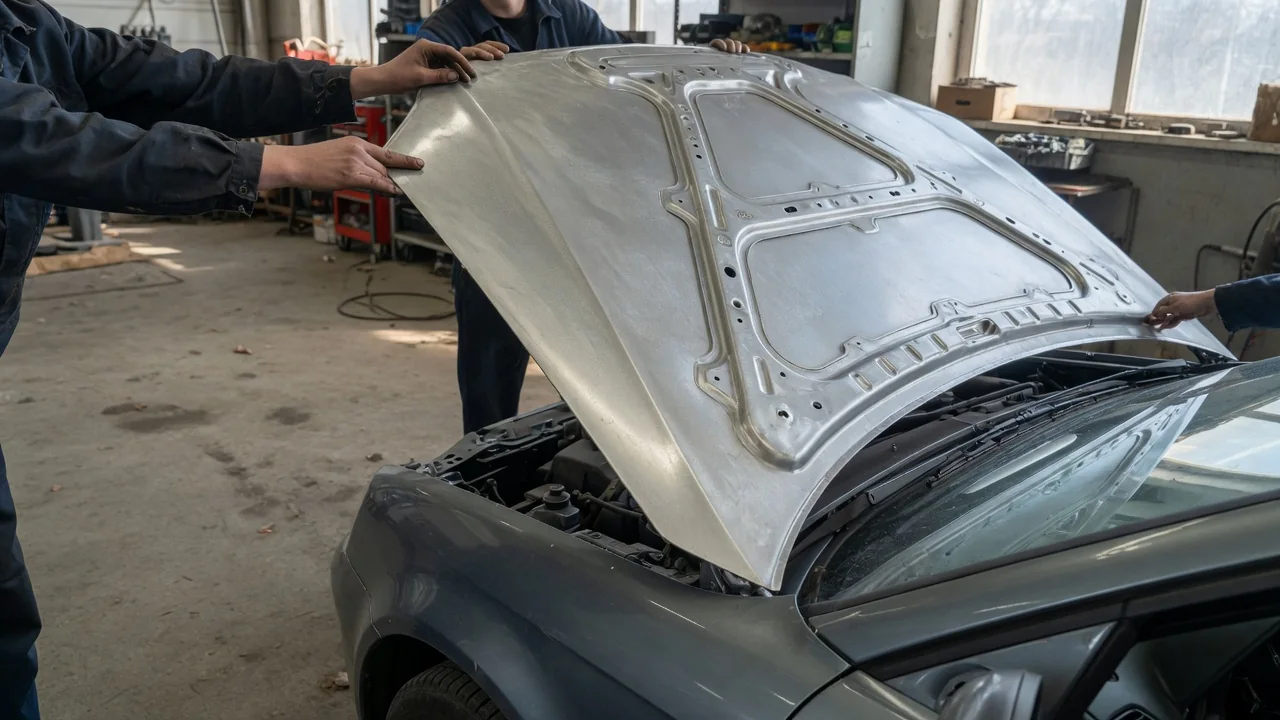
Lift the hood on one vehicle and it feels surprisingly light; lift another and it takes real effort. That difference often comes down to the metal. Anyone wondering why are some car hoods made of aluminum will find the answer in two engineering priorities: trimming weight from the front of the vehicle and resisting the rust that attacks steel panels over time.
Material choice
A hood is a large, mostly flat panel that sits high and far forward, so its mass affects more than the scale reading. Aluminum has roughly one third the density of steel, and even though an aluminum panel is usually made thicker to regain stiffness, the finished part can still weigh noticeably less. Engineers value that saving because weight removed ahead of the front axle helps fuel economy, eases the load on the front suspension, and improves balance between the axles.
Corrosion is the second consideration. Steel rusts when paint chips expose bare metal, and the red oxide keeps spreading beneath the coating. Aluminum forms a thin, hard oxide layer that slows further attack, so a stone chip on the leading edge is less likely to turn into perforation. Not every manufacturer makes the same choice, however. Many trucks, luxury sedans, and sports cars use aluminum hoods, while plenty of economy models keep steel because it costs less and stamps easily.
Dent behavior
Aluminum responds to impacts differently than steel. Hood alloys are generally softer at a given thickness, so hail, a dropped tool, or a palm pressed in the wrong spot while closing can leave a depression more readily. Manufacturers compensate with thicker skins and carefully designed inner bracing, which is why some aluminum hoods feel quite firm while others flex under light pressure. The outcome depends on the specific alloy, gauge, and reinforcement pattern chosen for that vehicle.
The metal also has less tendency to return to its original shape. Steel is often described as having a memory that helps a technician coax a dent back out, whereas aluminum work-hardens as it is stretched and can crack if pushed too aggressively. A sharp crease along a styling line is therefore harder to reverse than a shallow, round hail mark. Owners may notice that small dings look slightly crisper at the edges on an aluminum panel than on a comparable steel one.
Repair and replacement
Body shops treat aluminum as a separate discipline. The metal conducts heat quickly, reacts differently to welding, and can be contaminated by steel dust, so many facilities keep dedicated tools and a separate work area for it. Stray steel particles embedded in an aluminum surface can trigger galvanic corrosion beneath fresh paint. Paintless dent repair is often possible on shallow damage, though it typically takes more time and patience, and not every technician offers it for aluminum panels.
When damage is severe, replacement is frequently the more practical route, because a hood is a bolt-on panel and straightening badly stretched aluminum may not restore its strength or its surface. Estimates can differ from those for a steel hood since labor methods and part pricing vary by make and model. Hood design also plays a role in pedestrian impact protection on many modern vehicles, so the replacement part and any hinges or latches should match the manufacturer's specification for that particular vehicle.
Everyday Use and Observations
A simple magnet check reveals the material: a refrigerator magnet clings to steel but slides off aluminum. Use a soft one or place a cloth beneath it to protect the paint. The lighter panel is also easier to raise, and designers can fit smaller gas struts or a lighter prop rod. Closing habits matter more, though. Lowering the hood and letting it drop from a short height, or pressing over the latch as the owner's manual directs, avoids hand-shaped dents in the center.
Aluminum is not immune to corrosion; it simply fails differently. Instead of orange rust, look for white powdery deposits or paint bubbling along hem flanges, seams, and the front edge where moisture and road salt collect. Trouble often starts where aluminum touches a dissimilar metal, such as steel hinges or fasteners, if the protective coating or isolating material between them has been damaged. Regular washing in winter climates and prompt touch-up of chips help keep the finish intact for many years.
Limits and Next Steps
The benefits have boundaries. One lighter hood saves a modest amount on its own, and the real gain comes when a manufacturer applies the same thinking to doors, fenders, and structure. Aluminum also costs more to produce and form, which explains why it is not universal. Some vehicles use steel, others use composites or carbon fiber, and a single model line can change materials between generations or trim levels, so assumptions based on a badge or body style are unreliable.
Confirming what a specific vehicle has is straightforward. The magnet test gives a quick answer, and manufacturer body repair information or a dealer parts department can verify it by vehicle identification number. Share that detail with an insurer or body shop before authorizing work, and ask whether the shop is equipped for aluminum. Buyers of used vehicles can inspect panel gaps, paint texture, and the hood's underside for signs of earlier repair, since a poorly repaired aluminum panel may corrode later.