Why Are Prototype Cars Driven in Different Climates?
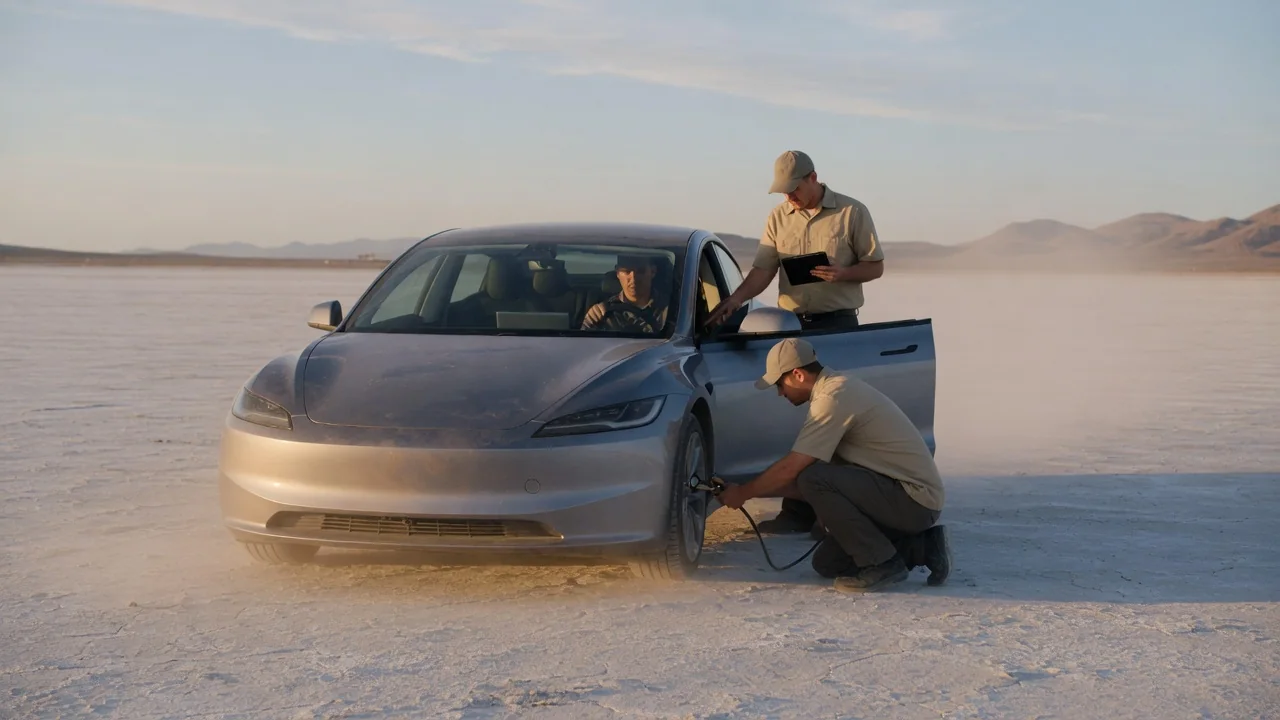
Prototype cars are driven in different climates so engineers can confirm that a design works where real owners will use it, not just in a lab. Heat, cold, humidity, dust and altitude each stress a vehicle in different ways. Climate chambers can reproduce many conditions, but road driving in varied environments combines those stresses with real traffic, terrain and driving patterns. These vehicle climate development tests reveal problems that are hard to predict on paper.
Heat and Cold: Two Very Different Stress Tests
Hot climates test how well a vehicle sheds heat. The cooling system must keep an engine, electric motor, power electronics or battery pack within its intended operating range while the car climbs long grades, tows, sits in slow traffic or idles with the air conditioning running hard. Strong sunshine adds solar load to the cabin, so the air conditioning has to cool the interior in a reasonable time and then hold a comfortable temperature. Engineers also watch for heat soak, when parts near the engine or exhaust keep absorbing heat after the car is switched off. Heat soak can affect restarts, fuel systems on combustion vehicles and nearby wiring or plastic components. Brakes, transmission fluid and electronic modules are also checked for signs of overheating during demanding drives.
Cold climates expose a different set of weaknesses. Engine oil and other fluids thicken, batteries deliver less power and accept charge more slowly, and rubber parts stiffen. Engineers check that the car starts reliably after sitting outside overnight, that the heater and defroster clear the windshield quickly enough for safe driving, and that doors, locks, mirrors, charging flaps and windows still work when coated with ice. Snow can pack into wheel wells, block air intakes or cover the cameras and radar sensors used by driver assistance systems, so those situations are evaluated as well.
Many conditions can be reproduced in climate chambers and wind tunnels, which offer repeatable results and are widely used during development. Road driving remains valuable because it combines factors that are hard to stack together indoors: real sunlight and wind, humidity, dust, road spray, altitude, long durations and the unpredictable mix of speeds and loads that real drivers create. Driving in several regions also captures transitions, such as cold mornings followed by warm afternoons, which repeatedly cycle components between temperature extremes.
Materials Under Temperature, Sun and Moisture
Every vehicle is an assembly of metals, plastics, glass, rubber, foam, textiles and adhesives, and each responds to temperature in its own way. Because these materials expand and contract at different rates, a dashboard, door panel or trim piece that fits neatly in a mild climate can develop gaps, squeaks or rattles in severe heat or deep cold. Seals and gaskets must stay flexible enough to keep out water, dust and noise across the full temperature range, and adhesives need to hold without softening in heat or becoming brittle in cold.
Sunlight and heat also age materials. Ultraviolet exposure can fade colors, and prolonged high interior temperatures can contribute to warping, cracking or odors from interior components. Dry, dusty regions test whether filters and seals keep fine particles away from the cabin, engine intake and moving parts. Tires, suspension bushings and engine mounts change stiffness with temperature, which can alter ride comfort, noise and handling, so engineers evaluate how those parts feel and perform in both hot and cold conditions.
Humid and coastal environments add moisture, and together with winter roads treated with salt, they increase the risk of corrosion. Electrical connectors, fasteners, brake components and underbody parts are typical areas of concern. Condensation inside headlamps or electronic housings is another issue climate testing can reveal. These findings often feed back into design changes such as revised drainage paths, different coatings, improved sealing or alternative material choices before production begins.
Control Tuning Across the Temperature Range
Modern vehicles rely on software to manage engines, electric drive systems, transmissions, batteries and climate control, and much of that software behaves differently depending on temperature. Calibration is the process of setting the many parameters these control units use, and engineers need real conditions to confirm those settings. On a combustion vehicle, cold-start and warm-up strategies influence how smoothly the engine runs, how quickly the cabin heats and how fast emissions systems reach working temperature. Transmission shift behavior may be adjusted while fluid is cold. In hot weather, control logic may protect components by managing cooling fans, limiting power or changing operating strategy.
Electrified vehicles depend heavily on thermal management. The control system decides when to heat or cool the battery, how much power and regenerative braking to allow at a given battery temperature, and how to divide energy between driving and cabin comfort. Charging behavior also depends on battery temperature, so engineers check that preconditioning and charging strategies work as intended in both cold and hot conditions. Getting this balance right affects range, performance and component life.
Chassis and safety systems need the same attention. Antilock brakes, traction control and stability control must respond appropriately on ice, packed snow, wet roads and hot dry pavement, which offer very different levels of grip. Driver assistance features depend on cameras, radar and other sensors that can be affected by snow, ice, glare, heavy rain or dirt. Engineers verify how these systems behave in such conditions, including how they warn the driver when a sensor is blocked and how heating elements or cleaning functions perform.
Practical Implications and Limits
For owners, climate development explains several behaviors that might otherwise look like faults. A car may idle differently on a frigid morning, an electric vehicle may show reduced range or slower charging in cold weather, power may be limited until components warm up, and cooling fans may keep running after a hot drive. These are often deliberate strategies intended to protect components or maintain safe operation, although exact behavior varies from one vehicle to another. The owner's manual is the best guide to what is normal for a specific model and to any recommended cold- or hot-weather practices, such as fluid specifications, tire choices or the use of preconditioning features.
Climate testing also has limits. A prototype fleet is small compared with the number of cars eventually built, and no program can recreate every combination of weather, road condition, maintenance history and driving style. Long-term aging over many years is partly estimated through accelerated methods rather than observed in real time before launch. Manufacturers set their own targets and rarely publish full details of their test programs, so climate testing does not guarantee identical performance everywhere. Software updates, aftermarket parts, incorrect fluids or worn components can also change how a vehicle behaves in extreme conditions after it leaves the factory.