Why Do Automakers Build Different Prototype Stages?
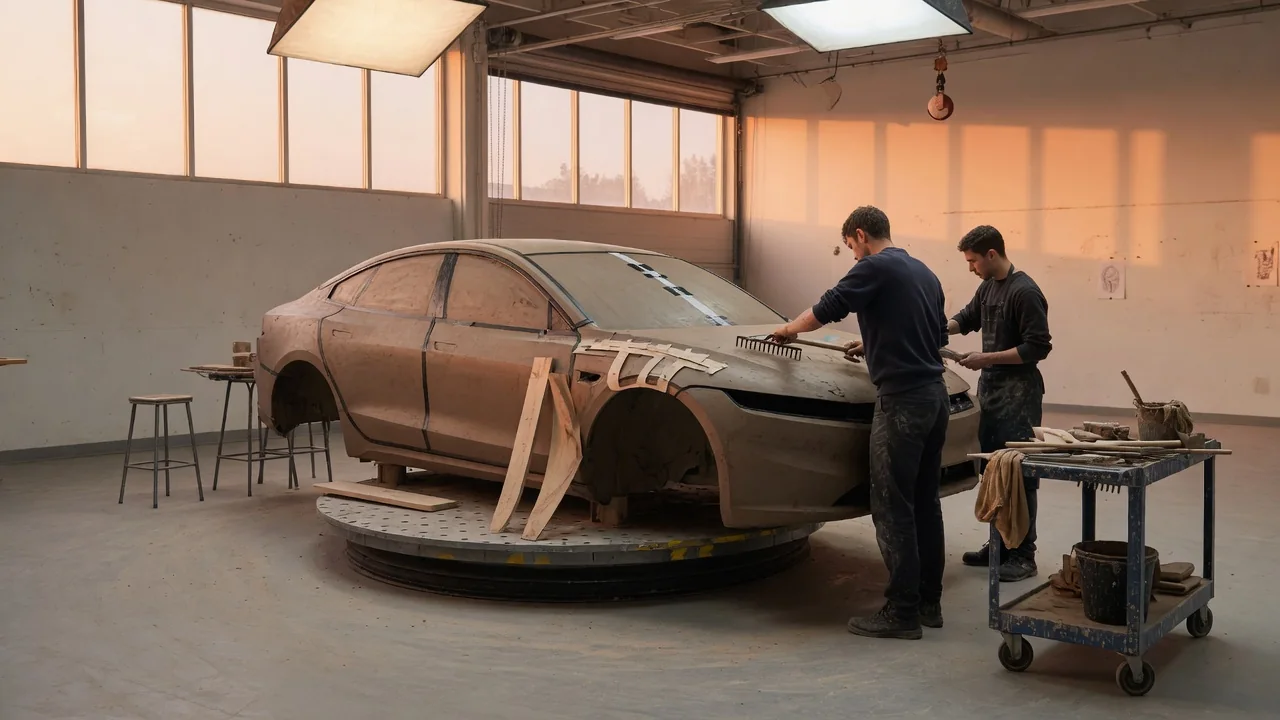
A new vehicle is not designed once and then sent straight to the assembly line. Automakers typically build several waves of test vehicles before production begins, and each wave exists for a different reason. Vehicle prototype stages explain why early test cars can look crude, why camouflaged cars change over a development program, and why automakers build different prototype stages instead of one perfect test car. In short, each stage is set up to answer specific questions at the lowest practical cost and risk.
Design questions
At the start of a program, engineers face basic questions that do not require a finished body. Does a new engine, motor or battery package fit the available space? Does revised suspension geometry behave as simulations predict? Can the cooling system handle sustained loads? To answer these early, manufacturers often build mules: existing vehicles or rough bodies fitted with new mechanical components. A mule can be modified quickly, costs far less than a representative prototype, and its familiar shape hides the new design from public view. Computer simulation now handles much of this early work, but physical hardware is still used to confirm that the models match reality.
Once the main systems prove themselves individually, the question shifts from whether each part works to whether everything works together. That requires vehicles with the intended body structure, wiring harness, climate control, electronics and interior. These integration prototypes reveal problems that isolated testing cannot, such as heat from one component affecting another, electrical interference between modules, packaging conflicts during assembly, or noise and vibration paths through the structure. Each finding feeds design changes, and each change has to be checked again. Manufacturers use different names for these phases, including alpha and beta builds, engineering prototypes or design validation builds, and the boundaries between them differ from company to company and program to program.
Staging also creates decision points. The cost of a design change grows as a program advances, because later changes can affect tooling, suppliers, software and certification work. Separating development into defined builds lets teams agree on which design questions must be settled before the next wave of vehicles is ordered, so that late changes are deliberate rather than accidental.
Tooling maturity
Production parts come from tooling: stamping dies for body panels, molds for plastic trim, casting and machining fixtures for metal components, and assembly jigs that hold everything in position. Production tooling is expensive, takes a long time to make and is costly to modify. Committing to it before the design is stable would risk paying for it twice. Early prototypes therefore rely on parts made by other methods, such as hand-formed or soft-tooled panels, machined pieces, additively manufactured components and low-volume molds. These methods are flexible and quick, but the resulting parts can differ from production parts in material properties, surface finish, weight and dimensional consistency.
As the design stabilizes, later builds increasingly use production-intent tooling and parts from the suppliers that will deliver them during series production. Only at this point do certain problems become visible: panel gaps and flushness, tolerance stack-ups across many parts, squeaks and rattles, clip and fastener retention, and whether a part can actually be installed in the planned sequence. A hand-made prototype can be adjusted until it fits perfectly, which is exactly why it cannot prove that large numbers of tooled parts will fit consistently.
Tooling maturity also determines what test results mean. A durability result from a soft-tooled component may not represent a production part made by a different process. Engineers therefore track which parts on each vehicle are prototype, production-intent or production, and they treat the data accordingly. This is one of the main reasons a single prototype stage cannot serve every purpose.
Validation
Development testing and validation testing have different goals. Development testing looks for weaknesses and accepts that the design will change. Validation testing aims to confirm that the finished design, built with representative parts, meets its requirements for durability, safety, emissions or energy use, climate performance and regulatory compliance. Confirmation is only meaningful if the test vehicle reflects what customers will receive, so formal validation and certification work generally relies on later builds close to production specification. Running a full validation program on early prototypes would waste effort, because the next round of changes would undermine the results.
A further layer concerns the manufacturing process rather than the product. Pre-production or pilot builds are often assembled in the actual plant, using production tooling, workstations and end-of-line checks. These builds help confirm that assembly instructions are workable, that equipment performs as intended, that quality inspections catch defects, and that the plant can move toward its planned production rate. Problems found here may be process issues instead of design issues, but they still need to be resolved before customer deliveries begin.
Software follows a similar path. Engine and transmission calibration, driver assistance functions, battery management and infotainment features typically mature across builds, so early prototypes may run software that behaves quite differently from the released version. Validating how software interacts with the final hardware is another reason later stages are needed even when the mechanical design already looks settled.
Practical implications and limits
For anyone following new models in development, the stage of a test vehicle matters when interpreting what is seen. Camouflaged cars photographed on public roads may carry temporary lights, placeholder trim, unfinished interiors or engineering instruments, and an early vehicle may not even use the final body. Conclusions about final styling, cabin quality or equipment drawn from such sightings are uncertain, and the same applies to impressions of noise, ride quality or performance, which can reflect unfinished parts or calibration.
Staged prototyping reduces risk but cannot eliminate it. A prototype fleet, however large, covers fewer vehicles, miles, climates, driving styles and equipment combinations than the eventual customer fleet. Some problems therefore appear only after launch and are addressed through running changes in production, service bulletins, software updates or recalls. The number of stages also varies: an all-new platform generally needs more extensive staging than a mid-cycle refresh that reuses proven components, and each manufacturer organizes its programs in its own way. Labels such as mule, prototype or pre-production describe a general pattern, not a universal standard.
For owners, the practical point is that published specifications, owner's manuals and repair information are prepared for production vehicles, not for prototypes. Pre-production vehicles are generally not intended for retail sale, and details reported from them should be checked against the documentation for the production model. When owner-level questions arise, the specific vehicle's production documentation remains the reliable reference.