What Is a Pre-Production Car? Build, Testing, and Production Changes
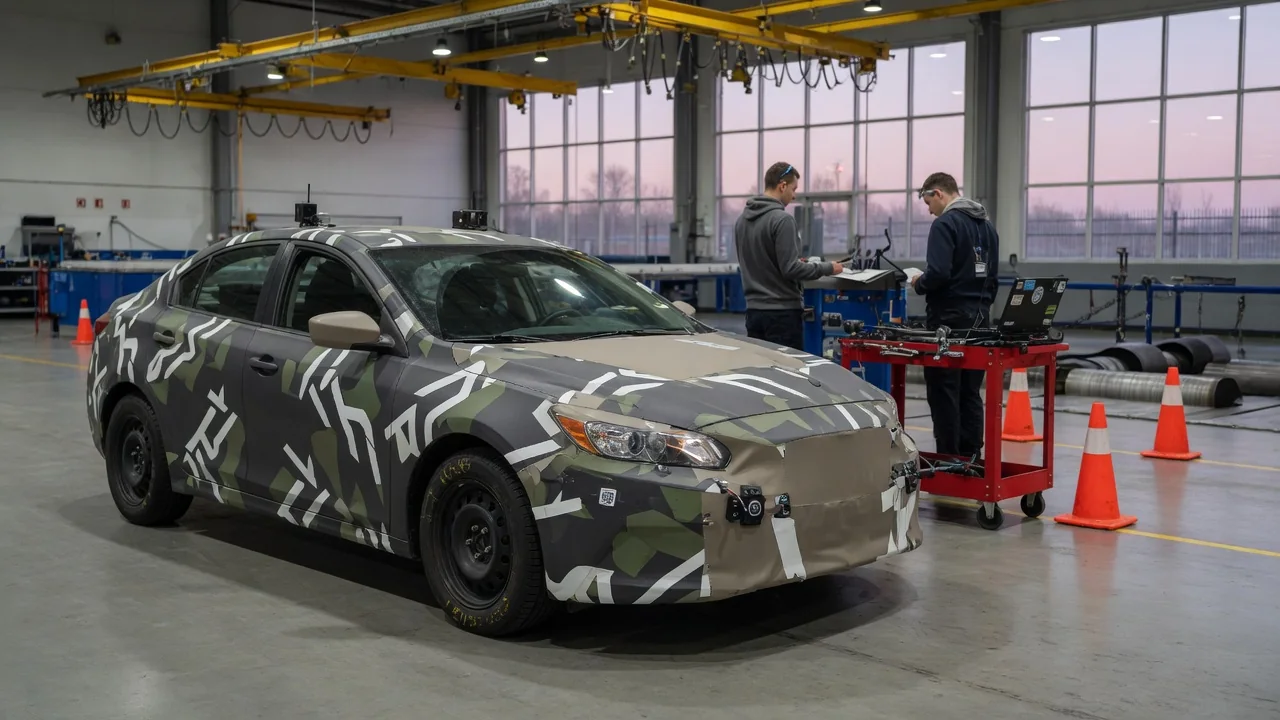
A pre-production car is a vehicle built after early prototypes but before full-scale manufacturing begins. It is typically made with production-intent parts, tooling, and assembly processes. In plain terms, a pre-production vehicle is a near-final car made to prove two things: that the design can be built consistently, and that it performs as intended. These cars are not usually sold to the public. Even so, they shape what eventually reaches dealerships, owner's manuals, and repair procedures.
Build stage
Vehicle development generally moves through several build phases. Early prototypes and so-called mules are often assembled by hand. They sometimes use bodies or components borrowed from existing vehicles to test new powertrains or chassis systems. Later prototypes use more of the new design, but they may still rely on hand-fabricated panels, temporary tooling, and parts made in small quantities. A pre-production car comes after these steps. It is meant to look and work very close to the finished product. It is usually built with components from the intended production suppliers or from tooling that will be used for series manufacturing.
What sets this stage apart is where and how the cars are built. Pre-production units are commonly assembled at or alongside the plant that will make the final vehicle, and workers follow the planned sequence of operations. Manufacturers use different names for these builds, such as pilot builds, pre-series, or validation builds, and some split the phase into several rounds. The labels and the number of rounds vary between companies. There is no single universal definition of how many pre-production cars are built or exactly when the phase begins and ends.
The build itself is a learning exercise. Assembly engineers watch for parts that are difficult to install, fasteners that are hard to reach, panels that do not align, and steps that take longer than planned. Line workers gain experience with the new model before the pace increases. Quality teams set up the inspection points that will later be applied to every car leaving the plant.
Testing
Pre-production cars are used for validation testing, which has a different purpose from earlier prototype testing. Prototypes help engineers decide whether a design concept works. Pre-production vehicles help confirm that the version built with production parts and processes still meets the targets set during development. Because these cars are close to final, their test results are considered more representative of what customers will eventually receive.
Testing typically includes durability running on test tracks and public roads, operation in hot and cold climates, and checks of noise, vibration, and harshness. Electrical systems and software are exercised to find faults that only appear when all modules communicate in a complete vehicle. Some units are used for crash testing and for the certification or homologation work required before a model can be sold in a given market. This work generally requires test vehicles that represent the production design. Other units may be taken apart to inspect welds, sealing, corrosion protection, and wear.
Not every pre-production car goes to an engineering lab. Some are used for marketing photography, auto show displays, or early media drives. When journalists drive a car before its official launch, it is often a pre-production example. Manufacturers frequently note in these cases that details may differ from the final version. That disclaimer reflects a real uncertainty, because the testing phase exists precisely while changes are still possible.
Production changes
Findings from the pre-production phase feed directly into changes made before regular production starts. For example: • A rattle traced to a trim clip may lead to a revised part design. • A panel gap problem may require tooling adjustments at a supplier or in the body shop. • A software fault may be fixed with a new calibration or a control-module update. • Assembly steps that proved awkward can be resequenced. • Supplier parts that missed quality expectations can be reworked or replaced. These changes are typically managed through a formal engineering change process, which keeps drawings, part numbers, and documentation consistent.
As a result, a pre-production car can differ from the matching production car in visible or hidden ways. Visible differences might include interior materials, trim finishes, badging, or the fit of individual pieces. Hidden differences can involve wiring routes, fastener types, software versions, or internal component revisions. How much the two differ depends entirely on the specific vehicle program. Some pre-production cars are nearly identical to retail vehicles, while others still carry significant unresolved items.
Once the pre-production phase is complete and the process is judged stable, the plant enters a ramp-up period in which output gradually rises toward full rate. Manufacturers continue to make running changes throughout a model's life. Those later changes are handled within series production, not as part of the pre-production stage.
Practical implications and limits
For car owners and shoppers, the main takeaway is that early impressions of a new model may not exactly match the car on the dealer lot. Reviews, photos, and specifications published before launch can reflect pre-production examples. If a pre-launch report mentions something that matters to a purchase decision, such as a feature, a trim detail, or a reported fault, confirm it on a production vehicle or in the final published specifications.
Pre-production cars also affect maintenance information. Owner's manuals, service procedures, and parts catalogs are normally written for the production configuration. A pre-production vehicle may use components or software that do not appear in those references, which can make diagnosis and parts sourcing difficult. This is one reason manufacturers often keep such cars in-house, scrap them, or release them only under specific conditions.
Pre-production vehicles occasionally appear on the used market or in collections. Their status can affect whether they can be registered, insured, or legally driven on public roads. They may not have completed the certification that applies to retail vehicles in a given market. Rules differ by country and region, and the vehicle's documentation decides the question, not its appearance. Anyone considering such a car should verify the title, vehicle identification number, and compliance paperwork with the relevant authorities. Only then can they know whether it can be used like a standard production model.