White-Rodgers Glow Plug Relay Selection: Fitment, Ratings and Trade-Offs
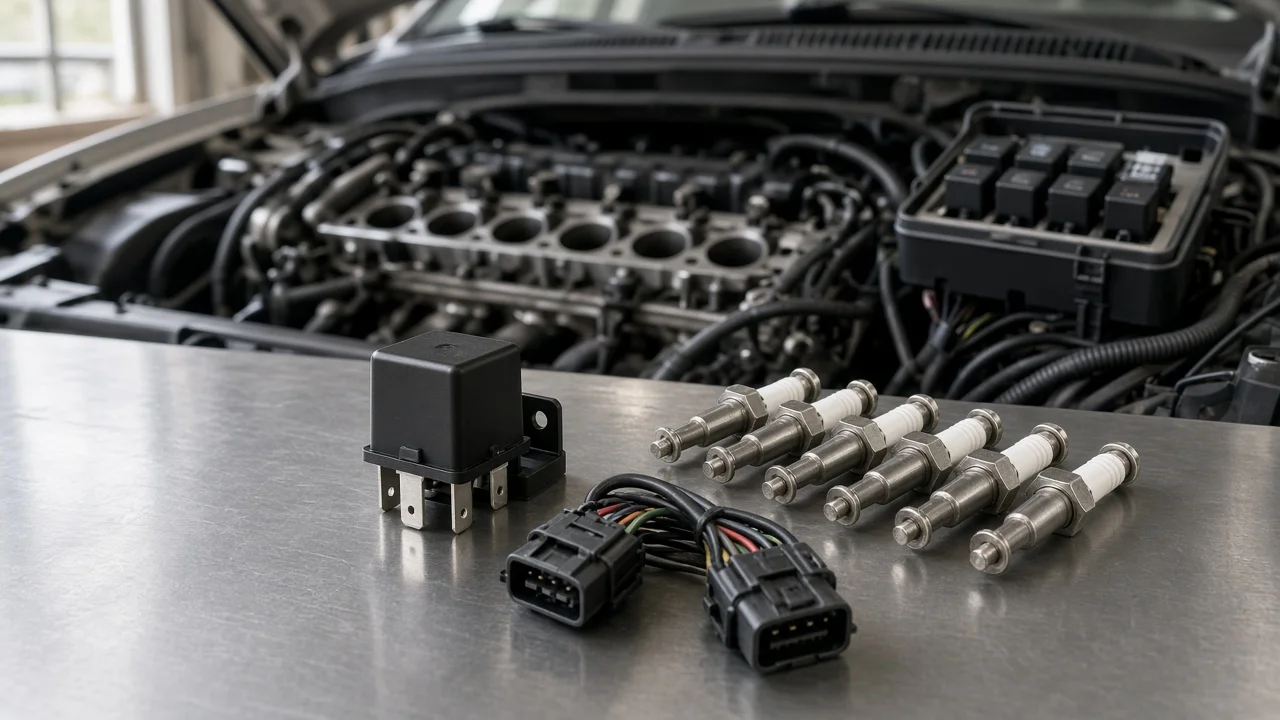
A White-Rodgers glow plug relay is a common replacement when a diesel's relay clicks without heating the plugs, or sticks on and drains the battery. Brand matters less than matching coil voltage, current capacity, duty cycle and terminal layout to the controller already on your engine. This guide shows how to narrow the options before you buy.
Define the job the product must do
Start by confirming the relay is actually the part that failed. On many older indirect-injection diesels, a heavy-duty solenoid switches battery current to all glow plugs at once, while a separate timer or controller decides how long they stay on. Signs of a bad relay include a click with no voltage at the glow plug feed, voltage that stays present long after the wait light goes out, or burned and pitted terminals. A failed glow plug, a broken harness or a weak battery can cause the same hard cold start, so measure voltage at the plug feed during the glow cycle before spending money.
Then define your constraints. A truck parked outside in freezing weather puts far more cycles on the relay than one kept in a heated garage. Decide whether you need an exact-fit unit that bolts into the original bracket, or whether you are wiring an aftermarket manual glow switch, where the relay stays energized for as long as the button is held. Glow plugs exist only on diesel engines. A gasoline engine has no equivalent circuit, so this part has nothing to do with spark-ignition hard starting.
Check compatibility
Coil voltage comes first. Most light trucks use a 12-volt system, while some commercial and military applications run 24 volts. A coil wound for the wrong voltage will either fail to pull in or overheat. Next, compare the contact current rating with the total draw of your glow plugs. Engine configuration matters here: a V8 powers eight plugs through one set of contacts. Cold plugs also pull more current at the first instant than once they warm, so the relay must handle that inrush as well as the steady load.
Check how the coil is grounded. Some solenoids ground the coil through the mounting bracket, so the case must bolt to clean bare metal. Others have an insulated coil with a separate ground terminal, usually on a four-stud body. If you swap one type for the other without changing the wiring, the relay can end up dead or permanently energized. Stud sizes, bracket spacing and terminal orientation also decide whether the original cables reach without strain. Compare the old unit's markings with the vehicle manufacturer's service information rather than trusting a generic cross-reference listing.
Features that affect the choice
Duty rating is the most meaningful trade-off. Intermittent-duty solenoids are built for short bursts, which suits a controller that pre-glows and shuts off quickly. If your system holds the plugs on through an extended afterglow period, or you use a manual switch, a continuous-duty unit is designed to stay energized without overheating its coil. A continuous-duty coil draws holding current the whole time it is on, so confirm your controller output can supply it.
Judge the build details you can actually inspect: a sealed housing that resists water and road salt, solid studs and contacts, insulating boots for exposed live terminals, and voltage and duty ratings printed on the body or packaging. Labels like heavy-duty, premium or OEM-grade mean little on their own. A listing that states coil voltage, contact rating, duty type and terminal configuration gives you something to verify. One that offers only fit claims does not. Also remember that a relay cannot change fuel pressure, injector spray or fuel pump output. All it does is deliver current to the glow plugs.
Limitations and ownership costs
Installation is simple but carries real risk. The main stud is live at all times, and a wrench that touches it and the body at once can arc or weld. Before you touch the relay, disconnect the battery negative cable, or both negative cables on dual-battery trucks. Clean the cable ends, replace corroded terminals and check the ground path, because a high-resistance connection causes the same weak heating as a worn relay. Budget for terminal boots, possibly a new cable or fusible link, and a replacement glow plug if testing turns up a failed one.
Ongoing cost is mostly contact wear and corrosion. Every glow cycle switches a large current, and pitting eventually raises the voltage drop across the contacts. Measuring that drop while the system is active is a quicker check than waiting for a no-start. A relay stuck closed is more serious than one that fails open. It keeps the plugs powered, which can drain the battery and shorten glow plug life, so investigate a wait light or glow indicator that behaves oddly.
Know what the relay cannot fix. If the glow circuit tests good but the engine still cranks long, look at fuel delivery: a restricted fuel filter, a weak lift pump, air leaking in at a loose fitting, or worn injectors. Do a visual leak check with the engine off and cool. Never loosen injection lines or a common-rail fitting to bleed off pressure. High-pressure diesel fuel can penetrate skin, and many systems require a specific procedure or scan tool. Fuel trim readings from gasoline diagnostics will not diagnose a glow circuit, and an additive is not a substitute for repairing a fuel or glow fault.
Build a practical shortlist
Before comparing prices, write down five things: the old relay's markings, your system voltage, the number of cylinders, whether the coil grounds through the case or a separate stud, and how long your controller or switch keeps the plugs energized. Those facts rule out most candidates. From what remains, keep only listings that state coil voltage, contact current rating, duty type and terminal count, and whose mounting pattern matches your bracket.
Compare the finalists on four points: rating margin over the combined draw of your glow plugs, a duty type that matches your control method, a terminal layout that fits the existing cables without modification, and sealing suited to where the relay sits under the hood. If two options tie, choose the one whose specifications you can confirm against the vehicle's service information. After installation, check voltage at the glow plugs during a cold-start cycle and confirm it drops when the controller shuts off. That single measurement tells you more than any product label.