Bobcat Glow Plug Relay Selection: Fitment, Features and Limits
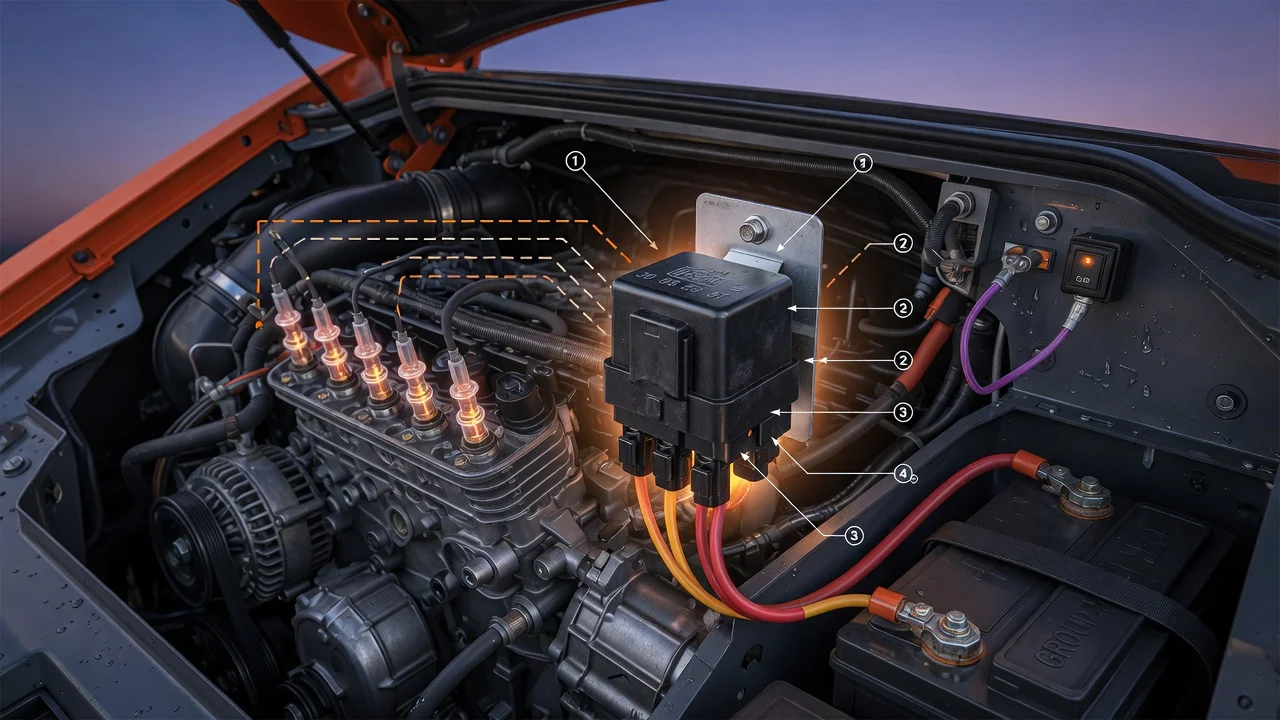
A Bobcat glow plug relay switches the heavy current that preheats the combustion chambers of a diesel engine. A failed or mismatched relay shows up as slow, smoky or impossible cold starts. Choosing a replacement is mostly about matching the machine, not finding a premium part. This guide explains how to confirm the relay is the real fault, which specifications decide fitment, and where a relay stops helping.
Define the job the product must do
Start with the machine and the symptom. Note the model, serial number and engine. Over the years, Bobcat loaders, excavators and utility vehicles have used different diesel engines and wiring, and the glow circuit changed with them. Then describe the problem precisely. The preheat indicator may never come on. The relay may click without sending current to the plugs. The plugs may stay energized after the engine starts. Or the machine may start hard only below a certain temperature. A relay that never closes and one that has welded shut leave different clues, and those clues show whether a relay is even the right purchase.
Hard cold starting on a diesel is not always electrical. Several fuel-side faults can mimic a glow fault: a clogged fuel filter, air drawn in through a loose fitting, a weak lift or transfer fuel pump, gelled fuel in winter, or a worn injector. Check the basics first. Look at battery state of charge and cranking speed, confirm the fuel suits the season, and do a visual leak check along the low-pressure lines. On engines with common-rail injection, the high-pressure side holds dangerous pressure. Do not open or bleed those lines while the engine is running or cranking, and follow the service manual procedure if fuel pressure needs testing. Additives may help with winter fuel handling, but they do not repair a failed relay, glow plug or injector.
Check compatibility
The most reliable compatibility evidence comes from three places: the original part number printed on the relay, the parts manual for your serial number range, or a dealer lookup. Match these interfaces: • System voltage. Bobcat equipment commonly runs a 12 volt system, but confirm it on your machine. • Coil voltage. • Pin count and terminal layout. • The physical footprint of the socket or mounting bracket. Many machines use a plug-in relay in a fuse and relay panel. Others use a larger bolt-on unit with stud terminals and ring connectors for the heavy cables. Engine configuration and the machine's production year both influence which style you will find. A relay that fits the socket but routes its terminals differently can energize the wrong circuit.
The current rating matters more here than on most relays. A set of glow plugs draws substantial current the moment it switches on, and the relay contacts must handle that inrush repeatedly without pitting. Match or exceed the original contact rating. Do not substitute a general accessory relay just because the pins line up. Also confirm what controls preheat duration. On some machines the relay is a simple switch commanded by the engine controller or a separate timer. On others, timing logic is built into the relay module itself. The two designs are not interchangeable.
Features that affect the choice
Useful features are the ones you can verify on the label or datasheet: • Continuous and inrush contact ratings. • Coil resistance or current. • A suppression diode or resistor across the coil. • Sealing against water and dust. • An operating temperature range suited to an engine compartment. Coil suppression deserves attention. A controller that expects a suppressed coil can be stressed by a relay without one. A diode-equipped relay installed in a circuit with reversed polarity may not work at all. Terminal plating and a sealed case help the part survive the washdowns, mud and vibration that compact equipment lives with.
Treat labels such as heavy duty, premium or OEM quality as marketing unless they come with numbers. A genuine Bobcat part guarantees the intended specification for its serial range. An aftermarket relay can be perfectly adequate if its documented ratings, pinout and suppression match. Be cautious with listings that claim to fit a long list of unrelated machines without showing ratings. Be equally cautious with prices far below comparable parts, since contact material is where cheap relays usually save money.
Limitations and ownership costs
Installing a relay is usually simple. Disconnect the battery, note the terminal positions, swap the unit, and tighten any stud nuts so the heavy connections do not heat up. A relay has no consumables, but the circuit around it ages. Corroded sockets, loose ring terminals, a blown fusible link or a chafed harness can all cause the same symptoms as a bad relay. A new relay can also fail early if one glow plug is shorted and pulling excess current. To find out whether the relay was the only problem, test each glow plug's resistance and check the voltage at the plugs during preheat.
A relay cannot make up for a weak battery, the wrong fuel grade for the temperature, a restricted fuel filter, poor injector spray or low compression. If the machine works in a cold climate far from a dealer, consider keeping a spare. A relay is inexpensive compared with lost working time. Keep the old part as well, so its markings are available for future cross-referencing.
Build a practical shortlist
Narrow the options with a checklist rather than a ranking. For each candidate, confirm: • The part number cross-reference for your model and serial range. • System and coil voltage. • Pin count, terminal layout and mounting style. • Continuous and inrush contact ratings compared with the original. • Whether a coil diode or resistor is present and matches. • The sealing and temperature rating. • Whether preheat timing is handled by the relay, a timer or the controller. Keep any candidate that leaves one of these unanswered off the list until the seller or datasheet fills the gap.
Once you have two or three candidates that pass, choose between a genuine part and a documented aftermarket equivalent based on availability, warranty terms and how soon the machine needs to work. After installation, verify the result. The preheat indicator should behave normally, the plugs should receive voltage for the expected period, and cold starts should improve. If they do not, go back to the fuel side, from the filter and fuel pump to injector condition, before replacing more electrical parts.