Choosing a Diesel Glow Plug Relay: Fitment, Features and Costs
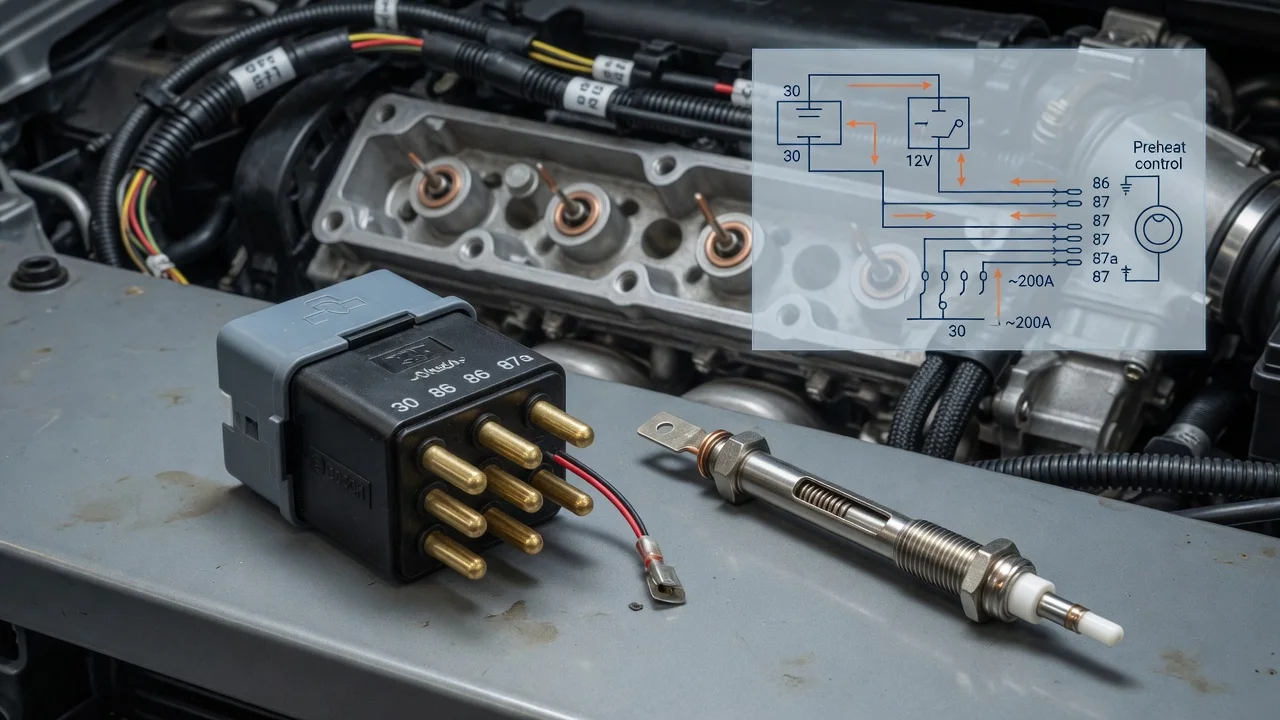
A diesel glow plug relay switches heavy battery current to the glow plugs so the engine can start and run cleanly when the combustion chambers are cold. When it fails, owners usually notice long cranking, rough idle and white smoke after a cold start, a wait-to-start lamp that behaves oddly, or a stored glow circuit fault. Picking a replacement is mostly a matching exercise: identify the control strategy your engine uses, confirm the fault, then weigh build quality, warranty and the full cost of the repair.
Define the job the relay must do
Glow plugs exist only on diesel engines. A diesel relies on compression heat to ignite fuel, and on a cold morning that heat is not enough without help. The plugs preheat each cylinder before cranking and, on many engines, keep heating for a short afterglow period to reduce smoke and noise. Gasoline engines use spark plugs and have no glow plug relay, so if a parts listing shows one for a gas model, the listing is wrong or refers to a different engine. Think about how the vehicle is used. A truck that starts outdoors in freezing weather every day puts far more cycles and heat stress on the relay than a commuter car in a mild climate, which makes durability and sealing more important than the lowest price.
Before buying anything, make sure the relay is really the culprit, because hard cold starts are just as often caused by the fuel side. A restricted fuel filter, waxed fuel in cold weather, an air leak in the supply line, a weak lift fuel pump, a worn injector or low rail fuel pressure can all mimic a glow system fault. Modern common-rail systems operate at extremely high pressure, so never crack open injector lines or rail fittings to bleed or test them; read rail pressure and injector correction data with a scan tool or leave that work to a qualified technician. Anti-gel and cleaning additives can help prevent fuel waxing, but they are not a repair for a failed part. On the electrical side, scanning for glow circuit codes, listening for the relay click and checking with a meter that voltage reaches the plug feed during the preheat cycle will tell you far more than guessing.
Check compatibility before you buy
Start with the engine configuration, not just the make and model. The same vehicle line can carry several diesel engines over its production run, each with a different glow system. Record the engine code, displacement, number of cylinders and model year, and if possible read the part number printed on the old unit. That number is the most reliable cross-reference, because catalog fitment by model alone often lumps incompatible parts together.
Next, identify which type of controller you have. Older and simpler systems use an electromechanical relay, triggered by a timer or the engine computer, that applies full battery voltage to the plugs. Many newer engines use an electronic glow plug control module that pulses current to plugs designed to run below system voltage, and it often reports faults for each individual plug. These are not interchangeable. A full-voltage relay feeding low-voltage plugs can overheat and destroy them quickly, while a pulsing module paired with the wrong plugs may not heat them properly or may set fault codes. Also confirm system voltage, since some heavy trucks run 24-volt electrics.
Finally, compare the physical interfaces: connector shape and pin count, the size and layout of the main feed and plug output terminals, the number of output channels compared with the number of cylinders, and the mounting bracket or bolt pattern. A part that needs a spliced connector or a modified bracket introduces new failure points in a circuit that carries a lot of current.
Features that affect the choice
The useful evidence on a listing is concrete: a stated cross-reference to the original part number, rated voltage, channel count, connector description and clear warranty and return terms. Labels such as heavy duty, upgraded or premium mean little unless they are backed by a specification you can check. An original-equipment part removes most fitment doubt but costs more. A recognized aftermarket brand that also makes glow plugs and publishes detailed fitment data is usually a reasonable middle ground, while unbranded units with vague listings are the riskiest choice for a component that handles this much current.
Construction matters too. Electromechanical relays are simple and you can usually hear them click, but their contacts wear and can pit or weld shut over time. Solid-state modules have no contacts to wear and support better diagnostics, but they can be sensitive to heat, moisture and voltage spikes, so a sealed housing and weather-tight connector seals are worth checking. Look at terminal plating, whether new nuts or a protective boot are included, and whether the instructions mention clearing stored fault codes with a scan tool after installation.
Limitations and ownership costs
A new relay cannot fix burned-out glow plugs, a corroded harness, a weak battery or a fuel delivery problem. Glow plugs are often replaced as a set, so budget for testing them and possibly buying new ones that match the controller type. On some engines, plugs that have been in place for years can seize, and forcing them risks breaking them off in the cylinder head, which turns a modest job into an expensive one. If the old relay failed with its contacts stuck closed, it may have kept power on the plugs, damaging them and draining the battery, so check both.
Disconnect the battery negative cable before working, because the main feed to the relay is often live whenever the battery is connected. Clean corroded terminals, tighten connections firmly without overtightening, and inspect the fuse or fusible link that protects the circuit. After installation, confirm that the plugs receive power during the preheat cycle and that power shuts off afterward. Beyond keeping connections clean and dry, the relay needs no routine maintenance.
While you are under the hood, a simple visual leak check of the fuel filter housing and low-pressure supply lines is worthwhile, and keeping the fuel filter on its service schedule protects cold starting as much as any electrical part. Never feel along high-pressure lines with your hand while the engine runs, since a pinhole spray can penetrate skin.
Build a practical shortlist
Narrow your options with a short checklist. Confirm the diagnosis with codes and voltage readings. Record the engine code, cylinder count and the original part number. Identify whether you need a full-voltage relay or a pulsing control module, and at what system voltage. Match connector, terminals, channel count and mounting. Check that your glow plugs suit the controller. Compare warranty length and return terms, and add the cost of any plugs, terminals or harness repairs to the price of the part.
Two or three candidates that pass every item on that list are enough to choose from. Do not let star ratings or a lower price override a fitment doubt; a cheaper relay that needs an adapted connector or arrives with the wrong channel count is no saving. If the engine has a pulsing module with per-cylinder diagnostics and you lack a scan tool, having a shop confirm the fault before you order can save you from replacing a part that was never the problem.