Kubota Glow Plug Relay Selection: Fitment, Ratings and Practical Checks
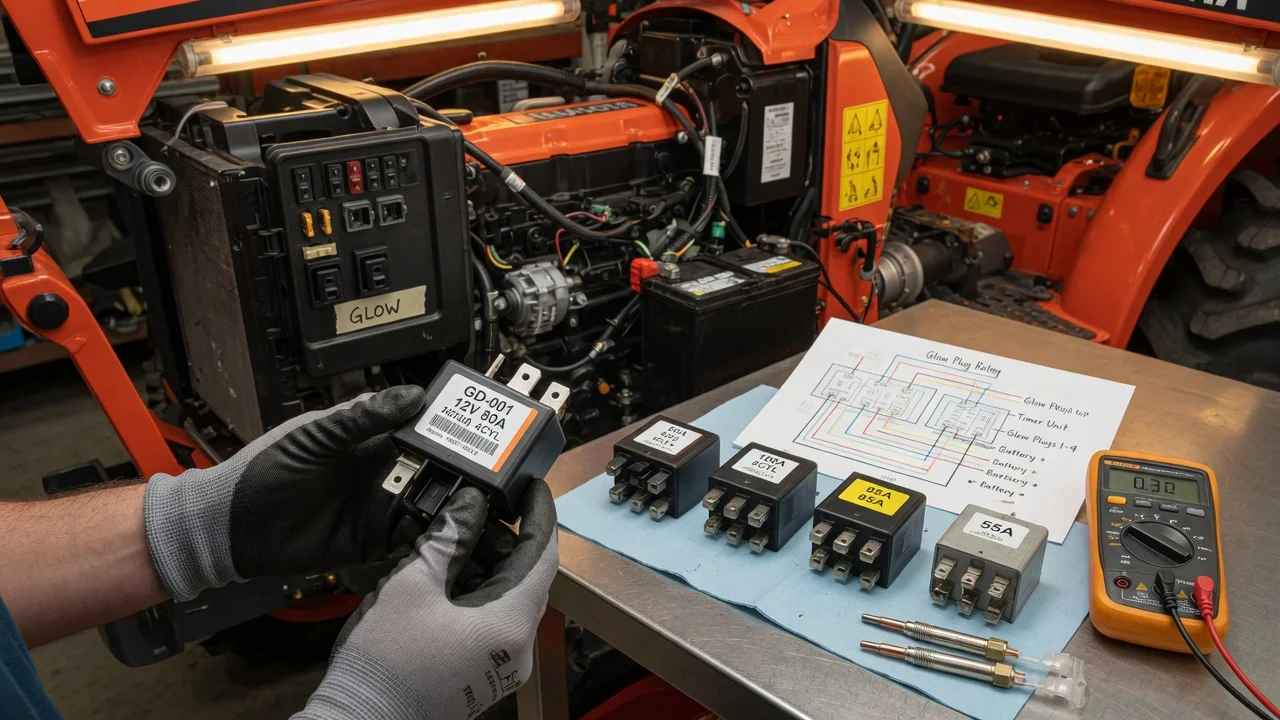
A failing glow plug relay on a Kubota diesel usually shows up as hard cold starts, extra white smoke at startup, or glow plugs that never seem to warm. Choosing a replacement is mostly about matching electrical ratings, terminal layout and timing function to your machine. You also need to confirm the relay is really at fault, rather than the plugs, the wiring or fuel delivery. This guide covers those checks so the part you buy fixes the starting problem you actually have.
Define the job the product must do
The glow relay switches heavy current from the battery to the glow plugs when the key switch or a glow controller energizes its low-current coil. On many Kubota compact tractors, mowers, utility vehicles and small excavators, the plugs are wired in parallel through a busbar, so a single relay carries the combined load of every cylinder. Not every machine uses the same arrangement. Some feed the plugs through a standalone relay, some through a timer or controller that also runs the preheat lamp, and some older designs route preheat current more directly through the key switch. Before shopping, confirm which arrangement your machine uses so you replace the correct component.
Then define your practical constraints: how cold your mornings get, how often the machine starts cold, how easy the relay is to reach, and whether you want a factory part or an aftermarket equivalent. Be honest about the symptoms. A relay problem typically means the plugs get no power or stay powered when they should not. If the plugs heat properly but the engine still cranks slowly into a start, the cause may be fuel delivery instead: a restricted fuel filter, air in the supply lines, a weak lift pump or a worn injector. A new relay will not cure any of those, and fuel additives are not a proven repair for them either.
Check compatibility
Start with the machine model and serial number, plus the engine model stamped on the block. Kubota has used different relay and timer setups across series and production years, and the same model name can change partway through a run. The most reliable cross-reference is the part number printed on the old relay or listed in the parts catalog for your serial range. Matching by appearance alone is risky, because relays that look identical can differ in internal wiring, ratings or timing behavior.
Next, compare the specifications that decide whether a relay will work. Coil voltage must match the electrical system; most compact equipment runs on 12 volts, but confirm yours. The contact current rating must comfortably exceed the total glow plug draw, which depends on engine configuration and plug type: a four-cylinder engine loads the relay more than a two- or three-cylinder one, and cold plugs draw more in the first seconds. Check the terminal count and pin arrangement. Many relays use the common 30, 85, 86 and 87 numbering, but some equipment relays use different layouts. Also check the connector style, the mounting bracket, and whether the original has a built-in diode or resistor across the coil. Finally, confirm whether the original includes timing or afterglow logic. The control timing must suit the installed plugs, because the wrong preheat duration can shorten plug life.
Features that affect the choice
A genuine Kubota relay gives you the surest fit and the intended timing behavior, usually at a higher price. Aftermarket units range from accurate equivalents to loose approximations. Useful evidence includes ratings printed on the housing, a published contact current rating, a terminal diagram, an explicit cross-reference to the factory part number, and clear warranty and return terms. Labels such as heavy duty, premium or direct fit mean little unless they come with those specifics.
Construction matters on equipment that sees vibration, washdowns and engine heat. A sealed housing and a secure mounting tab help a relay survive where it is usually installed. Timer-equipped relays automate the preheat period and may drive the indicator lamp, which is convenient but only correct if the timing matches your engine. The main trade-off is with universal relays. A generic automotive relay may plug in and click, yet lack the contact rating or timing function the system needs. An undersized relay can overheat or weld its contacts closed, leaving the plugs energized. That drains the battery and can burn out the plugs, turning a small purchase into a larger repair.
Limitations and ownership costs
A relay only switches power, so it cannot fix failed plugs, a corroded busbar, a poor ground, a weak battery, a faulty key switch or a bad controller. Before buying, check with the key in the preheat position. If the coil receives voltage but the output terminal does not feed the plugs, the relay is a likely suspect. With the busbar disconnected, test each glow plug's resistance with an ohmmeter; an open plug points to the plugs rather than the relay. A clamp-on DC ammeter on the feed wire during preheat shows the actual load, which helps you confirm the current rating you need. A battery that sags heavily during preheat can also prevent a good relay from pulling in reliably.
Installation is usually simple, but disconnect the negative battery cable first, because the main feed is unfused or heavily fused on many machines. Clean corroded terminals, tighten the nuts securely so they will not loosen under vibration, and route wires away from exhaust heat. Replace any melted or discolored connectors, since high resistance there can mimic a relay fault. If hard starting continues after the electrical side checks out, turn to the fuel system. Drain the water separator, replace the fuel filter, and perform a visual leak check on the low-pressure supply side for wet fittings or air bubbles in clear lines. Lines between the injection pump and injectors operate at very high fuel pressure. Never loosen them or put your hands near a suspected leak while the engine runs or cranks, because a fine spray can penetrate skin. Follow the air-bleeding procedure in your operator's manual instead.
Build a practical shortlist
Once the diagnosis points to the relay, narrow your options with a short checklist. Record the machine serial number, engine model and the part number on the old relay. Confirm the coil voltage and a contact current rating that exceeds your measured glow plug draw with margin. Match the terminal count, pin layout, connector and mounting. Confirm whether the original has timing or afterglow logic, and make sure the replacement reproduces it for your plug type.
Then compare the remaining candidates on evidence rather than claims: printed ratings, a terminal diagram, a stated cross-reference to the factory number, sealing for outdoor use, and a warranty and return policy you can actually use if the fit is wrong. When two parts meet every requirement, the factory part buys certainty and the aftermarket part may save money. When an aftermarket listing cannot show the ratings or the cross-reference, treat it as unverified and keep looking. With the right relay installed and the plugs, wiring and fuel supply confirmed healthy, cold starts should return to normal.