What to Pack for a Long Drive With Limited Trunk Space
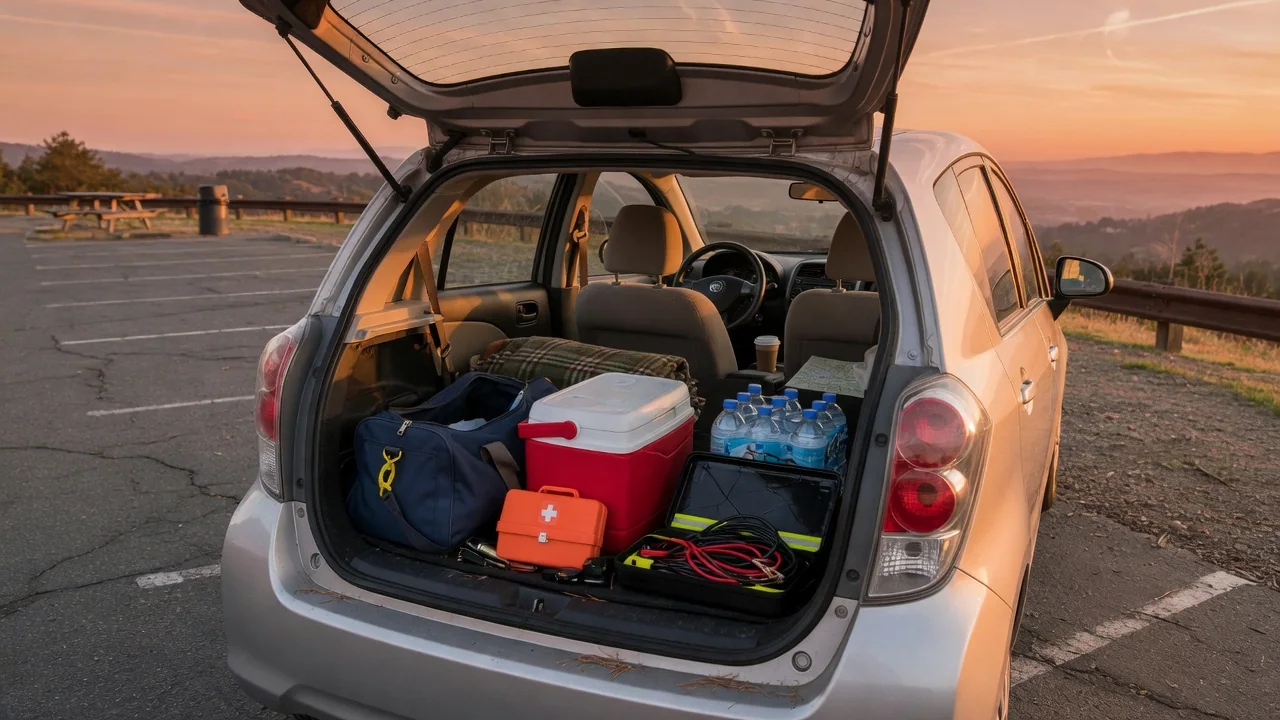
Packing for a long drive in a car with a small trunk depends less on cramming and more on deciding what needs to come along. When cargo space is tight, every item competes with passengers for room, changes how the car carries weight, and can end up blocking your view. This guide covers how to set packing priorities, choose compact items that do more than one job, and keep clear sight lines for the whole trip.
Priorities
Start by sorting everything into three groups: vehicle and safety essentials, things you need during the drive, and things you need only at your destination. The first group always gets space. It typically includes whatever tire equipment your car came with, whether that is a spare, a jack and lug wrench, or a sealant and inflator kit. It also includes jumper cables or a portable jump starter, a basic first-aid kit, a flashlight, and a warning triangle or reflective vest. The owner's manual belongs here too, because it explains your tire equipment, fuse locations, and warning lights, which are the details that matter when something goes wrong far from home.
The second group belongs in the cabin, not the trunk. Water, snacks, phone chargers, medications, sunglasses, a light jacket, and documents such as your license, registration, and proof of insurance should be within reach without stopping to unload. Destination items go in the trunk, and their order matters: pack the bag you need at the first overnight stop last, so it comes out first. A trunk packed by order of need saves you from emptying it at every hotel.
Once everything is grouped, cut aggressively. Ask whether each item can be bought, borrowed, or washed at the destination. Planning one load of laundry often replaces several days of clothing. Weight deserves attention as well as volume. Most vehicles list a maximum combined weight for occupants and cargo in the owner's manual and on a label, commonly on the driver's door jamb. A small car carrying several adults can approach that figure sooner than its trunk size suggests, so check it before you load.
Compact items
For small trunk road trip packing, soft-sided bags usually beat hard suitcases. Duffels and backpacks conform to the irregular shapes of a trunk, including wheel-well humps, sloped seatbacks, and the curve beneath the rear glass, while rigid cases leave unusable gaps around their corners. Packing cubes keep clothing sorted so you can pull out one cube instead of the whole bag. Compression bags shrink bulky items such as jackets and sleeping bags. Compression reduces volume but not weight, so a trunk full of compressed bags can be heavier than it looks.
Favor items that serve more than one purpose. Some portable jump starters double as power banks for phones, and a compact tire inflator that plugs into the car's 12-volt outlet can replace a bulkier pump. Confirm what any device actually does before relying on it. A blanket can provide warmth, cushion fragile items, and cover belongings from view. Collapsible water containers, folding crates, and fabric organizers take almost no space when empty. Coordinate with other travelers so the group carries one toiletry kit, one charger set, and one first-aid kit instead of duplicates.
Use the storage spaces many cars already have. The area around the spare tire under the trunk floor, seatback pockets, door pockets, and the center console can hold small items that would otherwise take up trunk space. Keep the driver's footwell and the space under the driver's seat clear, because loose objects can slide forward under the pedals. Small soft items such as rolled clothing or towels work well for filling gaps between larger bags, which also keeps the load from shifting.
Visibility
When trunk space runs out, the temptation is to stack cargo higher or spread it across the rear seat and parcel shelf. Doing so can block the view through the rear window, which takes away the interior mirror as a tool for judging following traffic and lane changes. Keep cargo below the window line wherever possible. If the rear view must be partly obstructed, adjust the outside mirrors carefully before departure. Rules on obstructed rear views vary by jurisdiction, and side mirrors do not fully replace a clear rear window, so treat a blocked view as a last resort.
Visibility and cargo security are closely linked, because items stacked high tend to be loose. In a sudden stop, unsecured objects in the cabin keep moving and can strike occupants. Place heavy items low in the trunk and as far forward as possible, against the rear seatback. If an unoccupied rear seat holds bags, buckle the seat belt through or around them where practical. Never place hard or heavy objects on the rear parcel shelf, where they can block the view and become projectiles.
It also helps to keep your own belongings easy to see and reach. Emergency items such as the warning triangle, flashlight, and first-aid kit should sit near the top of the load or in the cabin, not buried under luggage. Covering valuables with a blanket or cargo cover keeps them out of sight when you park at rest stops or overnight. A load you can scan at a glance also makes it easier to notice when something has shifted or gone missing.
Practical implications and limits
A fully loaded car behaves differently from the same car with only a driver aboard. Added weight lengthens stopping distances, softens steering response, and can make the rear feel less settled over bumps, so leave more following distance and brake earlier. Some manufacturers specify different tire pressures for heavier loads, and that guidance appears on the tire information label or in the owner's manual. Extra weight also raises fuel consumption, and cargo carried on the roof adds aerodynamic drag on top of its weight, which shows up most at highway speeds.
No single packing list fits every vehicle. Trunk shapes, opening sizes, spare-tire arrangements, folding-seat designs, and tie-down points vary widely, so the owner's manual for your specific car is the authority on load limits, roof load ratings, and where cargo can be secured. Roof boxes and hitch-mounted carriers can extend capacity, but they come with their own weight limits and can affect overhead clearance in garages and drive-throughs. A hitch carrier may also block the license plate, rear lights, or rearview camera. Plan to check and rearrange the load at fuel stops, since bags settle and shift over long distances.