How to Pack a Car for a Move Without Blocking Visibility
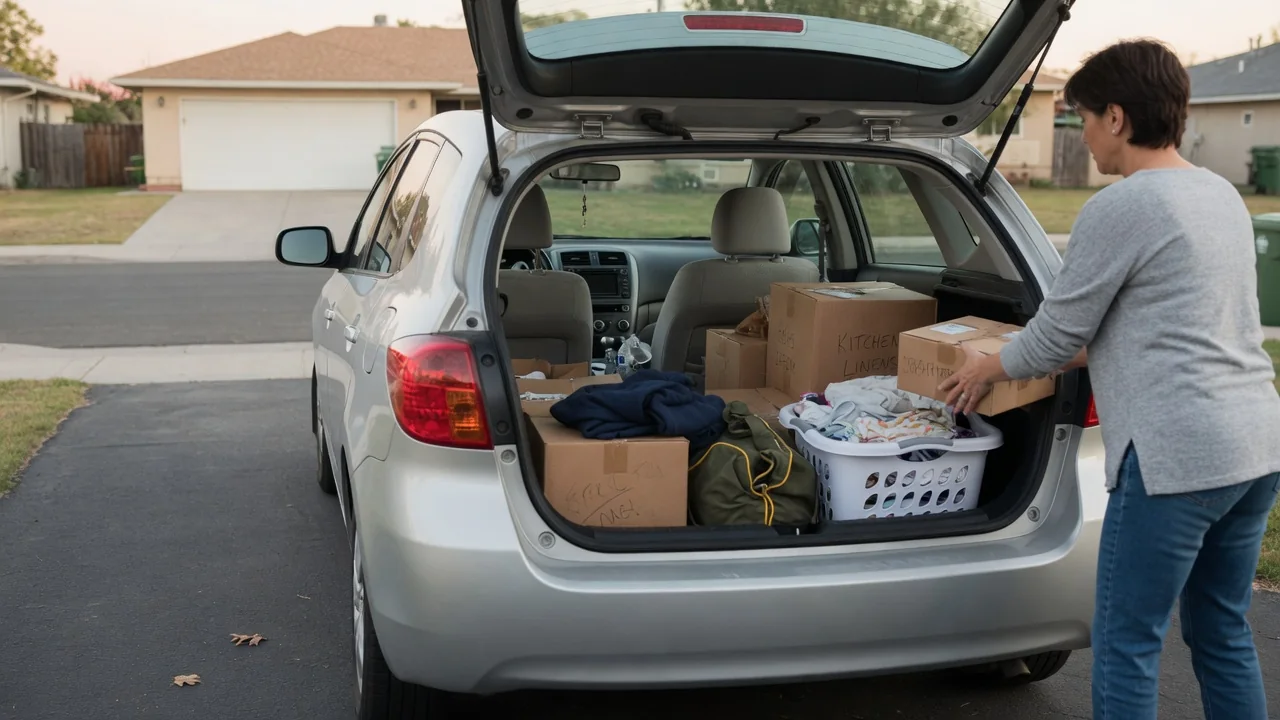
Learning how to pack a car for a move without blocking visibility comes down to sequence. Heavy, bulky household items go in first and low, lighter pieces fill the gaps, and nothing rises above the line where the driver's sightlines begin. The approach below works for sedans, hatchbacks, and SUVs, though cargo shapes, mirror coverage, and load limits differ by vehicle.
Plan load order
Start by staging everything beside the car and sorting it by weight and shape before a single box goes in. The heaviest, densest items, such as book boxes, a microwave, or a small dresser with the drawers removed, belong on the cargo floor, pushed against the rear seatback and centered between the wheels. Placing mass low and forward keeps the car's handling predictable and builds a flat base, so later layers stack evenly instead of leaning toward the windows.
Medium items come next: lamps wrapped in towels, kitchen bins, and folded chairs fit around the heavy base, with soft bags of bedding and clothing pressed into the remaining gaps. Flat pieces such as mirrors, shelves, or a headboard travel best standing on edge along a side wall or lying flat under everything else. Set a height limit before loading, typically the top of the rear seatbacks or the lower edge of the rear window, and treat anything that exceeds it as a second trip.
Protect glass and seats
The rear window and the rear quarter glass are what the driver loses first when a load creeps upward. In a sedan, the shelf behind the rear seats should stay empty, because anything resting there fills the inside mirror's view and can slide forward under braking. In a hatchback or SUV, keep cargo below the bottom of the tailgate glass and away from the glass itself; hard corners pressing on a window can scratch it or damage the defroster lines, and a shifting box can crack it.
Seats need protection of a different kind. Moving blankets or old comforters laid over upholstery prevent furniture legs and box corners from tearing fabric or denting leather, and they keep folded seatbacks from being scuffed. Many rear seats fold in sections, so check how yours split before deciding where a long item such as a rug or bed rail will run. Keep the front passenger area modest as well, since a tall item there can hide the right side mirror and block a shoulder check.
Secure and recheck
A load that looks tidy in the driveway can rearrange itself at the first hard stop. Many vehicles have tie-down anchors in the cargo area, and ratchet straps or a cargo net run through them hold the top layer down far better than friction alone. Where no anchors exist, wedge soft bags tightly between hard items so nothing has room to move, and buckle the rear seat belts across boxes placed on the seat. Heavy objects should never sit loose above the seatback line, where a sudden stop could carry them forward.
Before leaving, sit in the driver's seat in your normal position and check each view in turn: the inside mirror, both door mirrors, and a glance over each shoulder. If the inside mirror shows cardboard instead of road, remove or lower something rather than accepting it. Adjust the door mirrors once the car is loaded, because a heavy cargo area can settle the rear and change what they show. Stop after the first few miles and look again, since straps loosen and soft items compress as the load beds in.
Everyday Use and Observations
A loaded car behaves differently, and the changes are easy to notice. Braking distances grow, the rear may sit lower, and the steering can feel lighter than usual, particularly if weight sits behind the rear axle. Headlights may aim higher at night as the tail settles; some vehicles have a leveling adjustment, and the owner's manual will say whether yours does. Tire pressure deserves attention too, since the placard in the driver's door opening typically shows the recommended pressures, and the manual may give guidance for heavier loads.
Listen and watch during the drive. A new rattle, a thud during cornering, or an item appearing in the mirror that was not there before all signal that something has shifted and warrant a stop in a safe place. Driver-assistance features vary widely; a backup camera helps with reversing but does not replace a clear rear window in traffic, and blind-spot monitoring, where fitted, supplements the mirrors rather than standing in for them. Leave longer following gaps, change lanes deliberately, and lean on the door mirrors more than you normally would.
Limits and Next Steps
Every vehicle has a payload limit covering passengers and cargo together, and it is usually printed on the tire and loading placard in the driver's door opening. Dense household goods reach that figure sooner than most people expect; a cargo area can be only half full by volume and already near its weight limit with books, tools, or dishes. Rules on obstructed windows and required mirrors also vary by state, so check local requirements rather than assuming a blocked rear window is acceptable.
When the pile on the driveway clearly exceeds what fits below the window line, the answer is another trip or a different vehicle, not a taller stack. A roof carrier can take light, bulky items such as bedding if the roof and rack ratings in the owner's manual allow it, while mattresses, sofas, and appliances are better suited to a rental van, truck, or trailer. Deciding this before loading begins saves unpacking later, and it keeps the car's glass clear for the entire drive.