What to Keep Within Reach on a Long Drive
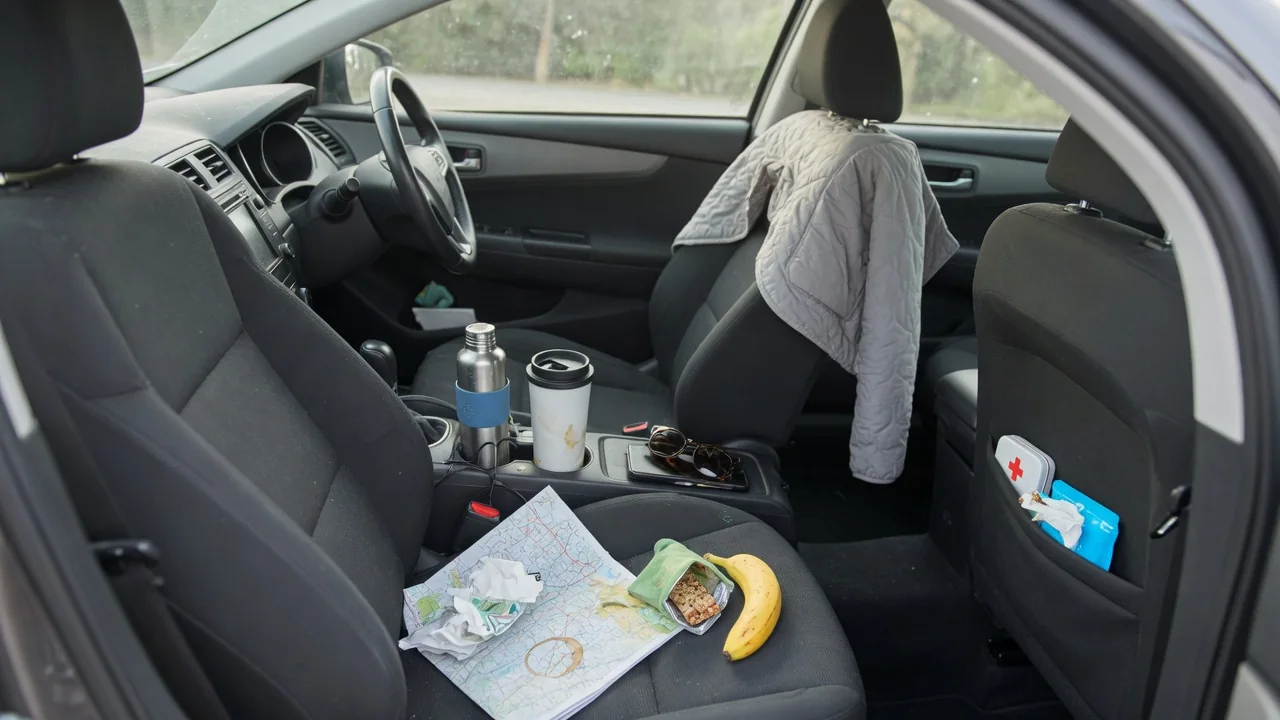
Deciding what to keep within reach on a long drive is less about packing more and more about sorting. A few items genuinely help the driver stay comfortable, legal, and focused, while most luggage, tools, and spare supplies travel better secured in the trunk or cargo area. Sorting the two groups before departure keeps the cabin calm and the driver's hands free.
Accessible controls
Before thinking about loose items, consider the controls built into the vehicle, because they are the things a driver reaches for most. Seat position, mirror angles, steering wheel adjustment, and climate settings are best set while parked, so that only small corrections are needed on the highway. A driver who can reach the wipers, defroster, hazard switch, and headlight control without leaning or looking down has already solved much of the reach problem before any bag is opened.
Layouts vary widely. Some vehicles place climate and audio functions on physical knobs that can be found by touch, while others move them into touchscreen menus that demand a glance away from the road. Steering wheel buttons and voice commands, where fitted, reduce that demand. It is worth spending a few minutes in the driveway locating the less familiar functions, such as cruise control settings or the fuel door release, and the owner's manual explains anything specific to that model.
Documents and supplies
Paperwork belongs in a predictable place rather than in a suitcase. License, registration, and proof of insurance may be requested at a traffic stop or after a collision, so the glovebox or center console is the usual home for them, along with any roadside assistance details. Toll passes, a payment card, and a little cash for parking or toll booths also earn a place near the driver, since fumbling through a wallet in a moving lane is a real distraction.
Supplies follow the same logic. Water in a bottle that fits the cup holder, sunglasses for glare, a charging cable already connected, and any medication needed during the day are true driver essentials. A phone mounted where its navigation display can be seen with a brief glance is more useful than one resting in a lap. By contrast, the first aid kit, jumper cables, spare bulbs, tire inflator, and extra fluids can remain stowed, provided everyone aboard knows where they are.
Avoid loose objects
Anything unrestrained in the cabin keeps moving when the vehicle brakes hard or changes direction suddenly. A water bottle on the passenger seat, a tablet on the dashboard, or a heavy bag on the rear shelf can slide, fall, or be thrown forward with considerable force. The driver's footwell deserves special attention, because an object that rolls beneath the brake or accelerator pedal can interfere with pedal travel at exactly the wrong moment.
The practical answer is to give every reachable item a fixed location. Door pockets, the console bin, cup holders, seatback pockets, and a closed glovebox hold small things securely, while heavier cargo sits low in the trunk or behind a cargo cover or net where the vehicle provides one. Dashboards should stay clear, both to protect the view through the windshield and because many vehicles house a passenger airbag there. Floor mats should be the correct fit and properly anchored.
Everyday Use and Observations
A few hours into a trip, the cabin itself shows whether the arrangement is working. If the driver repeatedly twists toward the back seat, asks a passenger to dig through bags, or steers one-handed while searching the console, something essential has been packed too far away. Rattles, sliding sounds under braking, and items collecting around the seat rails point to the opposite problem, where too much has been left loose within the cabin.
Fuel or charging stops are natural moments to reset. Trash can be cleared, the water bottle refilled, snacks moved from the cooler to the console, and a jacket returned to the back seat once the morning chill has passed. Passengers can take over many tasks, including handling navigation changes and passing food, which shrinks the driver's own list considerably. Solo drivers benefit most from a strict rule that anything not reachable without leaning waits until the vehicle is parked.
Limits and Next Steps
No arrangement makes it safe to do everything from the driver's seat. Reading messages, sorting documents, or retrieving a dropped item are jobs for a rest area, however close the object may be. Local rules on handheld phone use, windshield mounts, and required documents differ between states, so a route crossing several jurisdictions merits a quick check beforehand. Storage space differs too, and a compact car, a pickup, and a three-row SUV will each demand a different plan.
A sensible next step is a short trial before departure. Sit in the normal driving position with the seat belt fastened and confirm that each chosen essential can be reached without the shoulders leaving the seatback. Whatever fails that test moves to a passenger's care or into the cargo area. The owner's manual identifies storage compartments, tie-down points, and the location of the spare tire or inflator kit, which is helpful to know before those stowed items are ever needed.