What Is Rev Matching?
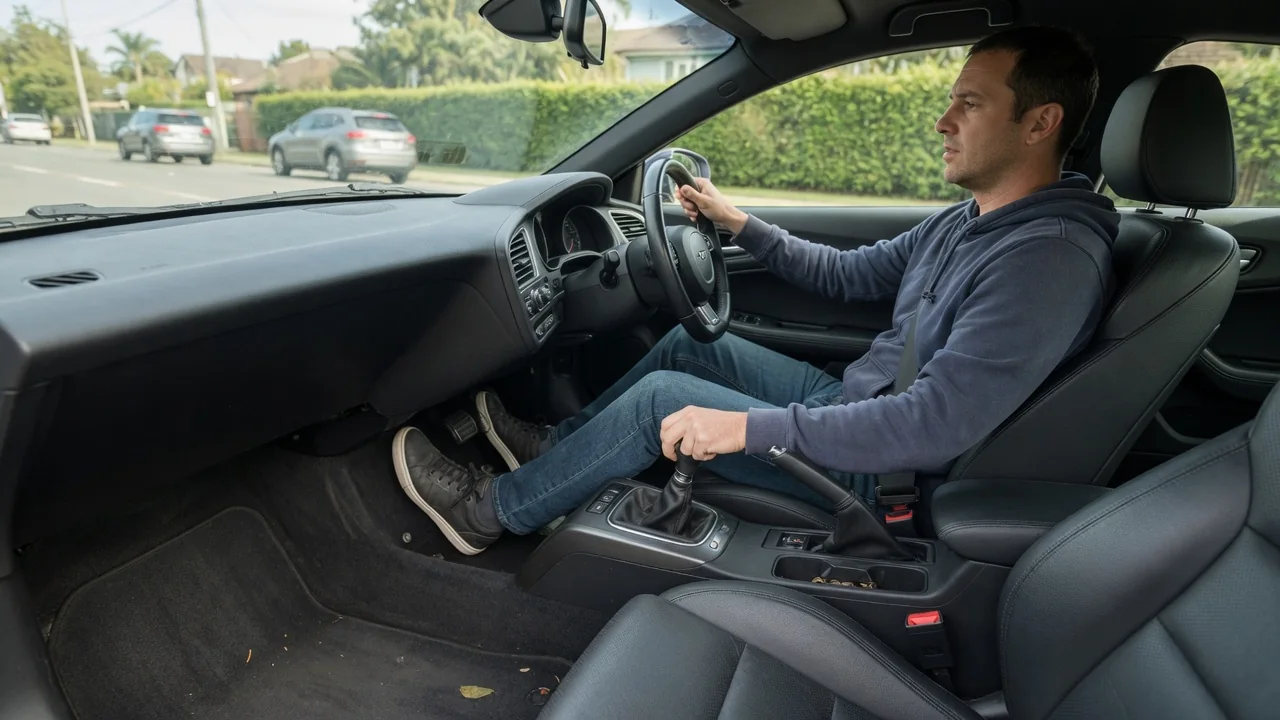
Drivers who ask what is rev matching are usually describing a moment they have felt: the lurch when a manual car drops into a lower gear. Rev matching is the habit of raising engine speed with a brief press of the throttle before the clutch re-engages, so the engine is already turning at the speed the lower gear demands.
Gear ratio change
Every gear in a transmission links engine speed to wheel speed at a fixed ratio. A lower gear multiplies torque more, which means the engine has to spin faster to hold the same road speed. Shift from fourth to third without changing how fast the car is traveling and the engine must suddenly turn noticeably quicker. That gap between where the revs sit and where they need to be is the whole reason rev matching exists, and it grows as the gears get lower.
The size of the jump depends on how the gearbox is spaced. Close-ratio transmissions, common in sportier cars, produce modest differences between neighboring gears, while wide-ratio boxes in economy cars and trucks can demand a much larger rise. A driver can watch this on the tachometer by noting the engine speed in one gear, downshifting at a steady road speed, and reading the new figure. That difference is the amount the throttle blip is meant to supply, and it varies by vehicle and by gear pair.
Smoother engagement
When the clutch pedal goes down, the engine is disconnected and its speed falls toward idle. If the lower gear is selected and the clutch released at that point, the clutch disc has to drag the engine up to speed using the car's momentum. The occupants feel this as a forward pitch and a sudden surge of engine braking. Blipping the throttle while the clutch is disengaged lifts the revs first, so the two sides of the clutch meet at nearly the same speed.
With the speeds aligned, the clutch has little slipping to do, which reduces heat and friction at the disc and spares the driveline a shock load. The driven wheels also see a gentler change in braking force, which matters on wet or loose surfaces where an abrupt downshift can briefly upset grip. A well-judged match feels almost like nothing happened: the tachometer needle is simply higher, the engine note has risen, and the car carries on without nodding its nose.
Practice boundaries
Learning the timing is best done where mistakes cost nothing. An empty, straight road or a quiet parking area at moderate speed gives room to concentrate on the sequence of clutch in, gear lever moving, a quick stab of throttle, and clutch out. Starting with higher gears, such as fifth to fourth, keeps the needed rev increase small and forgiving. Early attempts usually overshoot or undershoot, and the car reports both: a surge forward means too much throttle, a tug backward means too little.
Two boundaries deserve respect while practicing. The first is road speed: selecting a gear that is too low for how fast the car is moving can push the engine past its redline regardless of how well the blip is timed, because the wheels force the engine to that speed. The second is attention. Heel-and-toe, which adds braking with the same foot, is a later refinement, and pedal spacing in some cars makes it awkward. Practicing it in traffic takes focus away from the road ahead.
Everyday Use and Observations
In ordinary driving the technique shows up most often when slowing for a corner, preparing to pass on a two-lane road, or descending a grade where a lower gear provides engine braking. In each case the driver wants the lower gear ready before it is needed, and matching the revs lets the shift happen without disturbing passengers. Motorcyclists use the same idea for the same reason, since an unmatched downshift on two wheels can make the rear tire chatter or step out.
Many modern cars handle this on their own. Some manual transmissions offer an automatic rev-matching function that blips the throttle electronically when it senses a downshift, and dual-clutch and conventional automatics commonly do it during paddle or kickdown shifts. The audible flare of revs just before the lower gear takes hold is the giveaway. Whether a particular model has such a feature, and whether it can be switched off, depends on the manufacturer and trim, so the owner's manual is the place to confirm.
Limits and Next Steps
Rev matching makes downshifts kinder to the clutch and more comfortable, but it is not a cure for mechanical trouble. The synchronizers inside the gearbox still do the work of aligning the internal shaft speeds, and a blip with the clutch pressed does not help them; that is the job of double clutching, a separate and older technique. If gears grind, the lever resists, or the clutch shudders even on well-matched shifts, the cause lies in the hardware and warrants a professional inspection.
Throttle response also shapes how the technique feels from one car to another. A light flywheel and a sharp pedal let the revs rise and fall quickly, while a heavier flywheel or a lazy electronic throttle calls for an earlier, longer press. Drivers switching vehicles should expect to recalibrate. A sensible progression is to make consistent matched downshifts through the upper gears first, then work toward lower gears and, only once that is second nature, combine the blip with braking.