What Is E-Coat on a Car Body?
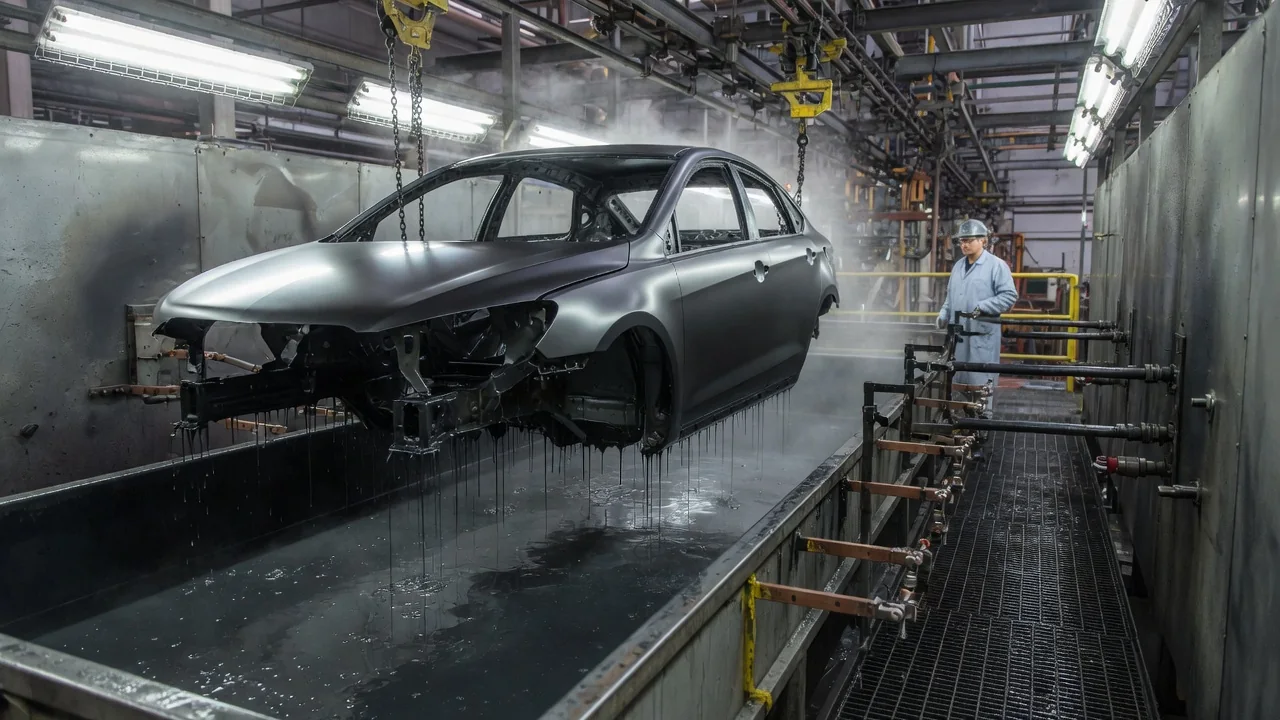
E-coat, short for electrocoat or electrodeposition coating, is the first paint layer applied to a vehicle's bare metal shell at the factory. If you have asked what e-coat is on a car body, think of it as an electrically deposited primer whose main purpose is corrosion resistance. It is applied by immersion, which lets it protect surfaces that spraying would miss.
Coating reach
The main advantage of electrodeposition is reach. The welded body shell, still bare metal after cleaning and pretreatment, is submerged in a tank of waterborne primer while an electrical charge is applied. Paint particles migrate toward the metal and deposit on it, and because the growing film insulates the surface, the current shifts toward areas that are still uncoated. That self-limiting behavior helps the coating build a fairly even film rather than piling up on the easiest surfaces to reach.
This matters most in places a spray gun cannot see: inside rocker panels, frame rails, door shells, pillar cavities and the overlapping flanges around spot welds. Drain and access holes stamped into the body let the liquid flow in and out of these box sections. Coverage is not identical everywhere, though. Deeply recessed cavities and tight seams may receive a thinner film, and how well a given body is protected depends on the manufacturer's design, the process and the vehicle's age.
Paint layers
E-coat sits at the bottom of the paint system. Before it, the steel or aluminum is cleaned and given a conversion pretreatment that helps the coating bond. After the dip, the shell is rinsed and baked so the film cures into a hard, tightly adhered layer. Seam sealer and underbody coatings typically go on afterward, followed by primer surfacer in many processes, then the color basecoat and finally the clearcoat that provides gloss and weather resistance.
Each layer has a different job, and e-coat's job is corrosion protection and adhesion rather than appearance. It is commonly a dull gray or black and it tolerates sunlight poorly, which is why the layers above it must shield it. You can sometimes see it where topcoat was never applied, such as inside the trunk, under carpets or deep in the engine bay on some vehicles. Layer count and colors vary between manufacturers and plants, so do not expect one universal pattern.
Damage repair
Collision repair is where the factory coating becomes hard to replicate. A body shop cannot dip a repaired vehicle in a tank, so anywhere metal is ground bare, welded or sectioned, the original e-coat is gone. Repairers substitute products such as epoxy or etch primers on exposed surfaces and cavity wax or similar corrosion protection inside closed sections. The automaker's body repair information normally specifies which materials to use and where, and those instructions differ by vehicle.
New replacement panels are often delivered with a black or gray electrodeposited coating already on them. Whether that coating should be scuffed and painted over or treated differently depends on the part supplier and the paint manufacturer's guidance, so a shop should confirm rather than assume. As an owner, it is reasonable to ask how weld zones and inner cavities were protected after a structural repair, because rust that begins inside a seam may take years to become visible outside.
Everyday Use and Observations
In daily driving you never see e-coat doing its work, which is the point. A stone chip on the hood may cut through clearcoat and color yet stop at a darker layer beneath; if that layer is intact, the metal is still protected for a while. A chip showing bright or brown metal means the barrier has been breached. Touching up chips reasonably promptly limits the chance that moisture and road salt creep sideways beneath the surrounding paint.
Underneath the car, a matte dark finish on suspension brackets, subframes or inner panels is often e-coat or a similar coating, sometimes with body-color overspray drifting onto it. Faded or chalky patches in areas exposed to sunlight are typical of this primer when left uncovered. Observations vary with climate: vehicles driven where roads are salted in winter tend to show seam and underbody rust earlier than those in dry regions, even with a similar factory coating.
Limits and Next Steps
E-coat slows corrosion; it does not make a body rustproof. The film is thin, and it can be compromised by sharp panel edges where coating pulls away during curing, by flexing seams, by abrasion from trapped grit, and by any impact that exposes metal. Clogged drain holes that hold water inside doors or rockers defeat even a well-applied coating over time. Galvanized steel beneath the e-coat adds a second line of defense on many vehicles, but the extent of its use varies.
Sensible next steps are simple. Wash the underbody periodically if you drive on salted roads, keep drain openings clear, and inspect wheel arch lips, door bottoms and rocker seams for bubbling paint, which usually signals corrosion working from behind. If you find it, a body shop can assess how far it extends before it is treated. For questions about a particular model's coating process or corrosion warranty, the owner's documentation and the manufacturer are the reliable sources.