Why Does Clear Coat Look Cloudy? Causes and Repair Options
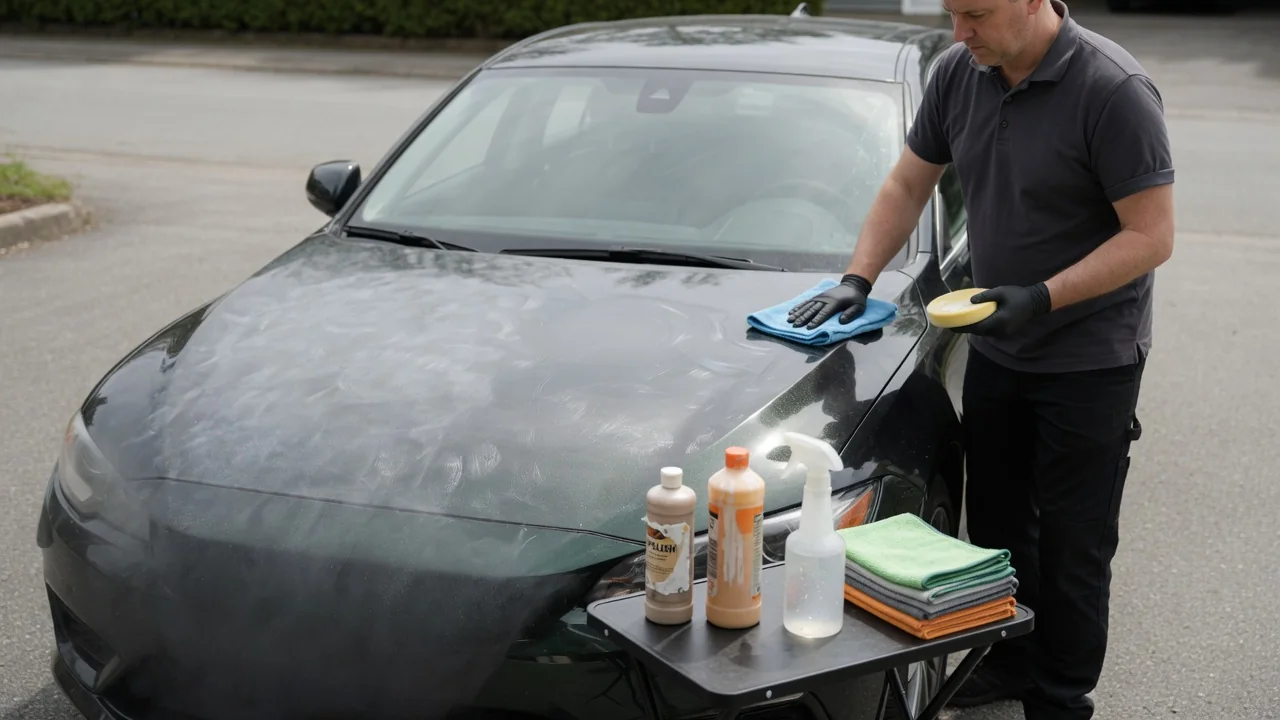
Clear coat is meant to be transparent, so when it turns milky, dull or hazy, something is interfering with the way light passes through it or reflects off it. The cause can be as minor as leftover polish on the surface or as serious as a coating that is breaking down from within. The difference matters because a fix that works for one cloudy clear coat cause can be useless, or even harmful, for another.
Surface haze
Clear coat looks glossy because its surface is smooth enough to reflect light in a uniform direction. When that surface is covered in tiny irregularities, light scatters instead, and the finish takes on a diffuse, milky appearance. Common cloudy clear coat causes at the surface include micro-marring and swirl marks from washing with dirty mitts, rough towels or brush-type automatic washes. Product residue is another frequent source. Waxes, sealants, quick detailers and polishes that are applied too heavily or not fully buffed off can leave a smeary film that dulls the reflection, especially on dark colors.
Water and environmental contamination add their own layer of haze. When hard water dries on paint, it leaves mineral deposits that can build into a cloudy film over time. Road film, industrial fallout and other bonded contaminants also cling to the surface and roughen it. Over a longer period, sunlight plays a role as well. Clear coats are formulated with UV-protective additives, but prolonged exposure gradually degrades the uppermost layer, leading to oxidation that looks chalky or flat. Horizontal panels such as the hood, roof and trunk lid receive the most direct sun and often show this kind of dullness first.
A useful clue is that surface haze usually changes when the panel is cleaned, wiped or viewed from a different angle. The panel may feel slightly rough to a clean hand inside a thin plastic bag, and the cloudiness tends to look like it sits on top of the finish rather than inside it.
Moisture or damage
Some cloudiness originates within the coating itself. One well-known example is blushing, a milky or whitish cast that can form when clear coat is sprayed in humid conditions. As solvents evaporate, they cool the wet film, and moisture from the air can condense and become trapped in it. Incorrect reducer choice, insufficient flash time between coats or large temperature differences between the panel and the surrounding air can contribute to similar defects. Because these conditions depend on how the paint was applied, this type of haze is most often associated with refinishing work rather than with an undisturbed original finish.
Physical and chemical damage can also make clear coat look cloudy. Clear coat failure occurs when the layer loses adhesion to the basecoat or breaks down after years of exposure; it often begins as whitish, foggy patches and may progress to flaking or peeling. Bird droppings, tree sap, fuel spills and harsh acidic or alkaline cleaners can etch the clear, leaving dull marks that are embedded in the coating rather than resting on it. Excessive heat, whether from aggressive machine polishing that overheats a panel or from a nearby heat source, can also distort or haze the finish.
Haze caused by moisture or damage generally does not change after washing or wiping. It may appear as patches with defined edges, show lifting or cracking at its borders, or look as though it lies beneath a glossy top surface. These signs indicate that abrasive polishing alone is unlikely to solve the problem.
Repair options
The sensible approach is to start with the least aggressive method and escalate only when needed. A thorough wash and careful drying will reveal whether the haze is simply dirt or residue. Leftover wax or sealant can usually be removed by re-buffing with a clean microfiber towel or by using a dedicated cleaning product. Clay bars or chemical decontamination products remove bonded contaminants, and water spot removers are designed to dissolve mineral deposits. If the finish clears up at this stage, no abrasive work is needed.
When micro-marring, light oxidation or shallow etching remains, polishing is the next step. Abrasive polishes level the clear coat by removing a very thin amount of material until the surface is smooth again. Small areas can be worked by hand, while larger panels are typically corrected with a dual-action machine polisher. Heavier compounds cut faster but can leave their own fine haze, so they are usually followed by a finer finishing polish. Wet sanding addresses deeper defects but removes considerably more clear coat, so it is best left to experienced hands. After correction, a wax, sealant or coating helps protect the refreshed surface.
When the cloudiness lies within or beneath the clear coat, as with failing, peeling or deeply oxidized clear, abrasives cannot restore it. The affected panel has to be sanded and refinished, which typically means reapplying clear coat and sometimes basecoat as well. Blushing in a fresh refinish may lessen as the paint cures or with controlled heat, but if it persists, refinishing is the reliable remedy, and the shop that performed the work is the logical first contact.
Practical implications and limits
Clear coat is a finite layer, and every round of polishing or sanding consumes part of it. Repeated aggressive correction can thin the clear to the point where it offers less UV protection and fails sooner. Professionals often use a paint thickness gauge to judge how much material remains before deciding how far to go. Some consumer polishes also contain fillers or oils that temporarily mask haze; wiping a test area with a panel prep solution or diluted isopropyl alcohol shows whether the defect has actually been removed or merely hidden.
Lighting strongly affects what you see. Shade and overcast skies hide fine defects, while direct sun or a strong handheld light exposes them, so inspecting under several light sources gives a more honest picture. Coating formulations, film thickness and application methods vary between manufacturers, vehicles and repair shops, and a repainted panel may age differently from the original paint around it. General explanations can point toward a likely cause, but they cannot predict exactly how a particular vehicle will respond. It also helps to keep cloudy painted surfaces separate from foggy headlights, which involve plastic lens degradation and call for different treatment.
Prevention slows the process but does not stop it entirely. Washing with clean tools, removing droppings and sap promptly, parking in shade or a garage when possible and maintaining a protective layer all reduce the wear that leads to haze. Once genuine clear coat failure has started, however, it usually continues to spread, and routine care will not reverse it.