What Is an Intake Manifold?
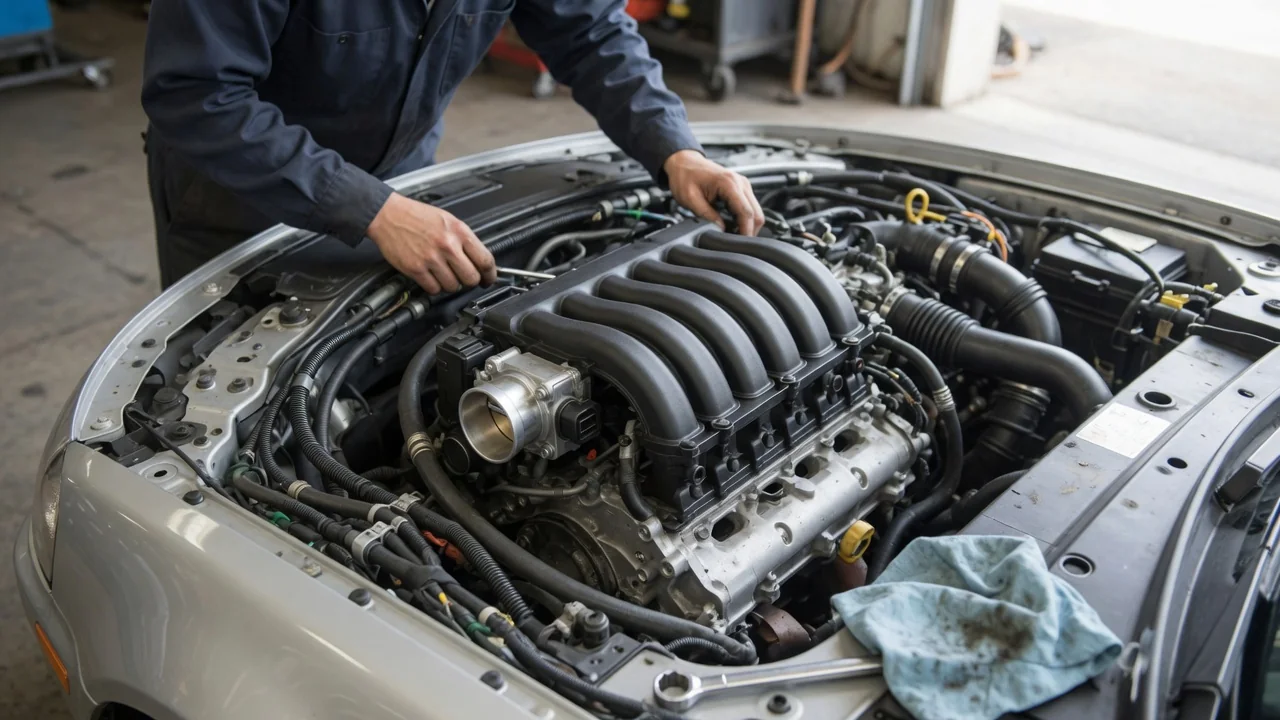
Anyone asking what is an intake manifold is really asking how an engine breathes. The manifold is the set of passages bolted to the cylinder head that takes incoming air from a single entry point and shares it among the cylinders. How evenly it does that job affects idle quality, throttle response, and how smoothly the engine pulls under load.
Plenum and runners
Most intake manifolds have two main parts. The plenum is a shared chamber that acts as a reservoir of air sitting just past the throttle. Branching from it are the runners, individual tubes that each lead to one cylinder's intake port. When an intake valve opens and the piston descends, that cylinder draws from its runner, and the runner refills from the plenum. Because cylinders draw in sequence rather than all at once, the plenum smooths out those separate gulps into a steadier supply.
Runner shape matters because air has mass and momentum. Longer, narrower runners tend to favor low-speed torque, while shorter, wider ones tend to favor high-rpm breathing, which is why some engines use variable-length designs with internal flaps to switch between the two. On an inline four you can often see four tubes sweeping from a single box, while a V engine usually nests the manifold in the valley between cylinder banks. Materials vary too, with molded plastic common on newer engines and cast aluminum on many older ones.
Throttle connection
On most gasoline engines, the throttle body bolts to the plenum inlet and acts as the gate for all the air entering the manifold. Pressing the accelerator opens the throttle plate, either through a cable or an electronically controlled motor, and more air rushes into the plenum. With the plate nearly closed at idle, the pistons pull against a restriction, creating the manifold vacuum that many vehicles also use to assist the brake booster and operate emissions components through small hoses.
Follow the large duct from the air filter box and it usually ends at the throttle body, which marks where the manifold begins. Layouts differ beyond that point. Turbocharged engines route pressurized air through an intercooler before the throttle, so the manifold sees pressure above atmospheric under boost. Some engines mount fuel injectors in the runners, while direct-injection designs spray into the cylinder and leave the manifold carrying air alone. Many diesels control power mainly through fuel quantity, so their throttle arrangement serves a different purpose.
Fault clues
Because the manifold is sealed against the cylinder head with gaskets, the most familiar problem is a leak that lets unmetered air slip past the sensors. The engine computer measures or calculates incoming air and adds fuel to match, so extra air makes the mixture lean. Drivers may notice a rough or wandering idle, hesitation when pulling away, a hissing sound under the hood, or a check engine light. A leak near one runner can affect that cylinder more than the others, producing an uneven misfire.
Stored fault codes pointing to a lean mixture or a misfire are evidence worth interpreting, not proof that the manifold or its gasket has failed. The same symptoms can come from a cracked vacuum hose, a dirty airflow sensor, a fuel delivery problem, or a worn ignition component. Other clues are specific to design: plastic manifolds can crack with age and heat, variable runner flaps can stick, and on engines that route coolant through the manifold, a failing gasket may show up as unexplained coolant loss.
Everyday Use and Observations
In normal driving, a healthy intake manifold goes unnoticed. It has no routine wear items of its own in most designs, and its job is entirely passive: hold a seal and give each cylinder an equal share of air. The evidence that it is working is indirect, showing up as a steady idle, clean acceleration without flat spots, and consistent fuel economy. An engine that feels the same at every stoplight and every on-ramp is one where air distribution is doing what the designers intended.
Owners can still make a few useful observations with the hood up and the engine cool. Look for hoses that have hardened, split, or popped off their fittings on the manifold, and for oily residue or coolant staining around the joint with the cylinder head. Over many miles, some engines accumulate carbon and oil vapor deposits inside the runners, particularly direct-injection designs where fuel no longer washes the intake ports. How much that buildup matters, and whether cleaning is recommended, depends heavily on the engine.
Limits and Next Steps
A general explanation can only go so far, because manifold design is tied closely to the engine it serves. The number of runners, the presence of tuning valves, the location of sensors, and whether coolant or exhaust gas recirculation passages run through the casting all vary by manufacturer and model year. Many engines also hide the manifold beneath a plastic cover, so what is visible at a glance may not match a diagram from another vehicle. The service information for the specific engine is the reliable reference.
When symptoms suggest an intake problem, the sensible next step is proper diagnosis before replacing anything. Technicians commonly use a smoke machine to find leaks, and they read live fuel trim data to see how the mixture behaves at idle versus higher engine speeds. Removing a manifold often involves the fuel system, electrical connectors, and fasteners with specific tightening sequences, so it is a job to approach with the correct procedure or leave to a qualified shop. Confirming the cause first avoids paying for parts that were never at fault.