What Is an Accelerator Pedal Sensor?
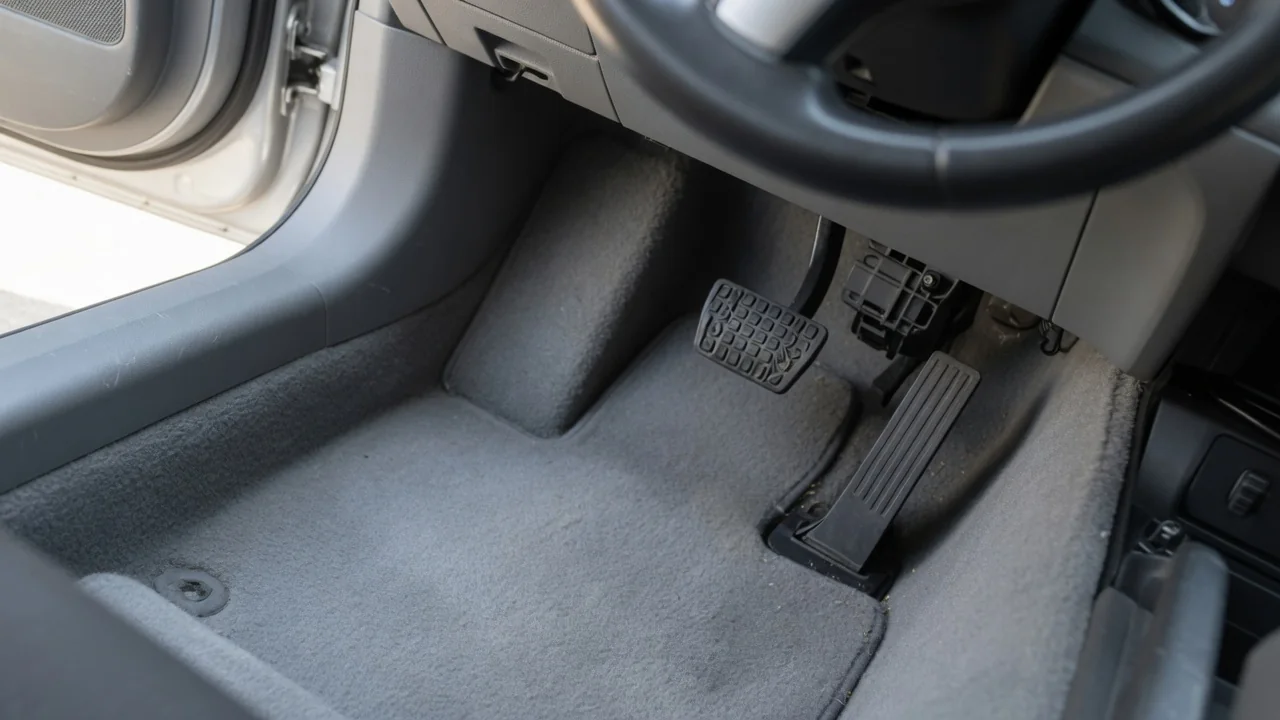
What is an accelerator pedal sensor? It is the electronic device attached to the gas pedal that converts the driver's foot movement into an electrical signal. On vehicles with electronic throttle control, sometimes called drive-by-wire, there is no cable running to the engine. Instead, the sensor reports how far the pedal is pressed, and the powertrain computer decides how to respond to that request.
Pedal travel
The sensor is usually built into the pedal assembly itself, near the pivot at the top of the pedal arm. As the pedal moves from rest toward the floor, the sensing element tracks that rotation and produces a voltage that changes with position. Older designs often use a sliding contact on a resistive track, while many newer assemblies use contactless Hall-effect or inductive elements that have no wiping surfaces to wear. Which design a particular vehicle uses depends on the manufacturer and model year.
Most pedal assemblies contain two or more independent sensing circuits that report the same travel at different voltage levels. One signal may run at roughly half the value of the other, or the two may move in a fixed relationship defined by the manufacturer. This redundancy lets the system compare readings across the whole sweep, from released pedal to full depression. A driver never sees these signals directly, but a scan tool typically displays them as voltages or as a percentage of pedal position.
Control module
The engine or powertrain control module receives the pedal signals and treats them as a request, not a direct command. It weighs that request against engine speed, coolant temperature, gear selection, traction and stability control activity, and cruise control status before commanding the electric motor on the throttle body. On a gasoline engine this sets throttle plate opening; on a diesel, the same request mainly shapes fuel delivery, and on hybrid or electric vehicles it becomes a torque demand for the drive motor.
Because software sits between foot and engine, the same pedal travel can produce different results. A sport mode may open the throttle sooner for a sharper feel, while an economy mode softens the response to the first part of pedal movement. The module may also trim torque briefly during an automatic gear change or when a wheel slips. The calibration behind these decisions is specific to each vehicle, so pedal feel that seems odd in one model can be entirely normal in another.
Fault behavior
The module continuously checks whether the pedal signals agree with each other and stay within their expected range. If one circuit drops out, reads too high or too low, or stops tracking its partner, the module can no longer trust the request. A typical response is to store a diagnostic trouble code, illuminate the check engine light or an electronic throttle warning lamp, and limit engine power. This reduced-power strategy, often called limp mode, is designed to keep the vehicle controllable rather than risk unintended acceleration.
A stored pedal position code is evidence that the module saw a signal it did not accept, not proof that the pedal assembly has failed. Corroded connectors, chafed wiring, a poor ground, a weak reference voltage supply, or water intrusion in the footwell can produce the same result. Some codes in this area are generic, while others are manufacturer-defined and carry different meanings from one brand to another, so the definition should be confirmed against service information for the specific vehicle before any part is condemned.
Everyday Use and Observations
In normal driving a healthy sensor is invisible. The engine responds smoothly and predictably as the pedal moves, idle returns promptly when the foot lifts, and cruise control engages without complaint. Some drivers new to drive-by-wire notice a slight delay or a filtered feel compared with a cable throttle; this is usually deliberate calibration that smooths torque delivery and protects the driveline, not a sign of a sensor problem. The spring and friction mechanism in the pedal also exists purely to give the foot familiar resistance.
Symptoms worth noting include hesitation or a dead spot at a certain pedal position, surging without a change in foot pressure, a sudden loss of power accompanied by a warning lamp, or a pedal that seems unresponsive after startup. Intermittent faults may appear only over bumps or in wet weather, which points toward wiring or connections. It is also sensible to check for simple physical causes first, since a bunched floor mat or debris behind the pedal can restrict travel and mimic an electronic complaint.
Limits and Next Steps
Similar drivability complaints can come from the throttle body, its own position sensors, the mass airflow sensor, ignition or fuel delivery faults, or transmission behavior, so symptoms alone cannot isolate the pedal sensor. Proper diagnosis usually means reading stored codes and freeze-frame data, then watching both pedal signals on a scan tool while the pedal is pressed slowly with the engine off. Smooth, proportional changes without dropouts suggest the sensor is reporting correctly and attention should move to the wiring or elsewhere in the system.
When the assembly does need replacement, it is commonly serviced as a complete pedal unit, and some vehicles require a relearn or adaptation procedure afterward so the module recognizes the released and fully pressed positions. The requirements differ by manufacturer, which makes vehicle-specific service information important. Because this circuit governs engine power, a car that has entered reduced-power mode or shows a throttle warning deserves prompt professional evaluation, and it should not be driven in demanding traffic until the cause is understood.