What Is Aerodynamic Drag on a Car?
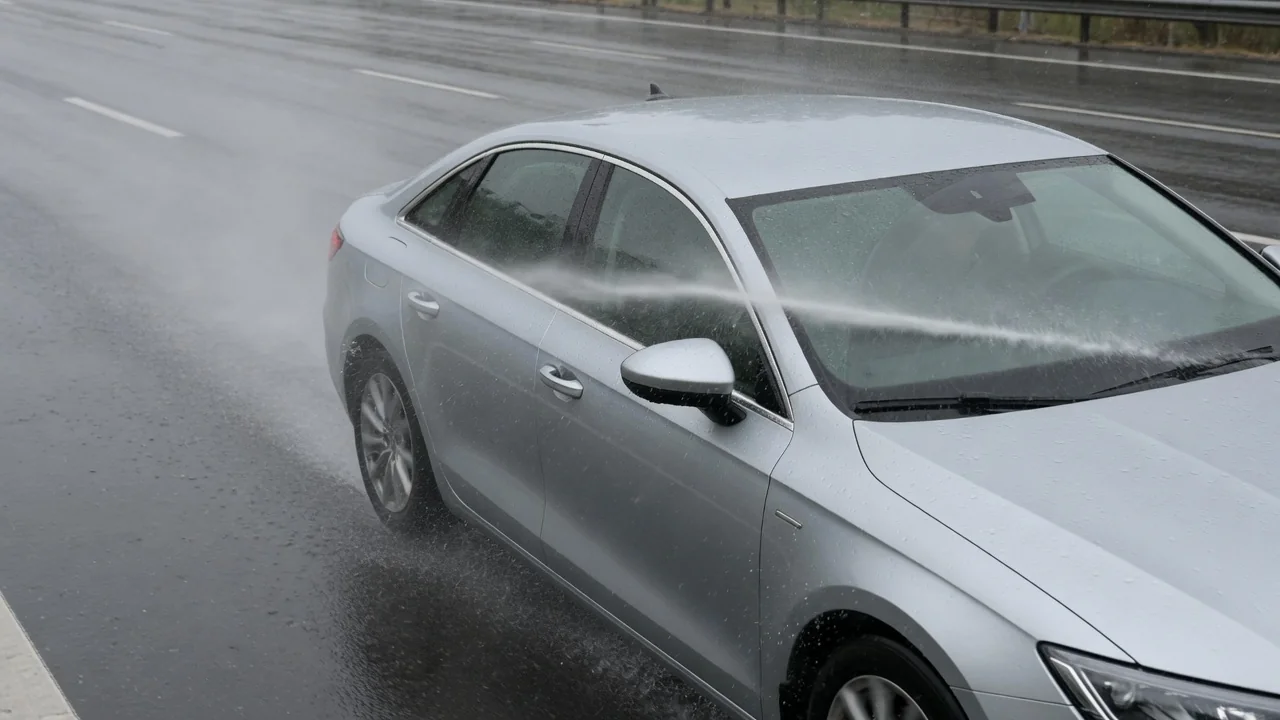
Anyone asking what is aerodynamic drag on a car is really asking why a vehicle has to work harder the faster it travels. Drag is the resistance air creates as the body pushes through it. It acts opposite to the direction of travel, and the engine or electric motor must overcome it continuously to hold speed.
Airflow
Air behaves like a fluid that must part around the car and close again behind it. At the front, air piles up against the bumper, grille and windshield, creating a zone of higher pressure. It then accelerates over the hood and roof and along the sides. Where the body tapers gently, the flow stays attached to the surface. Where the shape ends abruptly, such as at an upright tailgate, the flow separates and leaves a turbulent, low-pressure wake trailing behind the vehicle.
That pressure difference between front and rear is the largest contributor to drag on most road cars, and it explains why the rear shape matters as much as the nose. Surface friction adds a smaller share as air rubs along the paint, glass and underbody. You can see the airflow pattern on a dirty vehicle: road film collects heavily on the back of a square wagon or SUV because the swirling wake pulls spray onto the tailgate, while a sloping sedan trunk usually stays cleaner.
Speed effect
Drag does not rise in step with speed. The force grows roughly with the square of velocity, so doubling road speed produces about four times the air resistance. The power needed to push through that resistance climbs even faster, approximately with the cube of speed, because the car is meeting a stronger force and covering more distance each second. This is why a vehicle that feels effortless in town needs noticeably more throttle to maintain a fast highway pace.
At low urban speeds, rolling resistance from the tires and losses inside the drivetrain take most of the energy, and air resistance is a minor factor. Somewhere in the range of typical highway travel, aerodynamic drag becomes the dominant load, though the crossover point depends on the vehicle's shape, weight and tires. A tall pickup reaches that point sooner than a low coupe. Wind matters too, since the car responds to airspeed rather than ground speed, so a strong headwind acts like driving faster.
Practical design choices
Engineers describe a car's air resistance using two figures together: the drag coefficient, which reflects how cleanly the shape moves through air, and the frontal area, which is the size of the silhouette facing the wind. A slippery shape with a large front can still generate more total drag than a boxier but smaller car. That is why crossovers and trucks tend to face a tougher aerodynamic task than low sedans, even when their styling includes careful smoothing.
The details that reduce drag are often visible once you know where to look. Flush door handles, a raked windshield, a tapered roofline, a small lip at the trailing edge of the trunk, flat underbody panels and partly closed wheel designs all help air stay attached and leave the body cleanly. Some vehicles use grille shutters that close when cooling demand is low. Every choice is a compromise, because designers must also provide headroom, cargo space, cooling airflow, high-speed stability and styling that buyers accept.
Everyday Use and Observations
Drivers feel drag most clearly in fuel or energy consumption at speed. A trip computer will usually show a clear drop in economy as cruising speed rises, and electric vehicle owners often see predicted range fall on fast highway runs for the same reason. Lifting off the throttle at high speed also slows the car more sharply than it does at low speed, because air resistance is doing much of the braking before the pedal is ever touched.
Additions to the outside of the car change the picture. Roof boxes, crossbars, bike carriers, light bars and open windows disturb smooth flow and enlarge the wake, often adding wind noise as an audible clue. An open pickup bed, a lifted suspension or wider tires can have similar effects. How much each item costs in efficiency varies widely with the vehicle and the accessory, so the practical test is to compare consumption over the same route with and without the equipment fitted.
Limits and Next Steps
Drag is only one part of the load a car carries down the road. Vehicle weight, tire pressure and tread design, grades, temperature, climate control use and driving style all affect consumption, so a low drag figure does not guarantee low running costs. Published drag coefficients are also measured under differing test conditions and should be compared cautiously between manufacturers. Aftermarket spoilers and body kits may be styled for appearance or downforce rather than efficiency, and some increase resistance instead of reducing it.
For most owners, the useful steps are simple. Remove roof racks and carriers when they are not needed, keep factory underbody panels and air dams in place and intact after service or minor impacts, and moderate cruising speed when economy or range matters. If a splash shield is hanging or missing, having it refitted restores the airflow the vehicle was designed around. For figures specific to a particular model, the manufacturer's published data is the appropriate reference point.