What Is an Aerodynamic Wheel Cover?
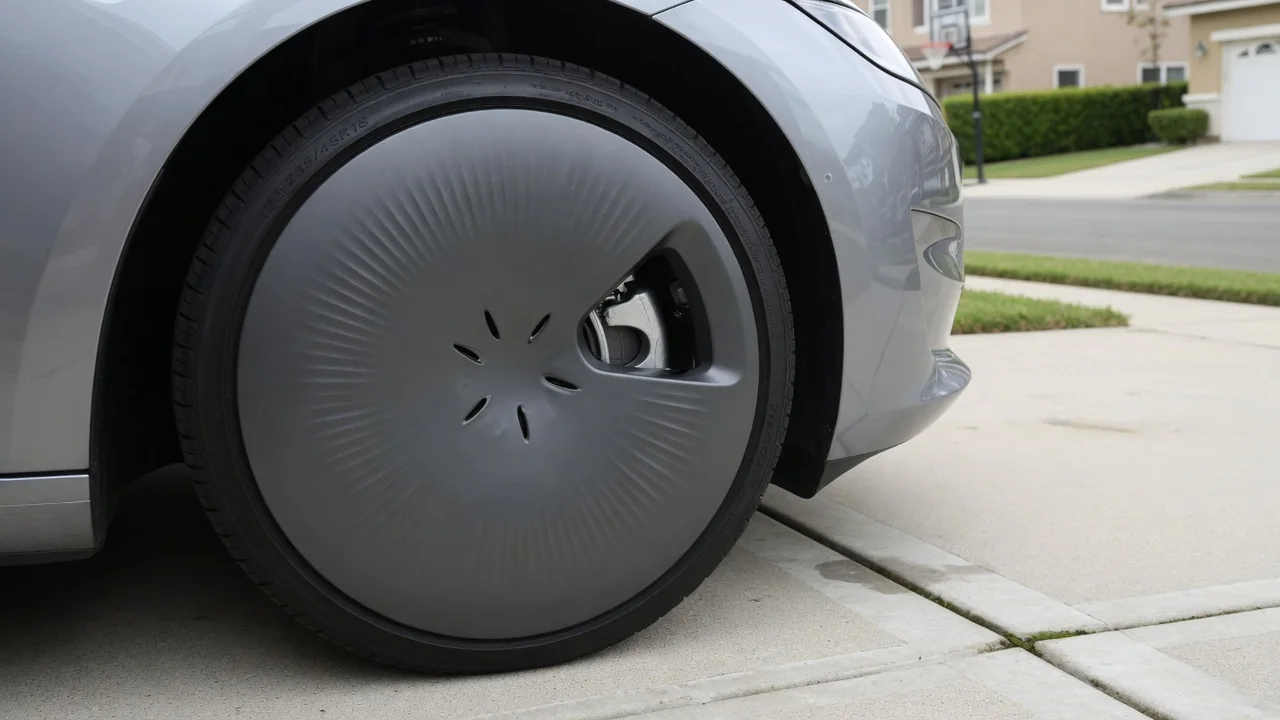
What is an aerodynamic wheel cover? It is a smooth or lightly vented panel that attaches over a wheel to calm the air passing its face. By hiding spokes and open cavities, it reduces the turbulence a spinning wheel creates, which can help efficiency. Because it also hides hardware, it changes how owners reach lug nuts, valve stems, and brakes.
Wheel airflow
A rotating wheel is one of the messier parts of a vehicle in aerodynamic terms. Air striking the front of the tire is pushed sideways, then spills across the wheel face, where open spokes act like paddles that churn it. That churning draws air in and out of the wheel cavity and feeds a wide, unsteady wake along the body side. An aerodynamic cover presents a flatter surface instead, so air tends to slide past the wheel opening rather than tumbling through it.
The effect is easiest to picture at highway speed, where drag grows quickly and small disturbances matter more than they do in town. Many electric vehicles and hybrids use flat or nearly closed covers for this reason, since reduced drag supports driving range. Long-haul trucks often use full discs on drive and trailer wheels for the same purpose. How much benefit a given vehicle sees depends on its body shape, wheel well design, tire width, and typical speed, so results are not uniform.
Cover fit
Fit determines both whether a cover works and whether it stays on. Designs attach in several ways: plastic clips that grip the rim or the underlying alloy wheel, a wire retention ring pressed against the rim lip, brackets held by the lug nuts, or dedicated fasteners. A cover made for one wheel diameter and offset may not seat correctly on another, and factory covers are often shaped to match a specific wheel underneath, so vehicle-specific confirmation is worth the effort before buying.
A properly seated cover sits flush and even around its full circumference, with the valve stem lined up in its notch or opening. Gaps on one side, a cover that rocks when pressed, or clips that do not snap home all suggest a mismatch or damaged tabs. A loose cover can rattle, scuff the wheel finish, or leave the vehicle entirely at speed. Clearance also matters, because a cover that sits too close to brake components or wheel weights can rub.
Cleaning
A closed wheel face changes where dirt collects. Brake dust and road grit that would normally blow through open spokes can settle behind the cover, sitting against the wheel finish and around the clips. Left alone, that trapped grit can hold moisture and, with winter road salt, encourage corrosion or staining on the wheel underneath. The outer surface is usually easy to wash, since a flat panel has fewer crevices than a multi-spoke alloy, but the hidden side needs occasional attention.
Removing the covers from time to time lets an owner rinse both the back of the panel and the wheel itself. Mild car wash soap and a soft brush or mitt suit most plastic covers, while harsh acidic wheel cleaners may dull or discolor painted and coated finishes. Clips and retention rings deserve a gentle rinse as well, because grit packed into them makes the cover harder to seat. Drying the mating surfaces before reinstalling helps reduce the chance of debris abrading the wheel.
Everyday Use and Observations
Day to day, the most noticeable difference is service access. Checking tire pressure usually remains simple, because most covers leave the valve stem exposed, though some require reaching through a small opening. Lug nuts are another matter: on many designs the cover must come off before a wheel can be removed, which adds a step during a roadside flat tire change or a tire rotation. Knowing how a particular cover releases, and whether a tool is supplied, saves frustration later.
Drivers may also observe subtler changes. Some report slightly less wind noise around the wheels, while others notice nothing at all. Brake inspection through the wheel becomes harder, since pads and rotors are hidden from casual view. Covers sit at the outer edge of the vehicle, so curb contact tends to scrape the cover rather than the wheel, which can be a cheaper part to replace. Any new clicking, buzzing, or rattle from a wheel area after a tire service is worth a look at the cover seating.
Limits and Next Steps
Aerodynamic covers have real limits. The efficiency gain is typically modest and concentrated at sustained higher speeds, so a driver who mostly makes short urban trips may see little measurable difference. A closed face can also reduce the airflow that helps carry heat away from brakes, which is why many designs include vents and why covers intended for one vehicle should not be assumed suitable for another, particularly with heavy towing, steep descents, or spirited driving that works the brakes hard.
A sensible next step is to check the owner's manual for the removal method and any guidance on covers for that vehicle, then confirm that a replacement or aftermarket cover matches the wheel size and attachment style. Inspecting clips and seating after tire work catches most problems early. If a cover repeatedly loosens, contacts brake parts, or shows heat distortion, a tire shop or dealer service department can check fitment. Owners who prefer the look of the bare wheel can usually run without covers, accepting a small aerodynamic penalty.