What Is Wheel Offset?
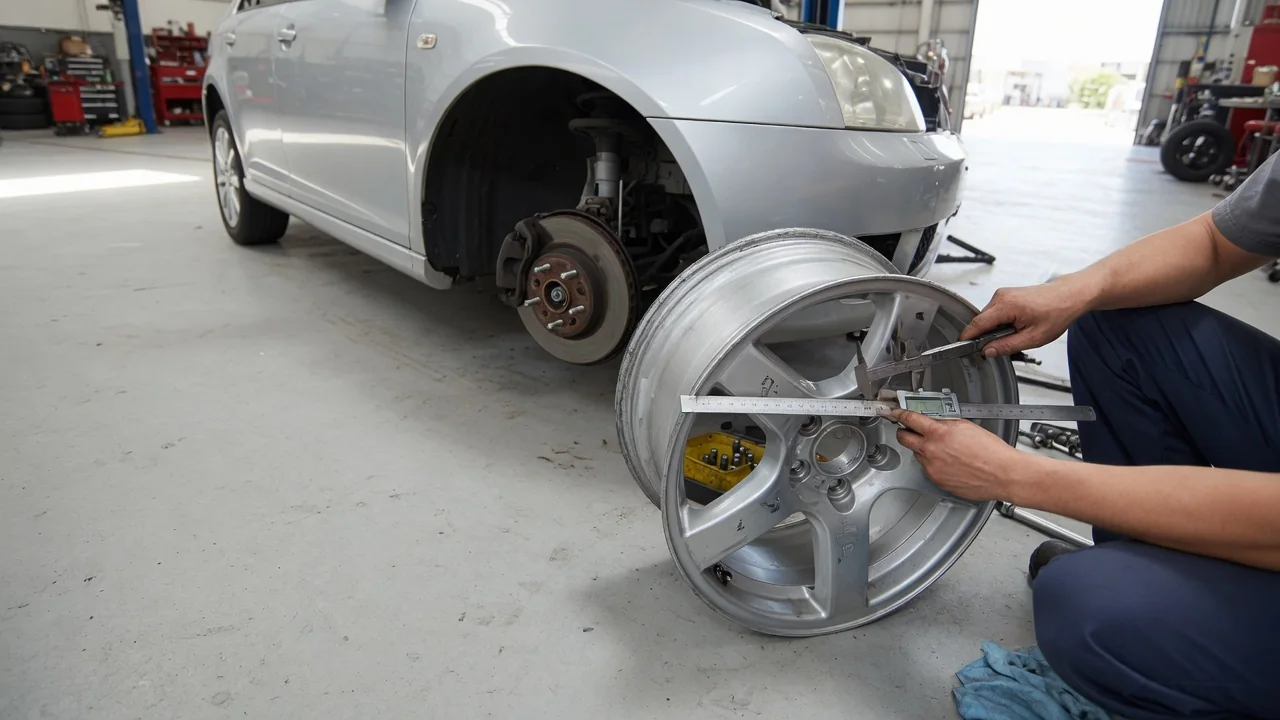
Anyone shopping for wheels eventually asks what is wheel offset, and the answer is simpler than the jargon suggests. Offset describes where the wheel's mounting face sits relative to the centerline of the rim. That single measurement decides how far the wheel and tire sit inward or outward in the wheel well, which shapes clearance, appearance, and how the suspension is loaded.
Offset concept
Picture a wheel sliced down the middle of its width. The flat pad on the back of the center section, where the wheel bolts against the hub, is the mounting face. Offset is the distance between that face and the imaginary centerline, usually expressed in millimeters. When the face sits toward the outer, street side of the centerline, the offset is positive. When it sits toward the inner, brake side, the offset is negative. A face exactly on the centerline gives zero offset.
Positive offset tucks the wheel farther into the fender, which is common on front-wheel-drive cars and most modern passenger vehicles. Negative offset pushes the wheel outward and creates the deep-dish look often seen on older trucks and off-road builds. Many wheels carry the figure cast or stamped on the back of a spoke or the hub pad, frequently preceded by the letters ET. Backspacing is a related measurement, taken from the mounting face to the inner rim edge, and it changes with both offset and wheel width.
Clearance effects
Moving the mounting face changes where the whole wheel and tire assembly lives in the wheel well. More positive offset shifts everything inboard, closer to the strut body, spring perch, control arms, and inner fender liner. Less positive or negative offset shifts everything outboard, toward the fender lip and the outer edge of the bumper cover. A few millimeters may be unnoticeable on one vehicle and enough to cause contact on another, because the room available differs widely between chassis designs.
Width complicates the picture. A wider wheel with the same offset grows equally toward both sides of the centerline, so inner and outer clearance both shrink. Brake clearance is a separate matter governed by the shape of the spokes and barrel rather than offset alone, which is why two wheels with identical numbers may not both clear a large caliper. Clearance also has to hold at full steering lock and through suspension compression, not just with the car sitting level in a driveway.
Fitment checks
A sensible fitment check starts with the specification of the wheels the vehicle left the factory with, since that offset was chosen around its suspension geometry and bodywork. Comparing a proposed wheel against that baseline shows how far the inner edge moves toward the suspension and how far the outer edge moves toward the fender. Both shifts depend on width and offset together, so each needs to be worked out rather than judged from the offset number in isolation.
Offset is only one part of the match. Bolt pattern, center bore, seat type for the lug hardware, and load rating all have to suit the vehicle as well. Tire size matters too, because a taller or wider tire can rub where the bare wheel would not. Test fitting a single wheel before mounting tires is a common precaution, letting the installer confirm the wheel seats flat on the hub and spins freely past the caliper and suspension components. Correct figures should come from vehicle-specific documentation.
Everyday Use and Observations
On the road, a wheel set that sits farther out than the original tends to make itself known. Tires that poke past the fender throw more spray and grit along the body sides. Steering may feel heavier or more inclined to follow grooves and crowned pavement, because moving the tire's centerline outward alters the scrub radius the suspension was designed around. How pronounced this feels varies by vehicle, tire, and how large the change is.
Contact problems usually show up under specific conditions. A scraping sound on full lock in a parking lot, a rub over driveway dips with passengers aboard, or polished marks on the inner liner and tire shoulder all point to a clearance shortfall. Looking inside the wheel well with a flashlight often reveals shiny witness marks where rubber has touched plastic or metal. Uneven tire wear may accompany these changes, though wear has many causes and alignment should be checked before blaming the wheels.
Limits and Next Steps
Every vehicle tolerates only a certain range of offsets. Moving the wheel outward lengthens the lever arm acting on the wheel bearings, ball joints, and hub, which can increase the load those parts carry. Moving it too far inward risks contact with suspension or brake components. Spacers reduce effective offset by pushing the mounting face outward, but they also affect how much thread engagement the lug hardware has and how the wheel centers on the hub, so they deserve careful selection.
Local regulations may restrict how far tires can extend beyond the bodywork, and significant changes can interact with stability control and driver assistance calibration on some vehicles. Before buying, it helps to gather the original wheel width, offset, and tire size, then discuss the intended setup with a wheel specialist or tire shop that can verify fitment for that exact model and trim. After installation, lug hardware should be tightened to the manufacturer's specification and rechecked as the shop advises.