What Is a Valve Lifter in an Engine? Cam Contact, Valve Motion and Wear
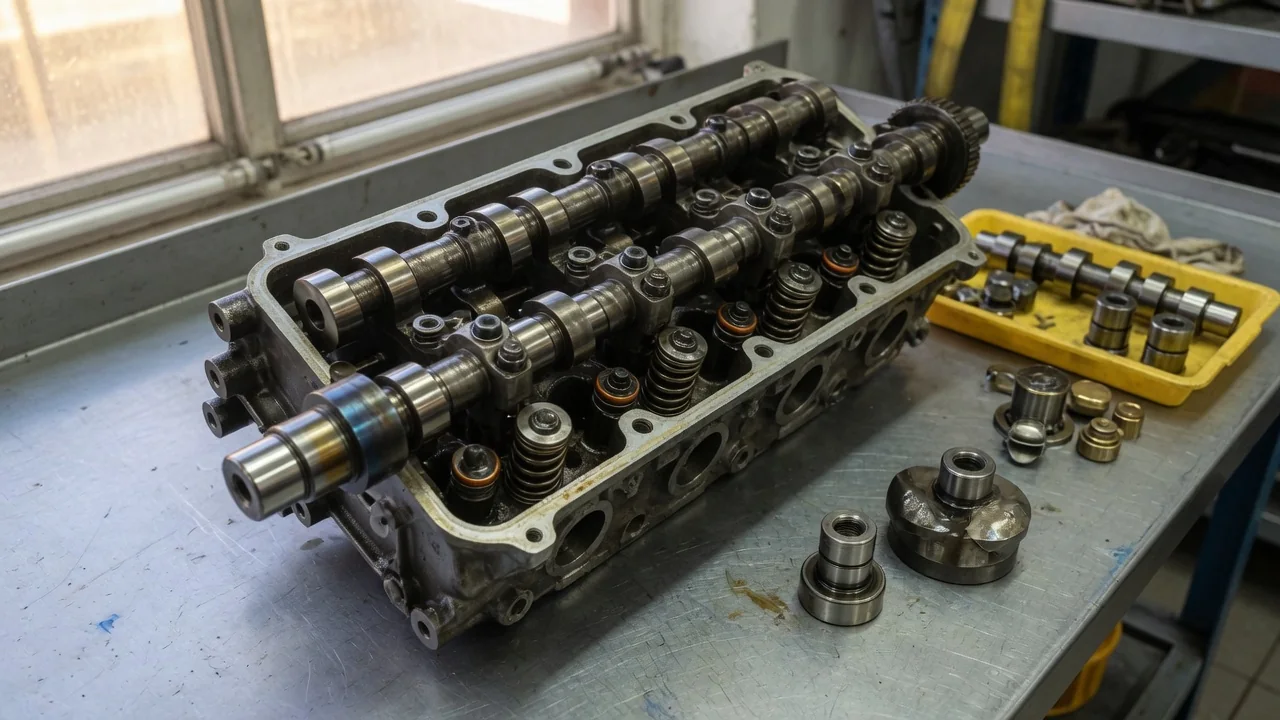
If you have ever wondered what a valve lifter in an engine is, the short answer is that it rides on the camshaft and turns the rotation of each cam lobe into a push that opens a valve. Also called a tappet or cam follower, the lifter is a small part with a demanding job. It handles heavy contact loads thousands of times per minute, helps keep valve events in step with the camshaft, and often manages valve clearance automatically.
Cam contact: where the lifter meets the camshaft
A camshaft has a lobe for each valve it operates. The lobe is not round. Part of it, the base circle, is concentric with the camshaft, and the rest rises to a peak called the nose. The lifter's face rests against this surface. While the base circle passes beneath it, the lifter stays put. When the rising part of the lobe arrives, the lifter is pushed outward. The lifter is the part that reads the shape of the lobe and passes it along to the valve.
How that contact happens depends on the design. A flat tappet lifter has a nearly flat face that slides across the lobe. On many flat tappet designs, the lobe is ground with a slight taper, the lifter face has a slight crown, and the lifter is offset from the lobe center, so the lifter spins in its bore as it works. That rotation spreads wear around the face. A roller lifter carries a small wheel on an axle, usually with needle bearings, so the lobe rolls against it instead of sliding. Because the roller must stay aligned with the lobe, roller lifters use guides, link bars or a retaining tray to stop them from turning.
Location varies too. In a pushrod, or overhead valve, engine, the lifters sit in bores in the block above a block-mounted camshaft. In many overhead cam engines, a bucket tappet sits directly between the lobe and the valve stem. Other overhead cam layouts use a pivoting finger follower with a separate hydraulic lash adjuster as the pivot. The basic job of following the lobe stays the same.
Valve motion: from lobe shape to valve lift
The core engine valve lifter function is converting the lobe profile into motion that opens the valve. In a pushrod engine, the lifter pushes a pushrod, which tilts a rocker arm, which presses the valve open against its spring. In a direct-acting overhead cam design, the bucket tappet presses on the valve stem itself. As the nose passes and the profile falls back toward the base circle, the valve spring closes the valve and forces the lifter to follow the lobe back down. Keeping the lifter in steady contact with the lobe through this cycle is one of the valve spring's main jobs.
Valve clearance, or lash, is where lifter type makes the biggest difference. Engine parts grow as they heat up, so the valvetrain needs a way to let each valve close fully when hot. A solid, or mechanical, lifter is a fixed-length part, and the engine is set up with a small specified clearance in the valvetrain. Each lobe begins with a gentle ramp that takes up this clearance before real lift begins. A hydraulic lifter contains a plunger, a small oil chamber and a check valve. Oil pressure fills the chamber to take up slack, giving effectively zero lash, and while the lobe pushes, the check valve traps the oil so the lifter acts almost like a solid part.
This affects how the engine breathes. The cam lobe defines the intended timing, duration and lift of each valve event, but the lifter and clearance decide how faithfully that profile reaches the valve. Too much clearance delays opening and shortens effective duration, while too little can hold a valve slightly off its seat. A hydraulic lifter that cannot hold its oil, or one that pumps up beyond its normal length, can also distort the intended valve motion.
Wear: what wears out and why
Lifters work at a high-pressure contact point, so some wear is normal. Flat tappet designs are the most sensitive because the face slides on the lobe over a small contact area. They rely on a thin oil film and on anti-wear additives in the oil, such as zinc and phosphorus compounds, to prevent scuffing. The first minutes on a new flat tappet camshaft are especially critical, which is why such cams are typically installed with assembly lube and run through a break-in procedure specified by the cam or engine maker. If a lifter stops rotating, its face and the lobe can wear quickly, sometimes until the lobe is visibly rounded off.
Roller lifters greatly reduce sliding friction at the lobe but add their own wear points: the needle bearings, the axle and the anti-rotation hardware. A worn bearing can let the roller wobble or fail, and debris from that failure can travel through the engine. Hydraulic lifters add a failure path through oil quality. Sludge, varnish or debris can make the plunger stick or keep the check valve from sealing, and worn internal clearances let oil leak out too quickly. A lifter that loses its oil cushion becomes noisy and may not open its valve fully.
Common signs of lifter trouble include a rhythmic ticking or tapping that follows engine speed, a rough idle, misfires or reduced power. These symptoms are not unique to lifters. Exhaust leaks, injector noise, worn rocker parts and other faults can sound similar, so confirming the cause usually takes inspection rather than listening alone.
Practical implications and limits
For owners, the key point is that lifters depend heavily on oil. Using the oil grade and specification listed for your engine, keeping the level correct and changing it on schedule all support the lifter's oil film and, in hydraulic designs, its ability to hold zero lash. Old or contaminated oil is a common contributor to sticky hydraulic lifters. Engines with flat tappet camshafts, mostly older designs, may call for oil with adequate anti-wear content, but the right choice depends on the engine and its documentation rather than a universal rule.
Expected behavior differs between engines. Some produce a brief tick after a cold start while hydraulic lifters refill, then quiet down, and whether that counts as normal depends on the specific engine. Designs with solid lifters or adjustable shims need periodic clearance checks at the intervals in their service schedule, while hydraulic designs usually need no routine adjustment. Some engines also use specialized lifters, such as collapsible units for cylinder deactivation, with their own oil requirements and failure modes.
When replacement is needed, a few general practices apply. Used flat tappet lifters are usually kept on the same lobes they wore in with, and a new flat tappet camshaft is normally paired with new lifters. A failed lifter can also damage its lobe, so replacing the lifter alone may not solve the problem. Exact procedures, parts and clearances are engine-specific, so the factory service manual or the parts maker's instructions should take priority over general guidance.