What Is a Shop's Labor Time Estimate?
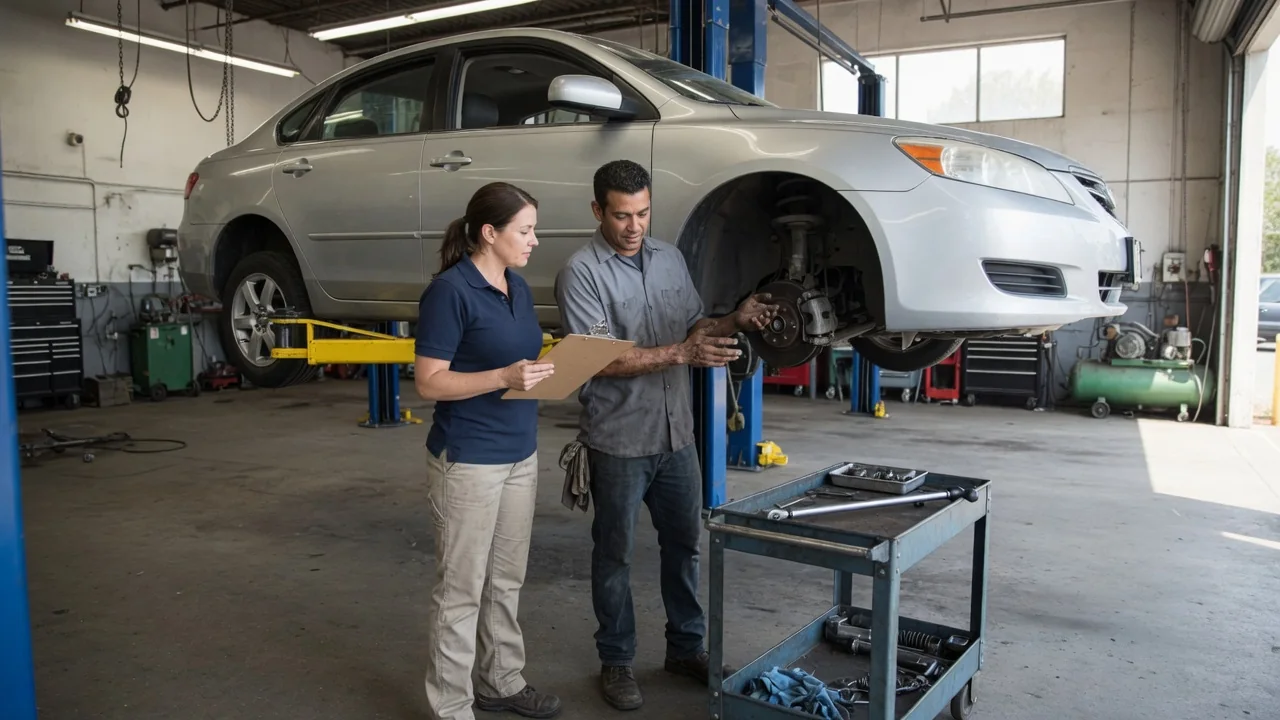
When a repair order lists 2.5 hours for a job, that figure rarely describes minutes on a wall clock. So what is a shop's labor time estimate? It is a planning number, built from published or in-house time standards, that predicts how long a trained technician should need for a defined task. Understanding that difference makes quotes and invoices far easier to read.
Task-based estimate
Most shops build an estimate from individual operations rather than from a guess about the whole visit. Each task, such as replacing a water pump or a set of front brake pads, carries an assigned time drawn from a labor guide or the manufacturer's own warranty schedule. That figure is multiplied by the shop's hourly rate to produce the labor charge. This approach is often called flat-rate or book time, and it lets a service advisor quote a price before any wrench is turned.
Because the number is tied to the task, it stays the same whether the technician finishes early or runs long. A seasoned specialist with the right tools may complete a two-hour brake job in ninety minutes, while a newer technician may need the full afternoon. The assigned time also varies by vehicle: the same water pump operation can carry a much larger figure on an engine where the pump sits behind the timing cover than on one where it bolts to the front of the block.
Access difficulties
Access is the biggest reason two similar-sounding repairs carry very different planning hours. Replacing a starter is quick when the unit hangs low on the side of the engine, yet considerably longer when it sits beneath an intake manifold that must come off first. Labor guides try to account for this by including the removal and reinstallation of whatever blocks the path. Transverse engines, tight engine bays, all-wheel-drive hardware and underbody shields all tend to push the assigned figure upward.
Published times assume a vehicle in reasonable condition, so real-world obstacles can widen the gap between planned hours and clock time. Seized fasteners on a rust-belt car, a broken exhaust stud, aftermarket accessories in the way or previous repairs done poorly all add minutes nobody predicted. Many shops handle this by calling the customer for approval before adding time, rather than quietly absorbing or billing it. Owners can often see the difference themselves by looking under the hood: crowded packaging usually means more hours on paper.
Invoice questions
An invoice typically shows labor as hours multiplied by a rate, and those hours are billed units rather than a timecard. A line reading 1.5 hours does not mean the car occupied a bay for exactly ninety minutes; it means the task was valued at that amount. It is entirely reasonable to ask which labor guide or time standard the shop uses, whether the quoted figure is flat-rate or actual time, and whether diagnostic work is billed separately from the repair itself.
Overlap is another fair question. When two repairs share disassembly steps, such as a timing belt and a water pump driven by that belt, the combined time should usually be less than the two figures added together, because the parts come off only once. A good advisor will explain how overlapping labor was credited. Customers can also ask why the final bill differs from the written estimate; many jurisdictions and shop policies require authorization before charges rise, though the specific rules depend on where the work is done.
Everyday Use and Observations
In daily practice, the gap between planning hours and clock time shows up in small ways. A car dropped off in the morning for a job quoted at one hour may not be ready until late afternoon, because the estimate covers hands-on work, not waiting for a lift, parts delivery, a road test or the cars ahead in line. Conversely, a vehicle may be returned sooner than the billed hours suggest when the technician is experienced and everything comes apart cleanly.
Diagnostic work behaves differently from repair tasks. Tracing an intermittent electrical fault or interpreting a stored fault code has no fixed endpoint, so shops often quote an initial block of diagnostic time and report back before going further. A code points toward a system to test, not a confirmed failed part, which is why that first hour is investigative. Readers comparing quotes between shops may notice different hours for the same job, reflecting different guides, rates, or assumptions about the vehicle's equipment and condition.
Limits and Next Steps
A labor time estimate is a forecast, and it has limits. It cannot foresee hidden damage discovered after disassembly, parts that arrive incorrect, or problems unrelated to the original complaint. Guides also do not cover every configuration, so heavily modified vehicles, older models and rare powertrains may be quoted from the shop's own experience instead. For those cases, billing by actual clock time is sometimes more accurate, and the shop should say up front which method applies.
The practical next step is to request a written estimate that separates parts, labor hours, the hourly rate and any diagnostic or shop fees. Ask how additional time will be approved if complications appear, and confirm that the quote reflects the exact engine, drivetrain and trim, since those details change the assigned hours. Keeping that document alongside the final invoice makes it simple to compare what was planned with what was billed and to raise specific, well-informed questions if the numbers differ.