What Is a Racing Fuel Cell? Design, Mounting and Maintenance
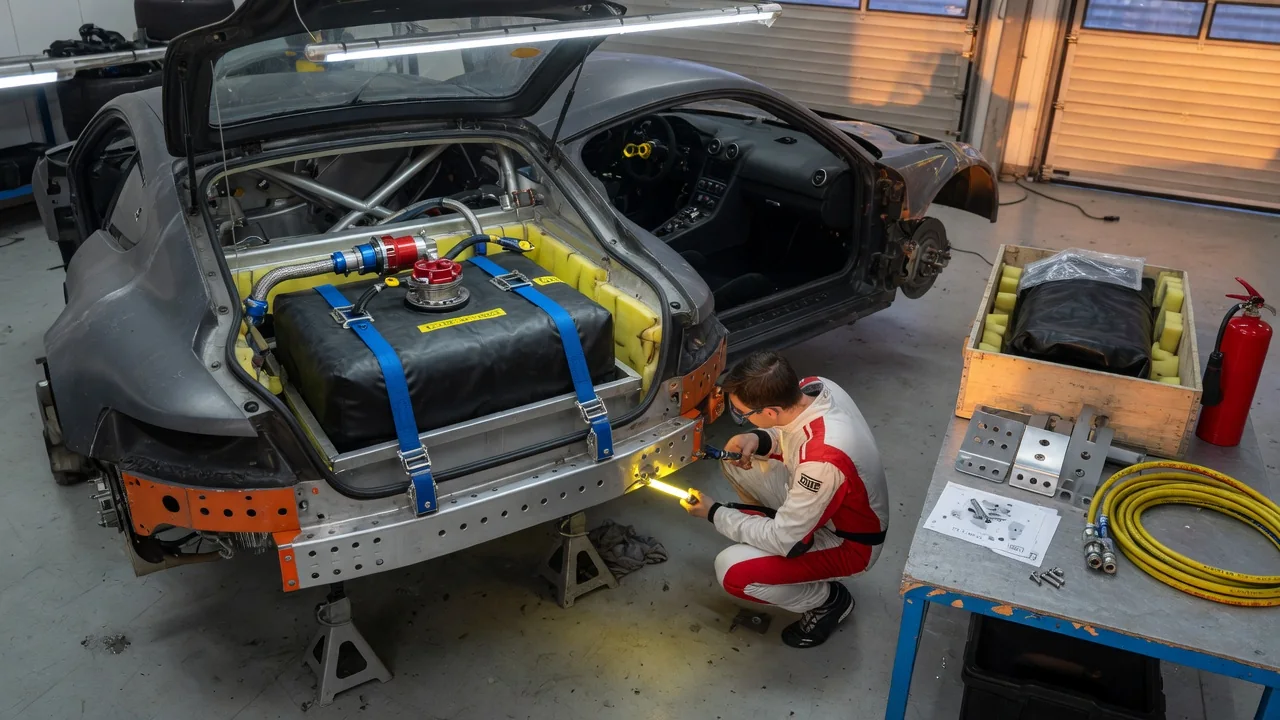
A racing fuel cell is a purpose-built fuel storage system designed to keep fuel contained when a race car is damaged, overturned or subjected to heavy loads. Unlike a typical production fuel tank, a motorsport fuel cell usually combines a protective outer container, a flexible inner bladder and internal foam. This guide explains how the container is designed, how it is mounted in a vehicle and what maintenance it needs to stay safe and compliant.
Container design
The defining idea behind a racing fuel cell is layered containment. The outer shell, often formed from aluminum, steel or a rigid composite, gives the assembly its shape and resists punctures and abrasion. Inside it sits the bladder, a flexible tank made from fuel-resistant rubberized fabric or a similar elastomer. Because the bladder can deform rather than split, it tolerates impacts far better than a single rigid wall. In these designs the bladder actually holds the fuel, while the shell protects and supports it. Some lower-cost cells skip the bladder and use a plastic or metal container with foam alone, which is a meaningful difference when rules specify bladder construction.
Most racing cells are filled with open-cell baffling foam. The foam occupies only a small share of the internal volume, yet it divides the fuel into many small passages. That reduces sloshing under braking, cornering and acceleration, helps keep fuel near the pickup, and limits the open space where a large vapor mass could ignite. The tradeoff is some loss of usable capacity, and foam types are matched to specific fuels because certain formulations degrade faster with alcohol or oxygenated blends.
The top plate and fittings complete the design. A typical cell includes a filler neck with a secure cap or dry-break coupling, a vent line with a rollover valve that closes if the car inverts, outlet fittings for the pickup, and a port for a level sender. Many cells add a sump or internal collector so the pump can draw fuel steadily even when the level is low and fuel is pushed to one side. Sanctioning bodies such as the FIA publish construction standards for bladders, and many series require a cell certified to a named specification, so the certification label matters as much as the physical design.
Mounting
Where and how a fuel cell is mounted largely determines how well its design works in a crash. The general goal is to place the cell where it is least likely to be crushed or torn open, which usually means inside the main structure of the car and away from areas that deform first in a collision. Many rulebooks specify minimum clearances from the ground and from the rear of the vehicle, and some require the cell to sit within the chassis rails or ahead of a defined line. These details vary by class, so the applicable rulebook is the controlling reference.
The cell itself is normally held by a rigid frame or cradle and secured with steel straps tied to the chassis rather than to thin body panels. Straps are padded or isolated where they contact the container to prevent chafing, and the mounts should stop the cell from shifting under heavy longitudinal and lateral loads. A sheet-metal firewall or enclosure typically separates the cell from the driver compartment so that leaking fuel or fire is kept away from the occupant, and an enclosed installation also needs a way to vent fumes outside the car.
Plumbing is part of the mounting job. Fuel lines should be routed away from exhaust heat, sharp edges and moving suspension parts, and clamped so they cannot rub through. Fittings need to stay accessible for inspection, and the vent outlet should exit the vehicle where fuel cannot spill onto hot components or the driver. A well-built cell can be undermined by a poorly supported line or a vent that drains toward the exhaust.
Maintenance
Racing fuel cells are not install-and-forget components. The bladder and foam are made from materials that age even when the car sits unused. Over time a bladder can stiffen, crack or lose its fuel resistance, and many sanctioning bodies limit how long a certified bladder may be used after its date of manufacture. Owners should record that date, check the certification label before each season and plan replacement before it lapses rather than discovering an expired bladder at technical inspection.
Foam needs its own attention. As it breaks down it can shed small particles that collect in pickups, filters and pumps, restricting fuel delivery or damaging components. Periodic inspection through the access plate shows whether the foam is crumbling, discolored or shrinking, and replacement intervals depend on fuel type, use and storage conditions. Downstream fuel filters are worth checking more often for the same reason, since debris there is often the first sign that the foam is deteriorating.
Routine checks should also cover the hardware. Gaskets and O-rings at the top plate can harden and seep, bolts can loosen from vibration, and rollover and check valves should be confirmed to seal and move freely. Straps and mounts deserve a look for cracks, corrosion or loose fasteners. Storage practice matters too: manufacturers commonly advise whether a cell should be kept partly filled or drained during long breaks, because some bladders can dry out when empty and stale fuel can harm components. The specific manufacturer's instructions are the safest guide.
Practical implications and limits
For someone considering a motorsport fuel cell, the first practical question is compliance rather than capacity. A cell that suits one series may be rejected in another because of its certification level, construction or location in the car, so checking the rulebook before purchase avoids buying a unit that cannot pass inspection. Physical fit is the next constraint: dimensions, fill location and the available mounting structure often decide which cell is workable, and adapting a vehicle to accept one can involve fabrication well beyond removing the original tank.
Ownership cost also differs from a production tank. Bladders, foam, seals and valves behave like consumables on a racing timeline, so the purchase price is only the start. Fuel choice can shorten those intervals, which is worth weighing if a car runs alcohol or blended fuels. Usable volume is typically lower than the outer dimensions suggest because of foam and pickup placement, so planning fuel load for an event should rely on fill quantities measured in the actual installation rather than nominal size.
Finally, a racing fuel cell reduces risk but does not remove it. Its benefits depend on correct installation, current certification and consistent maintenance, and a neglected cell can be less dependable than its design suggests. Road use raises separate questions, since production vehicles normally rely on evaporative emissions controls and other features a racing cell may not provide, so local regulations should be confirmed before fitting one to a street-driven car.