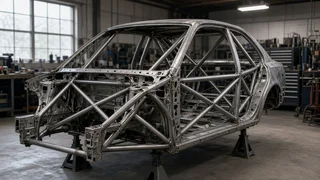
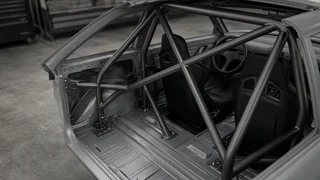
Race car roll cage design

A roll cage is the protective structure that surrounds a driver when a race car is involved in a severe impact or rollover. The goal of race car roll cage design is to manage crash energy and preserve occupant survival space. This requires careful thought about tube specification, joint design, mounting plates, and occupant clearance. Good execution depends on matching the cage to the applicable competition rules for the intended racing series, because those requirements define minimum standards for strength and configuration.
Essential answer
Race car roll cage design is the engineering and layout of a welded or bolted protective structure inside a competition vehicle. Its primary job is to keep the occupant area from collapsing if the car lands on its roof or is struck. The design must create a rigid survival cell by connecting the main hoop, front hoop, and supporting tubes so loads travel through the structure instead of through the driver. Occupant clearance is part of this work: helmet and limbs must stay away from tubes even when belts stretch during a crash.
Competition practice treats the cage as a system rather than a collection of tubes. Joint design and tube specification matter because a cage only works if its connections remain intact and its bends do not buckle early. The mounting plate spreads load where the cage meets the floor or rocker panel so a single point does not punch through sheet metal. A design that is strong in one direction may still fail in another, so diagonal bracing and node alignment are evaluated against the likely impact angles in the vehicle's racing environment.