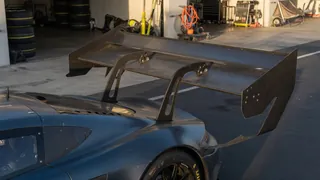
Race car rear wing design
A race car rear wing design is not a styling accessory; it is an aerodynamic device shaped to manage high-speed airflow over the back of the car. The wing profile works with the angle of attack to create a pressure difference that pushes the vehicle downward. This downforce increases tire grip and stability through corners, but it also adds aerodynamic drag. Designers balance those forces along with mounting loads to suit a specific speed range and track layout.
Essential answer
The essential principle is that a rear wing is an inverted airfoil. Instead of producing lift like an airplane wing, its profile accelerates airflow along the underside and slows it over the upper surface. That creates lower pressure below the wing and higher pressure above, generating downforce. The angle of attack controls how aggressively the wing meets the air. A moderate setting improves cornering grip efficiently, while excessive angle can separate airflow, reduce downforce, and increase drag sharply.
In practice, race car rear wing design is a trade-off made for the circuit. A high-downforce setup helps in medium-speed and high-speed corners but limits straight-line speed because aerodynamic drag grows with the square of velocity. The wing structure must also carry mounting loads from that downforce into the chassis or bodywork without flexing unpredictably. For a club or track car, a practical wing should be adjustable, mounted securely, and matched to the car's balance rather than simply made as large as possible.